Schools
Is Hinsdale D-86 Again Hiding Disparity?
Watchdog says South will run 100 fewer courses than Central. The district's numbers minimize the difference.


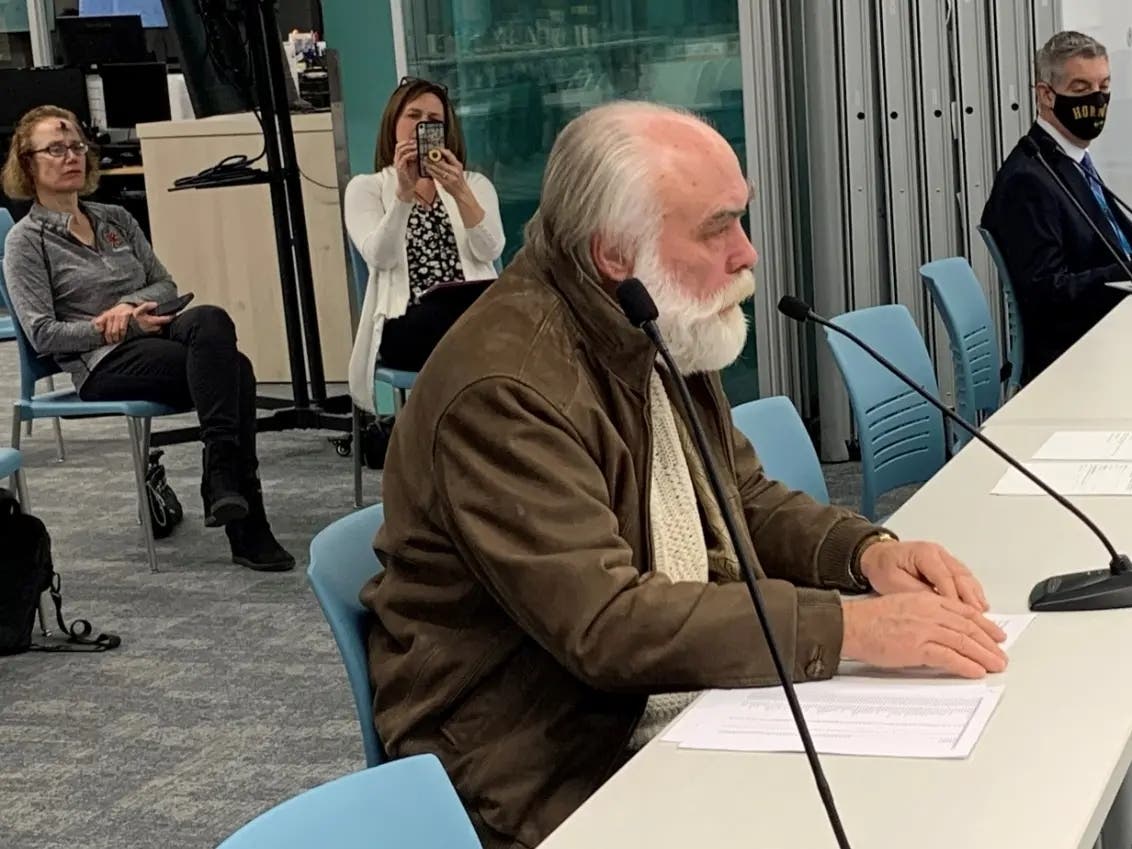
HINSDALE, IL – Burr Ridge resident Alan Hruby last year contended Hinsdale High School District 86 was hiding a big disparity between course offerings at its two schools.
His numbers showed far fewer courses were being offered at Hinsdale South. The school is considerably smaller and has far more low-income students than Hinsdale Central.
Last April, the district conceded Hruby was correct, saying it made "a little oversight."
Find out what's happening in Hinsdale-Clarendon Hillsfor free with the latest updates from Patch.
Now, history may be repeating itself.
Over the weekend, Hruby emailed school officials about its numbers on course offerings for the next school year.
Find out what's happening in Hinsdale-Clarendon Hillsfor free with the latest updates from Patch.
According to Hruby's analysis, Central will offer 303 courses and actually run 293 of them – just 10 fewer than offered.
By contrast, he said, South will offer 267 courses, but only run 196 of them. That is 71 fewer than offered.
By Hruby's numbers, South will run nearly 100 fewer courses than Central.
Courses are typically axed at South because of low enrollment. The school is only half Central's size.
School officials did not return Patch's message for comment left on Sunday.
In its presentation earlier this month, the school said it would offer 415 courses at Central and 362 at South, a difference of 53.
Hruby said the error was the double-counting of semester courses. He said he could find no evidence of double-counting of full-year courses.
The number of course offerings helps determine staffing at the two schools, which the school board has debated over the last few weeks.
Officials cited their long-term plan to unify the course offerings at the two schools.
But Hruby points to a passage in officials' recent presentation to the board: "D86 will make all course offerings available to all students during course registration regardless of their attendance school and at the conclusion of the curriculum alignment process."
Hruby said the important words are "during course registration."
"That’s the escape hatch to use the Curriculum Framework to subsequently club low enrollment courses at the smaller school," Hruby said in an email to Patch last week. "The D86 curriculum is sized to run at a school the size of Central where, you might have noticed, all but 10 courses of Central’s courses will run."
In his email to officials, Hruby pointed to a hypothetical situation involving Central student "Jack" and South student "Usha." Jack and Usha are students when courses are totally aligned, the long-term goal.
Jack can expect virtually every one of the courses offered at Central to run, powered by his school's economies of scale and 200-member faculty, Hruby said.
To be sure, Usha can select from the same 300 courses. But Hruby said the chances were far greater that the district would eliminate Usha's classes because of low enrollment.
Nobody in District 86's leadership, Hruby said, is discussing that issue.
With only 117.5 faculty positions, history has shown that South can deliver only about 200 courses, Hruby said.
"What can Usha expect?" Hruby said. "I think she can expect the District to wield its highly prejudicial D86 Staffing Framework weapon to club away about 100 (courses) at South."
The school board plans to decide on staffing for next year at its meeting Thursday.
For years, Hruby and others have pushed for changing the boundary between the two schools to equalize enrollment.
While the seven school board members are divided on a number of issues, they appear united on a boundary change: They're against it.
At a special meeting earlier this month, though, a crack in that unity appeared. For two hours, the board discussed adding a few more teachers at South to offer more courses, but some feared the added spending.
Near the end of the debate, Cynthia Hanson, the only member from the South zone, questioned why the board had "danced around" the topic of a boundary change.
Member Kathleen Hirsman said the issue could be considered in the future, while members Jeff Waters and Peggy James reiterated their opposition. The others stayed silent.
The district's administration apparently knows the politically toxic nature of a boundary change between the schools.
"I'm being careful not to take a position here," Assistant Superintendent Chris Covino said at the meeting.
Get more local news delivered straight to your inbox. Sign up for free Patch newsletters and alerts.