Politics & Government
Hinsdale Leader Reveals Attorney Communications: Feds
The feds are asking for all messages from the village's lawyer now that the leader has provided some.


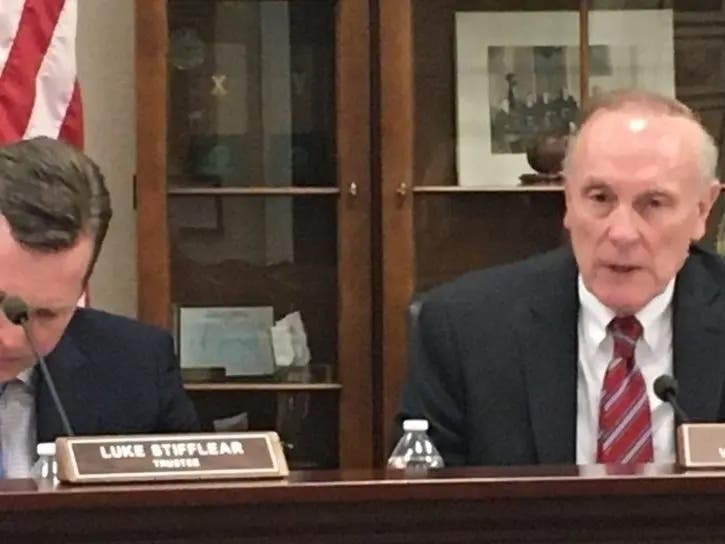
HINSDALE, IL – Hinsdale Village President Tom Cauley earlier this year revealed some attorney-client communications in a deposition involving a fair housing lawsuit, federal lawyers say.
In the lawsuit, the U.S. Department of Justice contends the village violated the Fair Housing Act in its efforts to close Trinity Sober Living at 111 N. Grant St.
Normally, attorney-client communications are considered privileged and thus not subject to subpoena.
Find out what's happening in Hinsdale-Clarendon Hillsfor free with the latest updates from Patch.
But the Department of Justice is seeking to compel the village to release all of its communications with its lawyers because of Cauley's disclosure.
Federal attorneys argue a client's disclosure of any communications with an attorney waives the entire privilege.
Find out what's happening in Hinsdale-Clarendon Hillsfor free with the latest updates from Patch.
In a July 1 letter to the village's attorneys, the Department of Justice said Cauley stated his desire to disclose certain communications even after being told they were privileged.
The department noted Cauley is a partner and trial litigator at Sidley Austin, with 40 years of experience as a lawyer.
In an April deposition, Cauley said village attorney Lance Malina told him that Malina informed Trinity owner Michael Owens that he needed to seek a "reasonable accommodation" from the village, according to the Department of Justice.
Cauley said Trinity refused to follow that directive and because of that, the village sued Trinity on Aug. 8, 2019.
The village has previously denied the federal government its correspondence with Malina.
"Mr. Cauley nevertheless disclosed his conversations with Mr. Malina concerning these matters," Department of Justice trial attorney Max Lapertosa said in the July 1 letter.
The department warned it would seek the court's help with its request if the village did not comply.
When Trinity opened in July 2019, it drew almost immediate objections from neighbors.
In response, the village called for the house's closure, saying it was a commercial operation in a residential neighborhood. And it said the house violated the village's rule for single-family housing zones — no more than three unrelated people in a house.
Shortly before the federal government sued in November 2020, the village backed down on its argument that the group home was a commercial operation.
In early December 2020, Village President Tom Cauley issued a statement on the Department of Justice's lawsuit.
In spring 2021, the Village Board approved a new policy for "reasonable accommodation" requests for group homes. In their discussion, trustees did not mention the federal lawsuit, the likely impetus for the policy.
A federal trial date has not been set.
Get more local news delivered straight to your inbox. Sign up for free Patch newsletters and alerts.