Politics & Government
Setback For Feds In Hinsdale Housing Battle
The judge rules the village can keep its lawyer's communications secret.


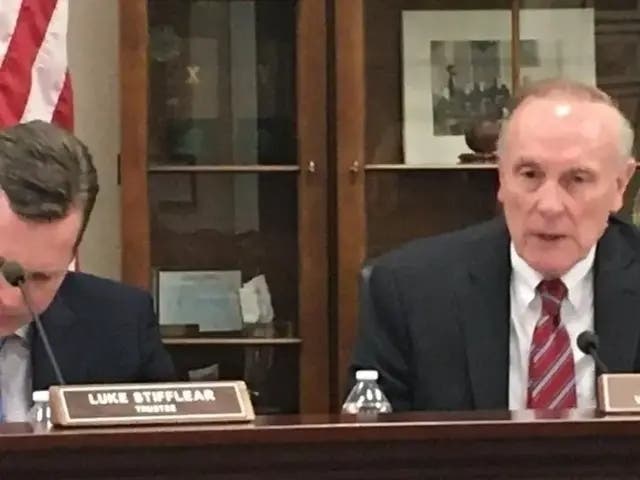
HINSDALE, IL – The federal government wanted to get access to the Hinsdale village attorney's communications in the 2019 fight over a sober living home.
But a judge denied the request. He suggested the U.S. Department of Justice "dragged its feet" in the matter.
The lawsuit involves the village's efforts to close a sober living house at 111 N. Grant St. The home's owner later closed it on his own.
Find out what's happening in Hinsdale-Clarendon Hillsfor free with the latest updates from Patch.
In July, the Department of Justice claimed the right to the lawyer's communications. It said Village President Tom Cauley "voluntarily and strategically" disclosed portions of his conversations with the lawyer, Lance Malina, during an April deposition.
Normally, attorney-client communications are considered privileged and thus not subject to subpoena.
Find out what's happening in Hinsdale-Clarendon Hillsfor free with the latest updates from Patch.
Federal attorneys, though, argued a client's disclosure of any communications with an attorney waives the entire privilege.
U.S. Magistrate Judge John Cole did not address that argument. Rather, he agreed with the village's contention that the federal government waited too long, missing a deadline for discovery.
"The government has repeatedly failed to meet deadlines that essentially have been, in whole or in part, of its own choosing," Cole wrote in an Aug. 30 order. "Its past assurances in requests for more time that no further deadlines would be affected have proven to be completely unreliable."
He said enough was enough.
"The government has reaped thousands of pages of discovery and hours of testimony regarding the plaintiff – a single, "sober living facility" on a residential block in a small suburb," Cole said. "At this point, it is delving into information on the peripheries and is leaving proportionality in the rearview window."
In its lawsuit, the Department of Justice contends the village violated the Fair Housing Act in its efforts to close Trinity Sober Living.
In an April deposition, Cauley said attorney Malina told him that Malina informed Trinity owner Michael Owens that he needed to seek a "reasonable accommodation" from the village, according to the Department of Justice.
Cauley said Trinity refused to follow that directive and because of that, the village sued Trinity on Aug. 8, 2019.
The village previously denied the federal government access to its correspondence with Malina.
When Trinity opened in July 2019, it drew almost immediate objections from neighbors.
In response, the village called for the house's closure, saying it was a commercial operation in a residential neighborhood. And it said the house violated the village's rule for single-family housing zones — no more than three unrelated people in a house.
Shortly before the federal government sued in November 2020, the village backed down on its argument that the group home was a commercial operation.
In early December 2020, Village President Tom Cauley issued a statement on the Department of Justice's lawsuit.
In spring 2021, the Village Board approved a new policy for "reasonable accommodation" requests for group homes. In their discussion, trustees did not mention the federal lawsuit, the likely impetus for the policy.
A federal trial date has not been set.
Get more local news delivered straight to your inbox. Sign up for free Patch newsletters and alerts.