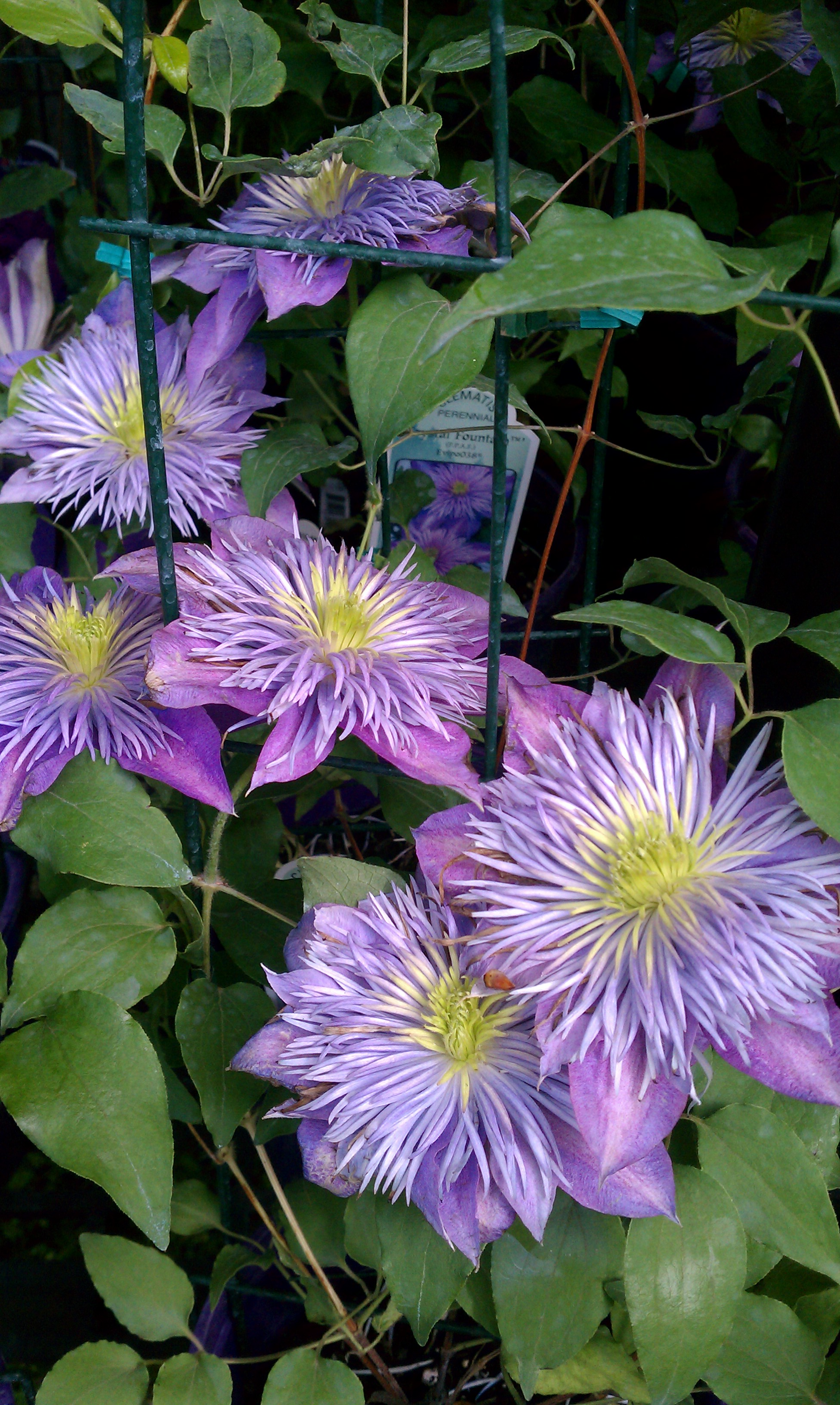
Our Spotlight Series continues to highlight different plants that are a great addition to any garden. Some you may know and others may be completely new to you.
Clematis
Scientific Name: Clematis
Find out what's happening in Hinsdale-Clarendon Hillsfor free with the latest updates from Patch.
Plant Type: Perennial Vine
Zones: 4-9
Find out what's happening in Hinsdale-Clarendon Hillsfor free with the latest updates from Patch.
Sun: Part Sun to Sun
Water: Keep soil moist
Bloom Time: Spring through Fall (Depends on variety)
Bloom Color: White, Red, Pink, Purple, Bi-color (Depends on Variety)
Height: 4-30 feet (Depending on variety)
Wildlife: Attracts butterflies
Clematis are a perennial climbing vine that comes in a variety of colors, shapes, sizes, and blooming periods. There are many to choose from, and undoubtedly one that will work for your yard.
Although there are so many different varieties to choose from, all clematis require similar care. Clematis want to be planted in a part to full sun area, with something to climb on. Whether you use a trellis, a tree, a lamppost or an arbor, having support to climb up is necessary. Clematis want moist soil and it is best to shade their base and roots when you plant them. This can be done by mulching the base of the plant, or planting a lower-growing plant at the Clematis’ base.
So how do you choose which variety of clematis you want? There is one important factor to look at, and that is the height. There are dwarf varieties that can be planted in a pot with a small oblisque or trellis, and there are other varieties that can grow as tall as 30 feet, as well as varying heights in between.
Once you have determined which size clematis your space requires, there are two things to look at. The first is the blooming period. Every clematis plant tag will say when that variety blooms. A lot of clematis will bloom for about two months out of the year, but not consecutively. For example, the plant’s tag will say “Blooms: May, August.” This means that the plant will bloom in May and again in August. Other plant tags may read “Blooms: May-June.” This means that this variety blooms from May through June. So be sure to read carefully to determine when your clematis is expected to bloom.
After determining when you want your vine to bloom, then you can begin to look at the flowers the plant produces. Clematis vines have blooms that vary from small, single-petal blooms in pink or white or lavender, to large, double purple blooms. There are bi-color flowers, more fragrant and less fragrant, and even the foliage can vary in size and appearance.
It can be hard to choose which variety you like best, so sometimes it can be fun to choose two that are in the same height range. Mix two different clematis that flower at the same time but are different colors, creating a wall of blooms during their blooming period. You can also choose two clematis that bloom at different times, giving you flowers on a more consistent basis throughout the growing season.
Once you have selected your clematis, dig a hole that is slightly larger than the pot your clematis has come in. Most likely, the clematis you are purchasing will have a small trellis that the vine is already growing on. Rather than trying to unwind the vine from the trellis it is on, simply plant that trellis with the clematis. Once the growing season is over and the clematis has died back, go ahead and remove that trellis. When your clematis begins growing the following season, it will attach to your support system without having the need for that small trellis from the store.
Clematis can make a dramatic statement with little work needed. Adding these as an accent in your garden or around your yard is easy and adds vertical interest to a garden that may be all on a level plane.
Happy Planting!