Neighbor News
Is your child struggling in school? It could be a vision problem.
It is estimated that 1 in 4 children struggle with reading and learning because of undiagnosed vision problems.

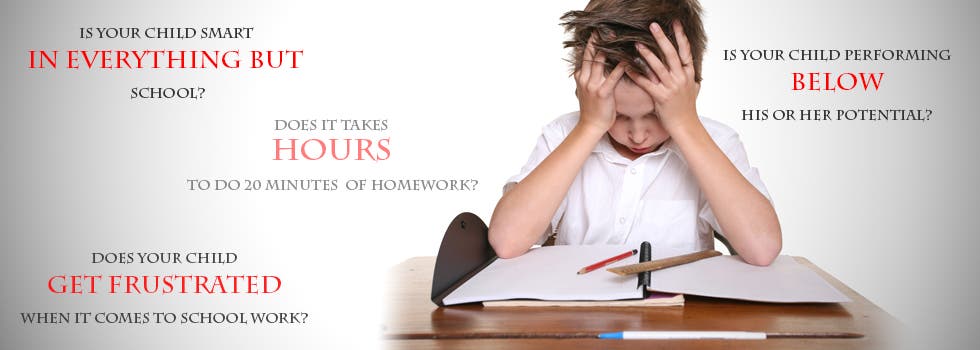
How is your child doing in school?
Many students have been studying hard, but their vision skills may not be up to the intense near work that fills most classroom hours.
“Third grade students are particularly susceptible because learning-to-read suddenly switches to reading-to-learn.” According to developmental optometrist, Dr. Monika Spokas, O.D., the amount of reading quadruples in third grade.
Find out what's happening in Hinsdale-Clarendon Hillsfor free with the latest updates from Patch.
Eighty percent of class work requires that students gather and process information visually. The eyes must stay focused and converged unnaturally close for hours at a time.
Some youngsters will be categorized as having a reading problem, “but for many, the underlying problem will be a visual restriction, not a learning disorder,” Dr. Spokas said.
Find out what's happening in Hinsdale-Clarendon Hillsfor free with the latest updates from Patch.
One way to distinguish a learning disability is to notice whether a child has trouble learning mainly when close-up vision work is required, such as reading, writing or math.
“A common sign is that it takes hours to do 20 minutes of homework,” said Dr. Spokas. “This child often cannot recall what they just read, and they skip or re-read lines.” Other common signs that visual stress is present include a child who gets headaches in the afternoon, rubs their eyes frequently, falls asleep when reading, overlooks small words or reverses letters or words or avoids reading altogether.
Another signal to look for is a child (or adult) who substitutes or “makes up” words he or she cannot decipher. The book says, “The cat is brown and white,” but the reader says, “The cat is down and white.” “A child does not outgrow this kind of problem, it remains a problem throughout adulthood and only gets worse.” Dr. Spokas said.
“If the child is not motivated by some internal drive or external discipline, the child might simply avoid near vision work. Moodiness, being a class clown, causing disruptions, all are ways to distract attention from academic failure. Vision is an underlying problem, the misbehavior is an unfortunate way the child tries to get around it.”
Dr. Spokas, explained that the typical school screening does not detect the kind of vision problems that restricts reading because these children often have 20/20 distance sight.
The traditional Snellen eye chart tests only the ability to use one eye at a time to see far away. It does not test the ability to make the eyes converge, focus, track a line of type, or the ability to decode and take meaning from letters on a page a foot or so from the eyes.
Dr. Spokas offers free seminars for parents and educators each month. Her office is 103 Ogden Ave, Clarendon Hills, IL 60514. Visit www.ClarendonVision.com or call (630) 323-7300 to get date and time.
Why do these visual dysfunctions occur?
Human vision developed over eons to see far away for hunting, gathering and avoiding danger. “Remember that just 125 years ago, most people worked as farmers or doing simple labor. Most people completed only grammar school. It’s only been in the last 100 years that we have been required to take 12-years of compulsory education and less than three decades since computers arrived. Our work and play today is all up close and entirely unnatural,” said Dr. Spokas.
The mismatch of our natural distance seeing ability with the unnatural close up work, produces intense visual stress. This stress is measurable and is particularly troublesome when eye movements, focusing, scanning or any of 20 visual skills are poor,” Dr. Spokas said.
What can be done about vision-related learning problems?
For some children, subtle prescriptions in glasses help. Other children have visual restrictions that require programmed therapy to rebuild. “Vision Therapy is a special area of vision care, only one in 20 eye doctors examines for and treats this kind of problem,” cautions Dr. Spokas. A medical eye exam may find healthy eye tissues, but completely miss this problem.
“This is rarely an eye health condition,” Dr. Spokas said, “but it has severe consequences because a person with learning-related vision problems will have trouble keeping up in any field they choose, throughout life.”
About Dr. Monika Spokas
Dr. Monika Spokas is a Developmental Optometrist who works with children and adults whose vision interferes with their ability to read, to learn, to comprehend, and even to pay attention.
Dr. Spokas earned her Doctorate of Optometry degree as a cum laude graduate at the prestigious Illinois College of Optometry. During her time there, Monika was the recipient of a number of awards recognizing her academic and clinical excellence. She is a member of the American Optometric Association, the American Academy of Optometry and of the College of Optometrists in Vision Development. She has completed extensive post-doctorate studies in vision development and vision therapy. Dr. Spokas is the clinical director of Clarendon Vision Development Center, 103 Ogden Ave, Clarendon Hills. www.ClarendonVision.com
For more information about vision and learning, visit the College of Optometrists in Vision Development website at www.COVD.org.