Crime & Safety
Anthony Maggio's Double Murder Conviction In Lockport: Illinois Court Of Appeals Renders Decision
Prosecutors argued Anthony Maggio killed Ashtin Eaton and his little girl Hazel to avoid being required to make child support payments.


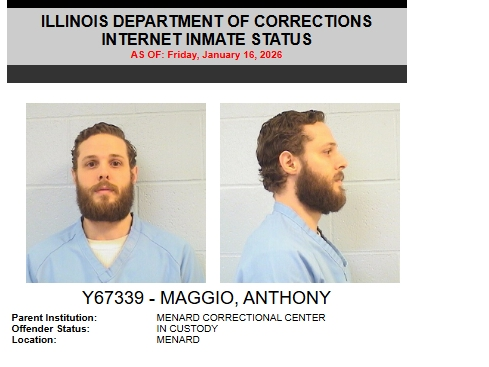
LOCKPORT, IL — In a 20-page ruling issued Thursday, the Illinois Third District Court of Appeals has ruled against Lockport double murderer Anthony Maggio and upheld his two first-degree murder convictions. The former paramedic at the Joliet Amazon warehouse was convicted and sentenced to life in prison with no chance for parole in January 2025 by Will County Judge Amy Bertani-Tomczak. Three months earlier, a Will County jury found Maggio guilty of killing his 14-month-old daughter Hazel Bryant and Hazel's mother, Ashtin Eaton.
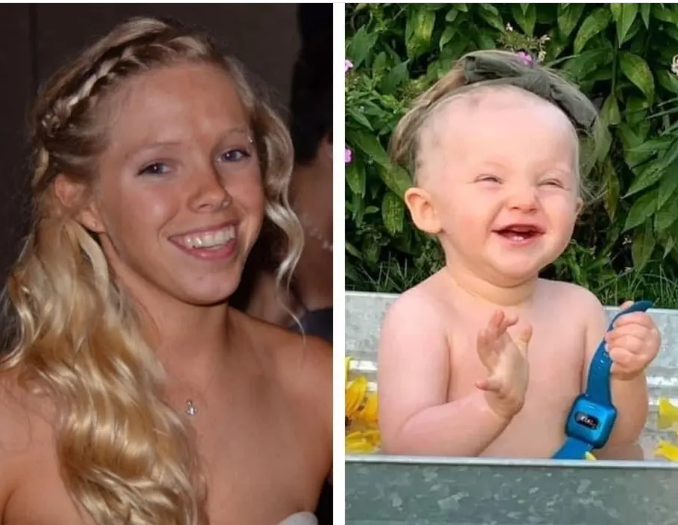
The young Lockport mother and little girl were found dead inside their apartment near downtown Lockport in the 900 block of Hamilton Street. Eaton died of strangulation, and Hazel was found smothered on her mother's bed. The slayings happened in October 2020.
"The judgment of the circuit court of Will County is affirmed," the three appellate justices agreed. "Defendant argues that the circuit court abused its discretion by denying his motion in limine to admit evidence of an alternative suspect on the basis that the evidence was remote and speculative. He further argues that the State failed to prove him guilty beyond a reasonable doubt, claiming that the State presented no evidence to link him to the crime scene at the time of the murders. Defendant also argues that the court abused its discretion by denying his motion for mistrial after 10 hours of deliberation and by instructing the jury to keep deliberating after the jury."
Find out what's happening in Homer Glen-Lockportfor free with the latest updates from Patch.
According to Thursday's 20-page ruling, Justice Lance Peterson delivered the judgment for the appeals court and fellow justices Liam Brennan and John Anderson concurred. Anderson is the former Will County Circuit Court judge who handled the wrongful death lawsuit filed by the parents of Samantha Harer against former Crest Hill police officer Phil Flores.
On the question whether Judge Bertani erred by not allowing Maggio and his Chicago defense attorney Michael Clancy from suggesting to the jury that the more likely killer was Ashtin Eaton's ex-husband Jordan Eaton, the court of appeals issued the following opinions:
Find out what's happening in Homer Glen-Lockportfor free with the latest updates from Patch.
"Here, the May 2011 gun incident was remote in time, as it was over nine years prior to the murders. Jordan’s whereabouts on the night prior to the murder were corroborated, in part, by his cell phone records. The records indicated that he went to Lockport and was returning to Palos Hills around 11:30 p.m., which is prior to the murders. His cell phone did not hit on a tower again until the following morning, showing that Jordan was on his way to work. In addition, (his girlfriend Antanina) Raspanti stated that he was home with her that night, and there was no evidence that Jordan had ever snuck out of her home without her knowledge. Thus, it is mere conjecture or speculation that Jordan was or could have been in Lockport at the time of the murders.
"Although defendant had a similar alibi from (Maggio's fiancée, Marcelina) Baliczek, there was evidence that he was able to leave their home without her knowledge and had done so 12 days prior to the murders. Further, Jordan’s DNA was not found under Ashtin’s fingernails, on the neckline of her shirt, or on the box cutter, while defendant’s DNA was identified on all three locations.
"Additionally, although defendant argues that Jordan could have worn gloves, that is speculation. Further, defendant wanted to introduce evidence that Jordan had cuts on his hands the day after the murders to indicate he could have obtained the cuts during a struggle with Ashtin; however, if that had occurred, he would have likely left DNA at the crime scene."
The Third District Court of Appeals also addressed the issue surrounding domestic violence in the relationship between Jordan Eaton and his current girlfriend.
"The alleged domestic issues between Jordan and Raspanti, his current girlfriend, are also too remote in nature from the murders of Ashtin and Hazel. Further, Hazel had no relation to Jordan. As to the purported motive—conflicts over parenting Jessica and potential restrictions on or denial of visitation between Jessica and Jordan—there was no actual evidence provided to the court that Ashtin was not allowing visitation at the time or that she advised Jordan she would not allow visitation ... Based on the foregoing, we conclude that the court did not abuse its discretion by finding that the evidence defendant sought to introduce regarding Jordan as an alternative suspect was remote and/or speculative. Additionally, we reject defendant’s argument that the court placed improper weight on the DNA evidence in its decision to exclude the alternate suspect evidence, as the record shows the court considered the DNA evidence as one factor among others in reaching its conclusion. Thus, the court did not solely rely on the DNA evidence in coming to its decision."
As to whether the Will County State's Attorney's Office offered sufficient evidence to prove Maggio guilty beyond a reasonable double of the Lockport double murders, the three appeals judges had this to say:
"Here, although the State did not have direct evidence that defendant was at the crime scene at the time of the murders, or regarding exactly when defendant’s DNA was left at the scene, the totality of the evidence was sufficient to prove beyond a reasonable doubt that he committed the murders," the three justices concurred. "Specifically, the State put forth evidence showing that defendant’s DNA was found under Ashtin’s fingernails, on the box cutter that was used to cut her, and on the neckline of her shirt.
"Ashtin was strangled. Further, the State offered evidence of motive—specifically, that defendant did not want to pay child support for Hazel or have a relationship with her and that he wanted to save his relationship with Baliczek. Moreover, the State presented (former Amazon co-worker Don) Crittle’s testimony, indicating that, shortly before the murders, defendant told Crittle that he would give him money to make Ashtin disappear. Additionally, although defendant’s cell phone records did not indicate he was in Lockport at the time of the murders, the State presented evidence that the defendant knew ways to avoid his cell phone being tracked. Similarly, although Baliczek testified that on the night/morning of the murders defendant was at home when she went to bed and when she woke up, she also testified that she did not know that defendant had snuck out of their home 12 days prior to the murder. Baliczek stated that she was a sound sleeper and that she did not wake up at all that night.
"Taking all of this together, there was sufficient evidence for the jury to make a reasonable inference that defendant’s DNA was left on the box cutter when he cut Ashtin, his DNA was left on the neckline of Ashtin’s shirt when he strangled her, and his DNA was left under her fingernails during the murder. Thus, the State presented sufficient evidence for the jury to conclude beyond a reasonable doubt that defendant committed the murders."
On whether a mistrial should have been declared during the jury deliberations, the appeals justices offered this analysis:
"Here, the trial lasted eight days, and numerous witnesses were presented. There were complex issues involved, such as the DNA evidence, that required testimony from several experts. The parties agree that the jury spent approximately 10 hours deliberating the first day and another 5 hours the next day before reaching a verdict. This amount of time is not excessive when considering the length of the trial and the complexity of the issues. Although the jury advised the court three separate times that it had not reached a unanimous decision, the jury did not express a belief that it would not be able to reach a verdict. Further, when the jury was told to continue deliberations after the first two notes, it was clear the jury was doing just that, as there were additional notes requesting either more information or to view certain pieces of evidence.
"The third time the jury indicated a failure to reach a unanimous decision, it requested a break. Again, the jury did not indicate that it believed it would not be able to come to a verdict; the jury simply requested a break. The court ultimately provided the jury with a break by having jurors stop deliberations for the night and return the next morning. Based on the foregoing, we cannot say the court abused its discretion by denying defendant’s motion for mistrial."
Get more local news delivered straight to your inbox. Sign up for free Patch newsletters and alerts.