Health & Fitness
Distance, Temperature & Color
The changing of the leaves can be dscribed in terms of planetary motion and biochemistry.


My favorite time of the year is Fall: reds and yellows of the leaves… cooler temperatures… Earth approaches the Sun… (My wedding anniversary…)
Distance
With the departure of the leaves in Homewood, there are still several weeks until Winter officially begins. A common misunderstanding is the reason behind these things. Homewood has an average distance from the Sun of 150 million kilometers (93 million miles), but Homewood’s orbit isn’t circular, it’s an ellipse (like an oval), and the Sun isn’t at the center. (The fact that the Homewood isn’t the center of the Universe is subject to debate, though.) At one point of the year, we’re 147 million km away from the Sun and six months later, we’re 152 million km. Closer means hotter, right?
Find out what's happening in Homewood-Flossmoorfor free with the latest updates from Patch.
Temperature
In addition to the distance change throughout the year, the Earth is tilted on its axis (23.5°), which means that Homewood points more directly at the Sun during the summer months and less at the Sun during the winter months. It’s this change in ‘pointing’ that gives us our seasons, not the distance. More direct sunlight means higher surface temperatures. On December 21st-ish, we’re actually the closest to the Sun in our orbit!
Find out what's happening in Homewood-Flossmoorfor free with the latest updates from Patch.
Color
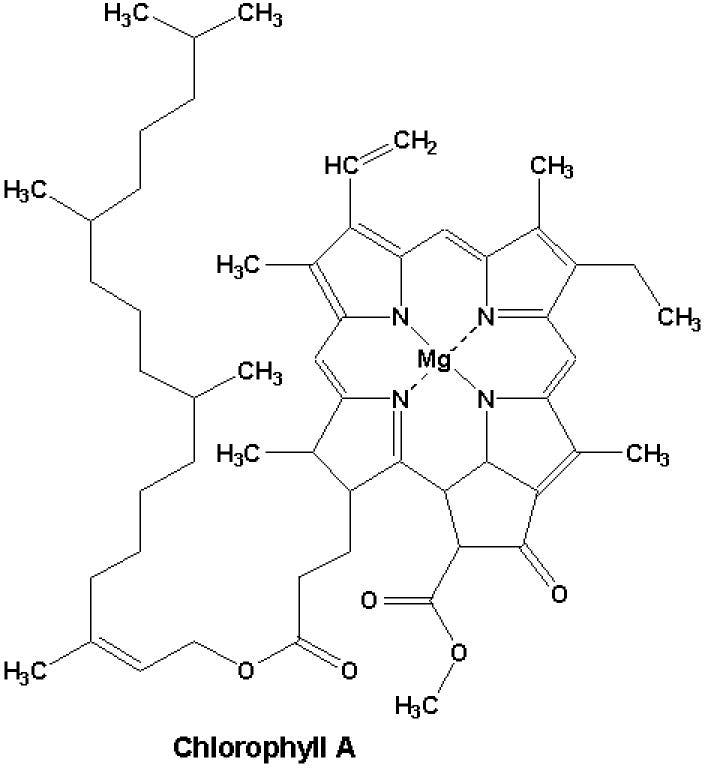
So what does this have to do with the leaves changing color? Is it the temperature change? Less sunlight? Different kinds of sunlight? The reason that leaves are green in the first place is because of chlorophyll a, which re-emits green light. It’s a fairly unstable chemical, though, and doesn’t take kindly to cooler temperatures. During the cooler days of September and October, Homewood’s trees begin to seal off the flow of water from the leaves, which is very upsetting to the chlorophyll a. As a result, chlorophyll decreases in production; yellow carotenoids and orange xanthophylls become more visible. Those chemicals are always there throughout the year, but chlorophyll a is so bright, that it masks them. Other colors come from new a class of compounds, anthocyanins (reds and purples), that are only produced in the fall from the breakdown of sugars in the leaves.
There is beauty in nature and Science does not mean to diminish that. The real beauty, though, is the ability to use laws of nature to discover and learn how a process such as the changing of leaves can be described by a wonderful combination of physics, chemistry and biology.
Question your world. The answers are there.