Arts & Entertainment
‘Where is Wendy Williams?’ Stirs Memories of Mama; A Night In The Cold
Alzheimer's gnawed at Mama's pride and soul. We sought to protect her even on the night she wandered away from my home into the snowy cold.

By John W. Fountain
WE TOOK FEW PICTURES of Mama after Alzheimer’s seized her brain, left her with a faraway gaze that filled her brown eyes whenever she was lost inside herself or confused. We wanted her to still feel dignified, even though her frustration over the loss of memories or her inability to care for herself or do the simple things, like taking a walk by herself, sometimes caused her to melt into tears.
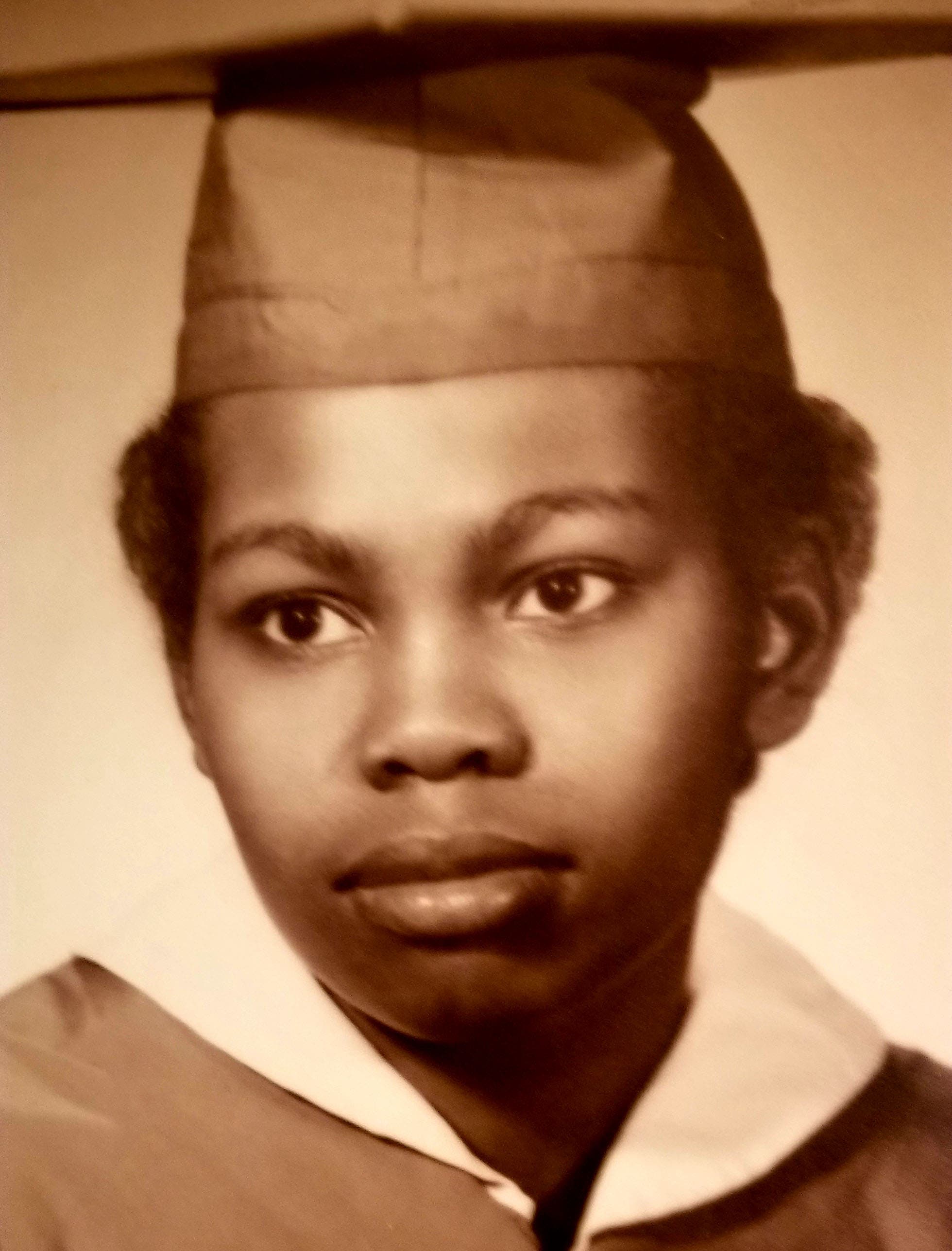
Mama was always a proud Black woman. Alzheimer’s gnawed at her pride and soul. We could not prevent it from taking its toll. But we could protect her from the outside world and herself, like the time she wandered away from my south suburban home one icy winter’s night.
Find out what's happening in Homewood-Flossmoorfor free with the latest updates from Patch.
We were her protectors—my brother and sisters. Perhaps none was fiercer or more diligent than me whom Mama had told before the disease took control, “I trust you more than anyone else in this world. You are the best man I have ever known. I trust you with my life.”
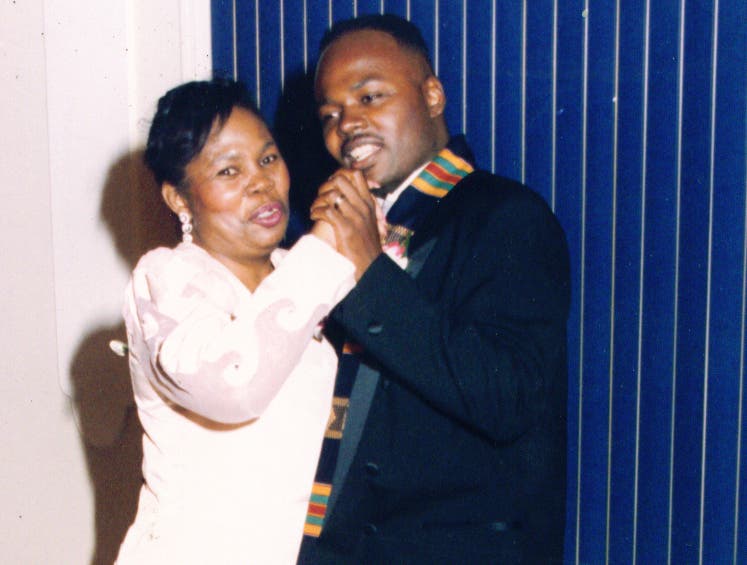
I assured Mama that she could trust me and that I would handle her affairs, her final arrangements and everything else—exactly the way she had instructed, even if it meant having to cuss somebody out, or more.
Find out what's happening in Homewood-Flossmoorfor free with the latest updates from Patch.
“I know, John,” she had responded with a chuckle years ago as we sat at my kitchen table preparing for the worse, for the inevitable.
By the time cancer and Alzheimer’s finally took mama away that summer afternoon on Aug. 22, 2014, I had exhausted every possibility and gone to every thinkable measure to try and shield her from the outside world: from insensitive or shoddy healthcare workers to bad healthcare facilities to predators and vultures of all varieties, to any and everything I thought might cause Mama hurt, harm or shame.
It was a charge I vowed to myself to uphold until I had carried my mother safely to her final place of rest—with the same love and care with which she had carried me to life.
That is the least we can do for loved ones, in my humble opinion, when a disease like Alzheimer’s or dementia or some other fatal, debilitating, deadly illness strikes.
Caring for and protecting loved ones is an unenviable and often heavy task not for the faint at heart. For it can mean having to show even relatives the way to the door when what they say or do—or simply their presence—offends or triggers.
It is a labor of love to protect our mothers and fathers or others when they no longer can protect themselves. To be their voice. Their console. Their help. To not intentionally hurt or harm them. To be patient, loving, kind, selfless.
We took few pictures of Mama during her Illness so that we could remember her the way she was in life before Alzheimer’s, but also because we knew she wouldn’t want people to see her like that, to stare at her, make fun of her, or pity her. We surrounded her in every way we could to keep her from harm. To not allow her to be taken advantage of, to protect her dignity.
Admittedly I was unprepared for the level of intensity of my mother’s suffering. For how much she would need me. For the loss of her ability to do even the simplest of things like control her bodily functions even in public, or her emotions—especially when she was sundowning—or her propensity towards wandering.
Or Mama’s sudden memory loss sometimes of the simplest things and facts like forgetting once even the man she had been married to for more than 40 years. In the middle of the night over the phone with me, she whispered that she had been kidnapped. She had not, I said, explaining calmly and deliberately that I been present at age 6 when they tied the knot at Grandmother and Grandpa’s house.
“God knew that one day you would need a witness,” I said, laughing, partly as a strategy to lighten the mood. “That’s not a strange man, Ma. That’s your husband.”
“I couldn’t be married to him,” she said, chuckling finally. “Well-l-l-l, I guess you’re right.”
We laughed.
Watching “Where is Wendy Williams?” a four-part documentary series on Lifetime recently, I wanted to cry.
Williams, 59, a former talk-show host and celebrity gossip queen, “has been diagnosed with aphasia and frontotemporal dementia, her care team announced,” as reported by the Washington Post and widely reported by other media outlets.
“Frontotemporal dementia is caused by a group of disorders that gradually damage the brain’s frontal and temporal lobes,” which can cause changes in thinking and behaviors. “Symptoms can include unusual behaviors, emotional problems, trouble communicating, challenges with work, and difficulty with walking,” according to Alzheimers.gov, a federal government portal to information and resources on Alzheimer’s disease and related dementias.
Aphasia, according to Mayo Clinc, “is a disorder that affects how you communicate. It can impact your speech, as well as the way you write and understand both spoken and written language.”
I could only watch episode one of the Lifetime documentary on Williams. I only chose to do that against my better judgement and after seeing a promotional clip in which I noticed an all too familiar empty gaze in Williams’ eyes, and wondered aloud how anyone who loved her could allow her cameras into the intimacy of her life at a point in her life when she is clearly battling an illness that leaves her vulnerable in so many ways.
As I watched, I kept wondering where were her protectors that this so-called documentary could be made at all. For this much was clear in scene after scene, in blank stare after blank stare, in those moments when Williams was overwhelmed by emotion and dissolved into tears: That she is not well. Ray Charles could see that. Can’t her “protectors”? Can’t the producers?
I don't know which was worse: The vultures behind the camera or the ones in front of it. It was simply sad.
Whatever feathers Williams may have ruffled as a celebrity gossip queen, whatever her sins against those who may deem that her turn of fate may be comeuppance, I could only think of Mama. That Williams deserves as a human being the dignity of privacy and respect.
And that a good and loving son—or someone, anyone—to protect her now that she can apparently no longer protect herself would work better than good medicine.
It was a charge I vowed to myself to uphold until I had carried my mother safely to her final place of rest…
That August Saturday 10 years ago, after everyone else had gone, I stood nearby as cemetery workers lowered Mama’s casket into a grave I had picked out near two towering emerald Evergreens because Mama always loved Christmas. I shoveled a little dirt, then knelt alone and whispered with tears streaming down my face: “You’re safe now, Mama. I did what you told me to do. I love you, Ma. You’re safe.”
#PrayersforWendyWillliams
Email: Author@johnwfountain.com
Into The Cold...
The column below was written originally in November 2014
By John W. Fountain
IN THE COLD, I could find no traces of her footprints in the snow.
I stared down my block into the darkness of midnight and the snow-laden, frigid South suburban streets. My heart pounded. My thoughts seemed frozen.
“Ma?” I called out, hoping she was close enough to hear. “Ma-a-a-a?”
My breath hung on the icy air.
No answer…
Into the darkness, my mother had disappeared. She slipped from my front door as we slept, just after midnight, wandering away in a haze of Alzheimer’s and her heart’s hope of finding “home.”
I hadn’t long laid across my bed, having first checked in on her. She was sleeping soundly.
Her wandering had worsened. She sometimes stayed the weekend with us. I wanted to take care of her, protect her, for what time we had left together. Make her smile. Make sure she ate well, took her meds, was safe.
Dead tired, I must have drifted off. The telephone rang. It was the security company: “You have a breach at your front door… Police are on the way.”
We ran frantically to where Mama had been sleeping…
Gone. She was gone.
Sure enough, the front door was closed but unlocked. Mama’s shoes and coat were still there. She had left, wearing only socks and pajamas.
I dashed out the front door without a coat, my heart racing, fighting back tears, my mind filled with thoughts of my mother freezing to death and dying outside in the cold—alone. With thoughts of Mama being attacked by someone or some wild animal. Or being run over by a truck on the highway—just blocks away—while in the haze that can leave some Alzheimer’s sufferers drifting in a trance-like state.
When Mama did not answer, I ran to the garage and hopped into my car. As I sped out of the driveway, lights from police squads flashed.
“My mother’s missing…” I told one officer, pausing just long enough. “She has Alzheimer’s. I gotta make sure she didn’t get to the highway... Talk to my wife.”
I drove to the highway, scanning the snowy streets. But no Mama. I circled back home. But no Mama. I drove around again—slowly, deliberately. No Mama. The police searched and searched, but still no sign of Mama.
With time and cold drifting on the wind, the officers called for the canine unit. The dog arrived. An officer gave him my mother’s scarf and he set out immediately, tracking her scent. I set out again in my car, combing the dark…
That night was to be a lesson in the cold. The cold of winter. The cold of life that can steal our memories, leave us lying frozen in misery, unless we remember:
To be thankful. To inhale each moment. To cherish good memories with our loved ones and to make as many of them as we can.
And to know that even that which cannot be remembered with the mind is never completely lost. But forever planted deeply in the heart—permanently seared into the soul.
I was still searching when my cellphone rang. They found Mama. Half a mile away, she was cold and confused, but safe.
We warmed her feet and fixed her a cup of hot tea. Eventually, we went back to bed—thankful for the kind police officers and a south suburban police dog named Lars. Thankful for a lesson in the cold. A lesson I will warmly embrace always, especially because Mama is no longer here.
Except I know that she always will be, even without seeing her footprints in the snow.
Email: Author@johnwfountain.com
TO READ MORE FROM JOHN FOUNTAIN, VISIT: