Community Corner
Imagine Huntley's Past
Huntley evolves from Native American homeland to dairy farms to thriving family community.
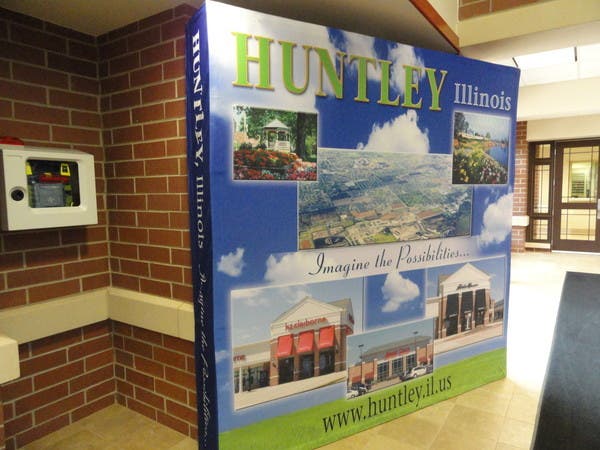
As you travel through Huntley, imagine back 200 years, as Native Americans of the Winnebago Nation traversed this land.
Imagine 100 years ago, when the area was covered with dairy farms, and Huntley farmers were said to produce more milk per square mile than anywhere else in the world.
Over hundreds of years, the landscape that is Huntley has been changing and evolving.
Find out what's happening in Huntleyfor free with the latest updates from Patch.
With the end of the Black Hawk War in 1832, the Native Americans left their encampments and croplands in Northern Illinois and moved to territories west, opening the land to white settlers from the east.
Immigrants to this area purchased their sections of land from the United States government. By the late 1830s, a small farming community existed in this southern McHenry County area.
Find out what's happening in Huntleyfor free with the latest updates from Patch.
Although he wasn't the first to settle in the area, Thomas Stillwell Huntley was the visionary who foresaw the thriving community that could be possible.
Huntley and his wife, Eliza, and children Harriet, Charles and William came to the area in 1846 from New York.
A relatively wealthy man, Huntley bought several sections of land, including 80 acres along what was to become the Chicago and Galena Railroad, later the Chicago and Northwestern Railroad.
The line was to stretch across the state, and Huntley saw the opportunities the railroad would bring.
In 1851, the first train came through to what was called Huntley Grove, where Thomas Huntley had laid out plans for a community of homes, businesses and churches along the railroad line. From his personal holdings, Huntley donated the land for three churches, a town cemetery and the village square park, all of which still exist today.
A flourishing business community of dry goods stores, harness and blacksmith shops, meat markets, hardware stores, furniture stores, livery stables and mills developed around the town square. These businesses supported and were supported by the farm families of the surrounding area.
For the first 20 years after the railroad's entry, farming for family subsistence was the area's main economic venture. But as conditions improved, entrepreneurs found ways to bring their surplus goods to market. The railroad provided a way to sell produce in Chicago, and Huntley became a shipping center for milk, butter, eggs, hogs, cattle and other agricultural products.
From the late 1860s to the 1930s, Huntley was the largest fresh milk shipping point in the Midwest.
The July 21, 1894 edition of the Huntley News reported, "Farmers in the district surrounding Huntley produce more milk to the square mile than any other area in the world."
Cheese and butter factories and milk plants popped up around the community. Huntley farmers would unload their raw goods at the local plants to be processed and shipped out by rail.
But in the 1920s, trucking made it possible to ship whole milk to larger, more modern factories near Chicago where pasteurization was available, and Huntley's local milk plants began to close.
Farming and dairy production continued to be the area's main industry into the 1980s.
As elsewhere in the country, trade and social activities suffered during the Depression years of the 1930s. With the milk factories closed, many residents took jobs in other communities, especially the watch factory in Elgin.
When what previously had been only a local dirt road known as Vine Street was paved and extended in 1936, Huntley residents could travel by automobile to Woodstock and beyond along the new Route 47.
It was not until the 1990s, however, when the area's longtime farmers found they could make more money selling their valuable land than they could farming, that the village of Huntley began to grow rapidly.
With the development of Del Webb's Sun City and other new subdivisions, Huntley has grown to be a thriving 21st century community of more than 25,000 people.