Politics & Government
ExxonMobil Joliet Discrimination Suit Wins Key Pretrial Ruling
Lawyers for Amy Phillips say their client endured dozens of incidents of slurs about her being scrawled upon refinery walls and equipment.


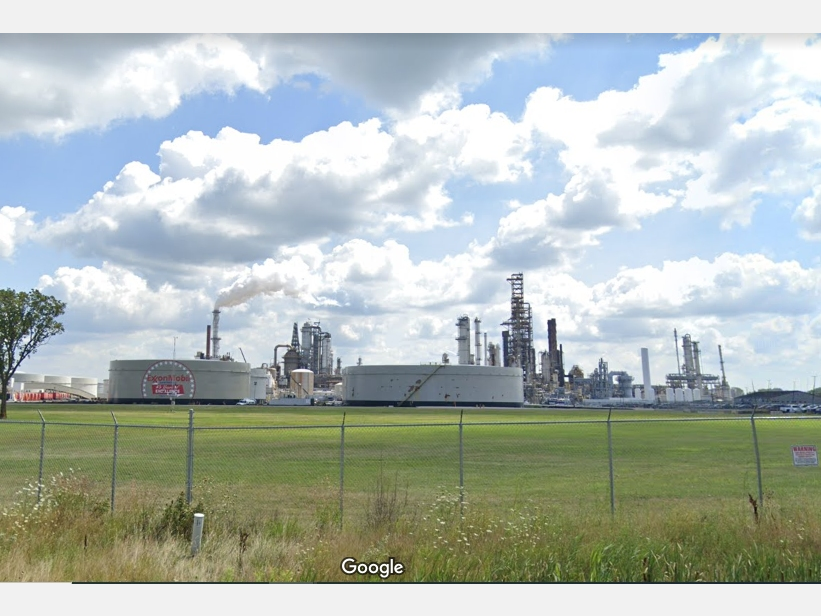

JOLIET, IL — A federal judge in Chicago has rejected efforts by the ExxonMobil Joliet Refinery to dismiss a sexual discrimination lawsuit brought forward by Amy Phillips, an openly gay employee at the chemical plant along Arsenal Road and Interstate 55.
According to her federal lawsuit, Phillips has been subjected to numerous instances of graffiti written on the walls throughout the ExxonMobil Joliet property in an effort to humiliate her.
The graffiti targeting Phillips at her worksite included a message that Phillips spotted in May 2017, proclaiming, "DIE AMY RAT BITCH," her lawsuit states.
Find out what's happening in Jolietfor free with the latest updates from Patch.
"Phillips has been targeted and harassed because she is a woman and did not conform to stereotypes about how women should appear and behave," argued Julie Porter, the plaintiff's lawyer from the Salvatore Prescott Porter & Porter law firm. "She has also been targeted and harassed because she is a lesbian. The discriminatory conduct includes, but is not limited to: verbal harassment and slurs, explicit and hostile graffiti of a sexual nature, physical harassment and threats of violence and denial of opportunities for training, promotion and additional compensation."
Joliet Patch reached out to the Chicago law firm defending ExxonMobil Joliet in the federal lawsuit on Tuesday afternoon, but representatives from the firm did not respond with any comments.
Find out what's happening in Jolietfor free with the latest updates from Patch.
On Tuesday night, Ashley Alemayhu, who works in ExxonMobil's corporate media relations, issued a statement to Patch that included the following message: "Harassment is not tolerated at ExxonMobil. Our policies prohibit all forms of discrimination and retaliation in any company workplace, anywhere in the world.
"All employees, including supervisors and managers, are subject to disciplinary action up to and including termination for any act of harassment. Whenever we learn of allegations, we take action to investigate and respond appropriately."
In late March, U.S. District Judge Jorge Alonso issued a split verdict in a key pretrial ruling. The judge found in favor of the plaintiff on two of her claims alleging ExxonMobil Joliet created a hostile work environment based on sex or sexual orientation. The judge also did not reject Phillips' petition seeking a jury award of punitive damages, if her case goes to trial.
"Viewing the record in the light most favorable to Phillips, there is sufficient evidence from which a reasonable fact finder could conclude that the conduct Phillips complains of was based on her sex or sexual orientation," the federal judge ruled.
However, Alonso dismissed two of the plaintiff's claims. The judge said he did not find sufficient evidence showing ExxonMobil engaged in a practice of retaliation against Phillips. Secondly, the judge dismissed her claim alleging intentional infliction of emotional distress.
Phillips, who is represented by the Evanston law firm of Salvatore Prescott Porter & Porter, filed her lawsuit in October 2017. According to court records, Phillips is one of very few women or openly gay people working as process operators at the ExxonMobil Joliet Refinery.
Since joining ExxonMobil Joliet in 2013, Phillips has monitored equipment used to process crude oil, and she responds when there are equipment problems, her lawsuit states.
Over the years, Phillips' "supervisors and coworkers have treated her horribly— excluding her from necessary training, restricting her opportunities to progress, constantly belittling her, repeatedly referring to her as a 'bitch' and a (expletive) and a 'rat,' writing hateful graffiti about her on walls and equipment all over the refinery, even threatening her physically and assaulting her," her lawsuit states.
Lawyers for Phillips contend that their client has endured dozens of incidents of slurs about her being scrawled upon the refinery walls and equipment.
"Even when the words and images were painted over, they often reappeared," federal court records state. "This was and continues to be embarrassing and degrading to Phillips. One male coworker told Phillips that although he did not write the graffiti, he thought it was 'hilarious.'"
According to federal court documents, Phillips found her bicycle with flattened tires, stolen seats and chained with a heavy-duty lock during her employment at ExxonMobil Joliet.
In March 2017, after Phillips found her bike disabled with a heavy-duty block, she went to use her backup bike, but it too was chained with a heavy-duty lock not used on other bikes in the facility, court documents outline.
The plaintiff's lawyers contend that Phillips then had to go to plant security in hopes of removing the blocks from her bikes, "but they too refused to offer assistance. It was only after Phillips contacted corporate security in order to request videotape of who had locked her bikes that anyone from the Joliet refinery responded to her requests for help," her lawsuit states. "Even then, the human resources department and managers were upset with Phillips, rather than the perpetrators of the harassment."
After Phillips began making complaints about being discriminated against by her male coworkers, ExxonMobil Joliet "took steps to intimidate and harass Phillips," her lawsuit alleges. When she started working at ExxonMobil, she operated a small remodeling business in her spare time.
"Although she spends little time on the business, it continues to exist and has been known to ExxonMobil since Phillips came on board," her lawsuit reflects.
Then, on Oct. 4, 2017, Phillips was called into a meeting by company officials and asked about whether she was violating ExxonMobil's conflict of interest rules, her lawyers state.
"Although Phillips' tiny remodeling business is clearly not in conflict with the business interests of a global oil company, ExxonMobil employees asked her a number of questions about the business," court documents show. "It was clear to Phillips that ExxonMobil was looking for an excuse to terminate her."
According to the plaintiffs, Phillips met with two men employed in ExxonMobil's human resources department in April 2017 and during that meeting, they said they investigated her claims and found them substantiated. However, Phillips learned she would still have to work alongside the coworker who had threatened her, documents show.
"When Phillips asked if he would be held accountable for his conduct, they told her that their understanding was that ExxonMobil had already required the male coworker to apologize to Phillips for locking her bike and that he would be on his 'best behavior,'" her lawsuit states.
One of the men in the human resources department then told Phillips "that things at the refinery were not as bad for women now as they had been in the 1970s," court records indicate.
Even though Phillips told the two men in the human resources department that she worked in a toxic environment and felt unsafe, ExxonMobil Joliet did nothing to help Phillips, her lawyers contend.
The plaintiff's argue the conduct by the employees at ExxonMobil Joliet appeared part of an ongoing effort to make Phillips "feel physically threatened and intimidated in order to drive her out of her position."
The federal lawsuit seeks unspecified compensatory damages to be determined at a jury trial, punitive damages, attorneys fees, costs and expenses.
The case has not been given a trial date.
Get more local news delivered straight to your inbox. Sign up for free Patch newsletters and alerts.