Community Corner
Crim: No Adverse Effects From Using Marijuana
Joliet social justice advocate Ernest Crim recently told Joliet's City Council about the history of marijuana prohibition in this country.


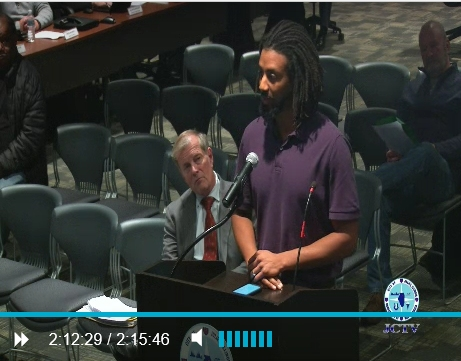
JOLIET, IL — Joliet is one of the only communities in Will County to approve the sale of recreational marijuana starting this year and one of the city's leading social justice advocates, Ernest Crim, recently thanked the Joliet City Council for making the right decision.
Crim, who is a high school teacher, public speaker and diversity trainer, addressed the city council at a recent December meeting.
With limited edits, here's the speech Crim gave to Joliet's City Council explaining the history of marijuana prohibition in this United States.
Find out what's happening in Jolietfor free with the latest updates from Patch.
"Marijuana has not always been illegal in America or the world," Crim began. "It hasn't always been demonized. It was made illegal after Prohibition strategically to lock up black and brown people.
"It was propagated that black and brown people, when they smoked weed, were more prone to 'lust for white blood.' This was the beginning of prohibition for marijuana in this country because they feared they would actually lose money after alcohol was legalized again.
Find out what's happening in Jolietfor free with the latest updates from Patch.
"From the late 1930s to the late 1970s, black and brown people were locked up disproportionately. In the 1970s, (President) Richard Nixon said to his aide who was quoted as saying that we have to disrupt these black communities. We have to disrupt these hippie communities and we can't outright say we want to do that so what we need to do is lock them up more for using marijuana and heroin."
At that point, Crim reflected on the incarceration numbers for minorities.
"Over the past 40 years, the incarceration rate in this country has improved by 500 percent. Black people make up 40 percent of the prison population and 13 percent of the general population. With that said, we know there are no adverse effects from using marijuana. You're not more prone to criminality. You can actually make an argument that you're more prone to criminality by drinking excessively.
"So, as we stand at this point in history ... I think you all have a very important position to make history as we're one of the very few cities in this county to actually allow (marijuana) and I commend you for making that historic jump."
Lastly, Crim asked the council to help make the areas of the city stronger that were negatively impacted by having a disproportionate number of marijuana incarcerations. "If we repair the communities who have been disproportionately affected, most of these are black communities, Mexican communities that have been red-lined strategically to keep them in poverty ... Do the right thing and I think that history will tell the story, 50 years down the line, 100 years down the line, that Joliet did what was right once again."
Prior to Crim's remarks to the Joliet City Council, one of the local church pastors asked whether Joliet will use the city's future revenues from recreational marijuana sales to put it back into minority neighborhoods and parts of the city that were negatively impacted from marijuana incarcerations.
However, interim city manager Steve Jones responded that the city's plan for now is to put all the marijuana revenue into the city's general fund, rather than designate it for a specific program.
RELATED: Joliet's New Pot Store By Louis Mall Opens At 6 AM Jan. 1.
Get more local news delivered straight to your inbox. Sign up for free Patch newsletters and alerts.