Schools
Fifth-Graders Build Tech Skills in Robotics Unit
Lake Bluff School District offers first-time program.


At the end of the lesson, technology curriculum specialist Laurie Brown instructed the budding engineers to put their USB cords away.
“I didn’t know what (a USB cord) was before we did this,” said fifth-grader Sasha Zoubareva. “I had heard the word, but I didn’t know what it was for.”
She does now.
Find out what's happening in Lake Forest-Lake Blufffor free with the latest updates from Patch.
During teacher Bethany Plapp’s fifth-grade science class last week, students completed the final part of a robotics unit.
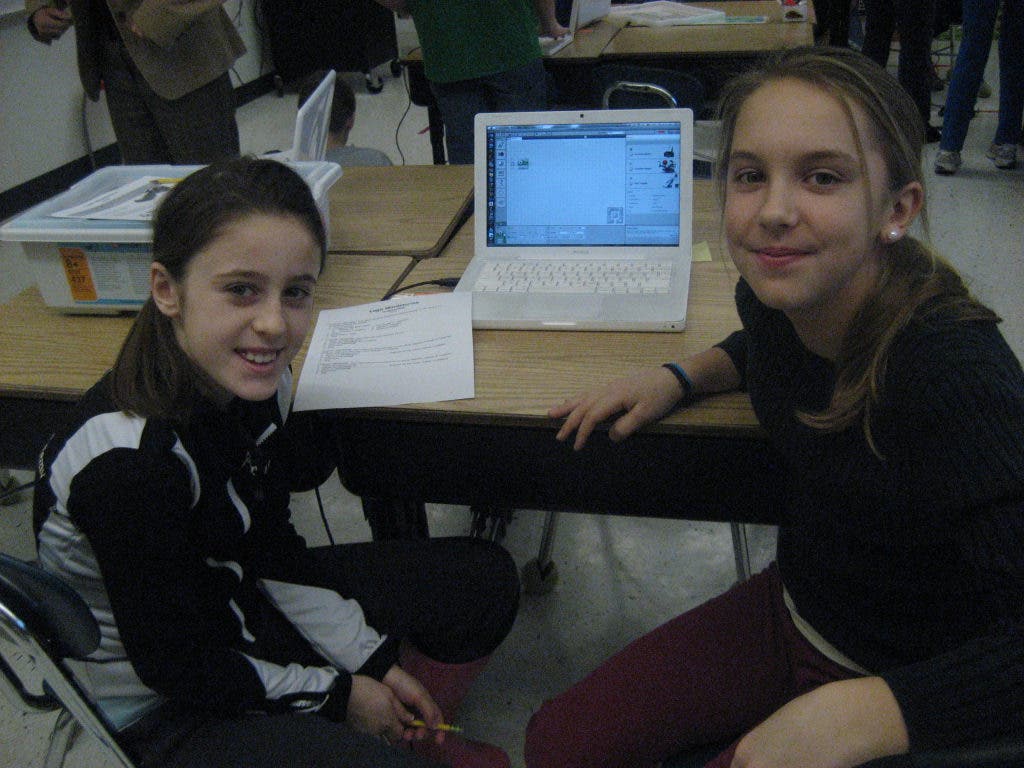
Working on MacBook laptops in teams of two, the students attempted to program their LEGO Mindstorms robots, which they also built and engineered. The goal was to get the robots to move in precise measurements and angles, tying in with Plapp’s lessons on motion and design.
“We’re programming (the robot) to do a certain task,” said fifth-grader Alex Ma. “You can time the ports using action blocks. It’s easy.”
While it might not sound as easy to older generations, kids are becoming acquainted with technology at younger ages — honing important skills they will need to survive the modern world.
“I like computers a lot. I use (the one at home) for making and editing movies and programming stuff,” said Josh Kowalski, who said he uses computers every day at school, and at minimum three hours a day on weekends.
“It’s an important lesson because (kids) have to be more tech-savvy, they have to know how to put things together and make them run,” said Plapp. “They are all very familiar with technology from playing video games and other stuff at home. Bringing in the technology they use at home gets them more excited about learning.”
Despite growing up in the age of technology, the novelty of working with robots is not lost on the 10- and 11-year-olds.
“At lunch, I heard that another class was working on robots. I was excited when I heard it was coming to us and we could build our own robot,” said Zoubareva.
Most students said the biggest challenge was programming, and many enjoyed building their bots.
“They’re all pretty interested. Some of them want to learn faster and see what else they can do,” Plapp said. “We put the students with same-gender partners because the boys tend to be more hands-on. We wanted the girls to get a chance to work with the robots.”
On the computer screens, images showed the students exactly what element they were working with as they adjusted the robots to rotate or move in precise degrees or measurements. Following a set sheet of tasks, the students learned by trial and error to program their robots.
Brown ran the unit with Plapp in the first year the school has taught robotics, beginning with an afterschool program. Brown said it may be taught to groups of fourth- and fifth-graders next.
The lesson “deals with logic,” Brown said. “You have to program everything. You have to be accurate and specific. It also gives them a chance to use math. The manuals are all laid out in pictures, so you really see who is adept at spatial reasoning. If they did not build it right, the programming won’t work. It shows them that engineers rethink and retry.”