Schools
186 District 95 Students Use English Language Learner Program
Program assists students in becoming more fluent and literate in English
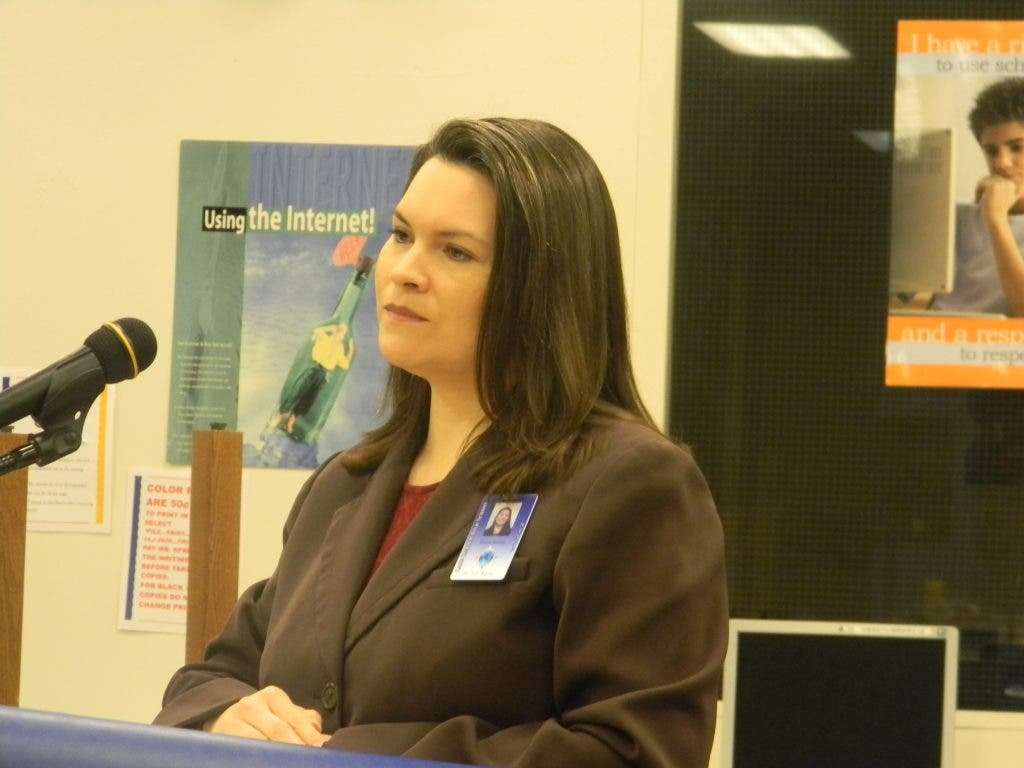

There are currently 186 students who have accepted services from Community Unit School District 95’s English Language Learner (ELL) program, according to Stacie Noisey, school administrator.
Noisey presented a program update at the recent District 95 Committee of the Whole meeting. The program assists bilingual students in becoming more fluent in speaking English, as well as improving their reading skills.
Currently, ELL students are mostly serviced through a pull-out model at the elementary schools. At the middle schools and high school, students are serviced during regularly scheduled periods, and may be seen more than one period a day.
Find out what's happening in Lake Zurichfor free with the latest updates from Patch.
“The program builds information in the students’ native language, and then transitions students into English,” explained Noisey.
With the exception of Isaac Fox, there is a full-time ELL teacher at all of the elementary schools. Middle School North also has a full-time teacher, while Middle School South and Lake Zurich High School have a part-time teacher. The part-time teacher at Middle School South is also assigned to the adjacent Isaac Fox elementary school.
Find out what's happening in Lake Zurichfor free with the latest updates from Patch.
Students are provided services in the district’s ELL program based on their language proficiency standards and their language levels on the WIDA-ACCESS Placement Test (W-APT) screener. At the time of registration, parents complete a home survey, and based on the information furnished in the survey, students can be identified for a language proficiency assessment through the W-APT. The test measures skills in speaking, listening, reading, and writing.
Students are subsequently placed in the ELL program if a language need is identified through the screening process and the parents give their consent.
Besides the screening assessment, there also is a state requirement to administer the ACCESS test to all ELL and Limited English Proficient (LEP) students in grades K-12 during a testing period in January and February of each school year.
“This assessment measures language proficiency in English and helps us address the instructional needs of the ELL students,” said Noisey. “The scores from the assessment also assist us in determining continued placement or exit from the ELL program.”
The state mandated last year that students shouldn't be dismissed from ELL services unless they have a composite score of 4.8 and a literacy composite score of 4.2. Ell students are also required to participate in the ISAT and PSAE assessments. Their scores are included in the district totals.
There are currently two different ELL programs in District 95. The Transitional Program of Instruction (TPI) is provided for students in which there are less than twenty speakers of that language in an attendance center.
The program assists students both in the development of English language skills and academic skills. Students receive English instruction from an ESL-approved or endorsed teacher. Students from different language groups can participate in the same ESL class according to their age and language level. Students with less English language proficiency are also able to receive additional service.
The Transitional Bilingual Education (TBE) program was implemented in three elementary schools during the 2010-11 school year for facilities with 20 or more students who have limited English proficiency and speak the same native language.
Sarah Adams, Seth Paine and May Whitney all have had additional Spanish-speaking bilingual staff added to serve as resource teachers for the TBE program.
The program also includes daily instructions in native literacy for students in grades K-2, and ESL instruction with native language support based on the educational needs of Spanish-speaking students. The objective is to gradually transition students over to English-only instruction.
“We’ve given all students in both programs books to read at home,” said Noisey. “This emphasizes the literacy aspect of the program."
There are 100 Spanish-speaking students who participate in the ELL program, by far the largest group. There also are 19 Polish-speaking students, 17 Russian-speaking students and six Korean and Telugu-speaking students.
Additionally, there are students who speak Bulgarian, Cantonese, Czech, French, Gujarati, Hindi, Japanese, Lithuanian, Mandarin, Pilipino, Romanian, Slovak, Swedish, Thai and Vietnamese.
ELL program recommendations at the meeting included:
- Increase staffing to include a teacher who is both certified in Early Childhood and endorsed to teach English as a Second Language to meet the newest state mandate for pre-kindergarten students.
- Create a team-taught, sheltered instruction history class at high school
- Continue cohesive implementation of staff development to provide research-based strategy instruction for regular education, special education and ELL teachers.
- Continue with efforts to develop and align the ELL and bilingual curricula with WIDA standards and local objectives.
- Plan and implement activities for District 95 families and ELL students to promote increased parental and community participation.