Politics & Government
EPA: Sulfur Dioxide Designation Tied to Stricter Air Quality Standards, Not Increased Emissions
Illinois EPA to recommend Lemont as non-attainment zone under Clean Air Act.


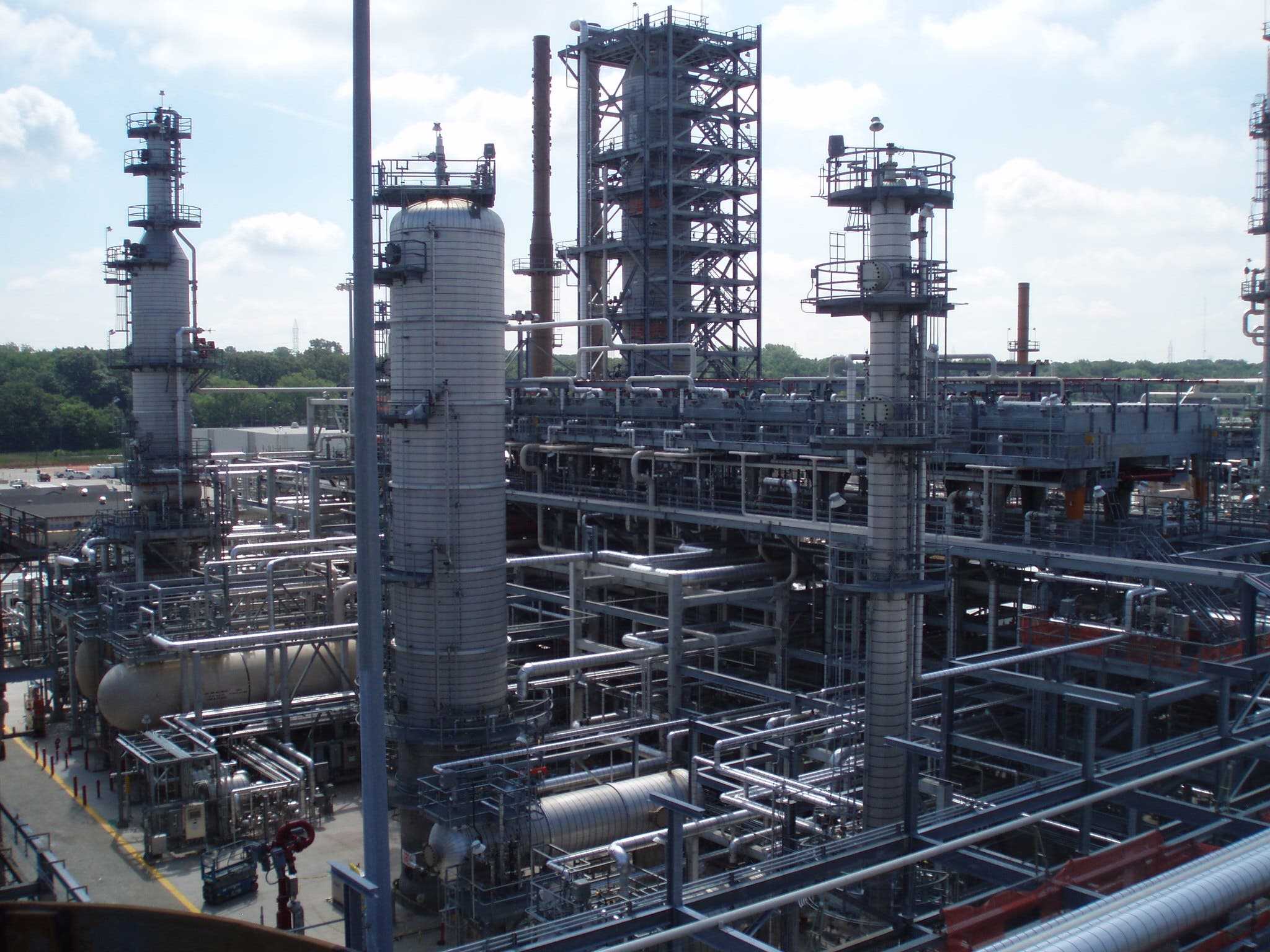
Lemont Township will officially be reported to the United States Environmental Protection Agency next week for failure to meet the more stringent standards established last year for sulfur dioxide concentrations in the air.
The Illinois EPA Bureau of Air announced last week that it would be recommending to the EPA that four areas in Illinois—Lemont, Oglesby, Pekin and Wood River—be designated as "non-attainment" for the new sulfur dioxide levels set by the Clean Air Act in June 2010.
Robert Kaleel, manager of the air quality planning section within the Illinois EPA Bureau of Air, held a public meeting at the Lemont Township Community Center on Wednesday to discuss the recommendation and its implications with residents.
Find out what's happening in Lemontfor free with the latest updates from Patch.
According to Kaleel, the U.S. EPA adopted the National Ambient Air Quality Standard last year in an effort to improve public health protection. Short-term exposure to sulfur dioxide is linked to a number of respiratory problems, including increased asthma symptoms and narrowing of the airway, he said.
The new one-hour standard is set at 75 parts per billion, which the EPA found would protect public health by reducing the public's exposure to high short-term concentrations of sulfur dioxide.
Find out what's happening in Lemontfor free with the latest updates from Patch.
The previous standards were 140 parts per billion evaluated over 24 hours and 30 parts per billion evaluated over an entire year, according to the EPA website.
Kaleel said the new one-hour standard was adopted because there is little evidence to suggest any connection between long-term exposure to sulfur dioxide and adverse health effects.
"We haven't worried too much about sulfur dioxide," he said. "For the most part, the EPA felt that the state of Illinois was complying with standards. Last June, however, the standard was strengthened significantly."
To evaluate air quality across the state, the Illinois EPA evaluated monitor readings from 2008 to 2010, averaging the highest one-hour concentration from each of the three years.
As of last year, there were more than a dozen air quality monitors in place throughout the state. Lemont's is located near the Houston Street water tower.
The three-year average of sulfur dioxide levels measured by the Houston Street monitor registered at 100 parts per billion—the third highest concentration in the state, Kaleel said.
The highest concentration was found in Pekin, where the three-year average was 235 parts per billion.
Sources of sulfur dioxide
Kaleel identified several sources of sulfur dioxide in Will and Cook counties, including the Exxon Mobil and Midwest Generation facilities in Joliet.
Based on an analysis of wind patterns and the times when sulfur dioxide readings were highest in Lemont, the Illinois EPA found three companies to be the primary contributors: Midwest Generation's Will County Station, the Citgo Lemont Refinery and Oxbow Midwest Calcining.
"From this simple analysis, we think it's a close, local scale problem," Kaleel said.
Designation tied to stricter standards
According to Kaleel, the non-attainment designation does not mean the surrounding facilities are failing to comply with laws or standards. To his knowledge, none of the companies identified as sources of sulfur dioxide were violating requirements, he said.
"The sulfur dioxide levels are getting better," he said. "They're pointing to reductions, but levels are still too high. They still have a ways to go.
"The air quality is getting better, certainly not worse. The reason we're here is because the standards are stricter."
Peter Colarelli, government and public affairs manager for the refinery, said Citgo was "in good shape" in terms of sulfur dioxide emissions.
In 2007, the refinery, which is at New Avenue and 135th Street, completed the $142 million Clean Stack — two high-tech units meant to minimize emissions and improve air quality. According to the Citgo website, the Clean Stack reduced sulfur dioxide emissions by 98 percent.
Midwest Generation, which is located along 135th Street just southwest of Citgo, has also made significant efforts to reduce sulfur dioxide emissions, according to spokeswoman Susan Olaverria.
"We as a company want to be part of the solution," she said. "We have a long history of being progressive and responsive to the EPA."
According to Olaverria, Midwest Generation made a landmark agreement with the Illinois EPA in 2006 to install controls for the reduction of mercury, nitrogen oxide and sulfur dioxide.
The first phase of the agreement, which implemented mercury controls, was completed in 2009. The second phase, which will implement nitrogen oxide controls, is on track to be completed in January 2012.
The third phase, which will reduce sulfur dioxide emissions by 84 percent is expected to be completed between 2013 and 2018, Olaverria said.
Since 1999, the Will County Station has reduced emissions of sulfur dioxide by 32 percent, she added.
What does it mean?
The major impact of an area being designated as non-attainment is that there are stricter regulations on potential new sources of pollutants and modifications to existing sources, Kaleel said.
Once final designations are made, the EPA will go to work on maintenance or infrastructure plans based on dispersion modeling.
"What we'll try to do is use models to replicate the values [we want to achieve]," he said. "We'll use the models to reduce emissions."
The ultimate goal is to bring the area's sulfur dioxide concentrations down to the new standard, he added.
Timeline
The non-attainment recommendations will be submitted to the U.S. EPA next week, Kaleel said.
The EPA then has until June 2012 to make its final decision about designations. Once non-attainment areas are officially certified, the EPA will go to work on maintenance plans, which are due in June 2013.
Plans to achieve attainment are due by June 2014, with the achievement goal set for June 2017.
"It's a slow process," Kaleel said. "The plan we come up with [to reduce emissions] has to be enforceable ... We will work with the companies to make sure these things are feasible and the schedule is reasonable.
"If we stay on schedule, by 2014 there will be enforceable requirements."
Once the companies have implemented new controls and reduce emissions, the area can be reclassified to attainment status, Kaleel said.
Get more local news delivered straight to your inbox. Sign up for free Patch newsletters and alerts.