Kids & Family
Educational games to beat the summer slide
Five educational games to help you beat the summer slide recommended by LearningRx Chicago Naperville.
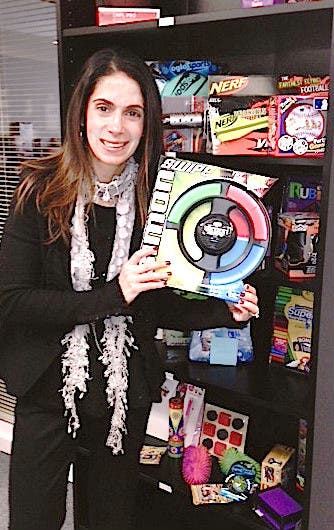
Research shows ALL young people experience learning losses when they don’t engage in educational activities during the summer.
“It doesn’t have to be that way,” said Mia Tischer, executive director of LearningRx Chicago-Naperville. “Think of it like this: The brain is like the body. If you exercise it, you improve it, but if you let it sit idle, it’s going to lose ability.” To avoid the summer slide, Tischer recommends brain games and exercises that build cognitive skills, the underlying skills needed to learn.
Thousands of LearningRx graduates and their parents know the power of building those cognitive skills. Many who come to LearningRx Chicago-Naperville have learning struggles, like not remembering what they read, problems staying focused and taking hours to do simple homework.
Find out what's happening in Napervillefor free with the latest updates from Patch.
One parent said, “Before the training, I would sit right beside my child for at least three hours a night making sure he did his homework, and he struggled to get C’s.” After training with a one-on-one coach, she reported, “Now, he does it all on his own, in 30 minutes.”
The best way to build those mental skills quickly and effectively is through an intensive LearningRx brain-training program, said Tischer. “With our intense game-like exercises we can see growth of many years in key areas like logic and reasoning, attention, processing speed and auditory processing. But, to prevent the summer slide, parents and kids can use free, fun games and exercises at home, in the car, and even online.”
Find out what's happening in Napervillefor free with the latest updates from Patch.
Here are just a few of the free and fun brain-training games Tischer recommends:
· Mental Tic Tac Toe: Similar to traditional Tic Tac Toe, this game uses a ‘mental’ grid numbered 1 to 9. Players remember where their opponent has already been and call out an unoccupied space. The player who calls an occupied space loses.
What it helps: Attention, logic and reasoning, and working memory.
· Needle in a Haystack: Take a page from a newspaper and time your child as she circles all occurrences of a specific letter. Focus on increasing both accuracy and speed.
What it helps: Visual processing speed
· 20 Questions: Think of a person or object and give your child 20 chances to narrow down what you’re thinking of by asking yes or no questions. To help them improve their logic and reasoning, teach them to strategize by using questions that will significantly narrow down the categories, such as “Are they alive?” or “Is it bigger than you?”
What it helps: Logic, reasoning, memory
· Poetry: Have your child choose four words that rhyme and then ask them to use those words to create a poem or a rhyming song. Or say a word, then have them come up with another that rhymes. Keep this pattern going as long as possible, then start with a new word.
What it helps: Auditory analysis, verbal rhythm, memory
Simply getting your child to read every day is another powerful way to slow the summer slide. According to Scholastic Parents Online, research shows that reading just six books during the summer can keep a struggling reader from regressing. When choosing the six, make sure they’re the right level - not too hard and not too easy.