Health & Fitness
Edward Hospital's early rehab key to recovery for stroke victims
Edward Hospital's physical and occupational therapists use innovative therapy to spur recovery for stroke victims.

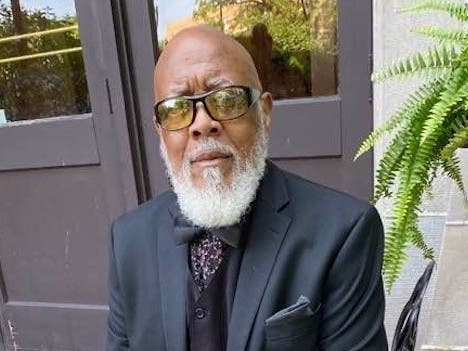
In 2006, Terry McGuire suffered a heart attack, flat-lined on a Wisconsin operating table during emergency bypass surgery, and survived. At the time he was a 59-year-old healthcare executive and ordained deacon in the Catholic Church. After this experience, he says, “I decided God wasn’t done with me yet.”
But his health challenges continued over the years, culminating in a stroke on the right side of his brain in August 2014.
McGuire, now a Naperville resident, was treated in the Edward Hospital ER and admitted to Edward Hospital. The stroke caused the greatest impairment to his left arm and hand, but it also weakened his left leg. His overall energy and balance also took a hit. But just one day after the stroke, he was taking short walks down the hall with assistance.
Find out what's happening in Napervillefor free with the latest updates from Patch.
“Getting patients moving as soon as possible is key to minimizing weakness and physical impairment,” says Jen Matern, inpatient rehab manager at Edward. “At Edward we can now even get some of the patients who are on ventilators into early mobility and rehab. Academic medical centers have been doing this, but it’s unusual for a community hospital.”
McGuire’s primary concern was the limited use he had of his left arm and hand. In her assessment of McGuire the day after his stroke, occupational therapist Mara Sonkin determined he had only about 4 psi (pounds per square inch) of grip strength in his left arm, compared to the 85 psi that’s average for a man.
Find out what's happening in Napervillefor free with the latest updates from Patch.
“In rehab we help patients re-learn skills that are lost as a result of the stroke,” says Matern. “While damaged parts of the brain don’t come back after a stroke, the brain responds to injury by reorganizing and forming new neural pathways.”
The day following a two-night hospital stay, McGuire began weekly outpatient sessions with Sonkin, who would be his therapist throughout his occupational therapy.
Occupational therapists help patients learn to perform their daily activities safely so they can regain as much independence as possible. For McGuire, the focus was on strength training and regaining dexterity in his arm and hand.
Sonkin used traditional techniques, such as intense repetition of activities that are broken down into their smallest components. She also incorporated some newer strategies such as visualization, in which the patient mentally rehearses the desired movement. There’s evidence to suggest this type of exercise can support recovery.
“Therapy can be futile if you’re not also willing to do your homework both during the time you’re in therapy and after,” says McGuire. “From the beginning, Mara provided me with the direction, support and affirmation to do some of my exercises at home.”
According to Sonkin, “When Terry finished his therapy in late January he had regained about 80 to 90 percent function in his left arm.”
Many stroke rehab patients struggle with depression. The Edward rehab department administers depression screenings before and after discharge and share the results with the patient’s primary care physician.
McGuire has been able to stay optimistic. He’s retired from healthcare, but he’s back to work as a deacon.
“I’m grateful for every day that I have, and for the doctors, therapists and others who helped me,” he says. “I’m happy I have the time to spend with my family, including the latest light of my life, my 18-month-old granddaughter, Nyomi.”
For more information, visit www.edward.org/rehab.