Health & Fitness
Walk-In Clinic visit leads to successful treatment of two life-threatening conditions
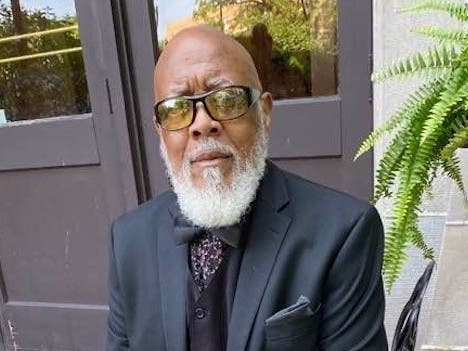
Dr. Ralph Hoover did a test that confirmed an aneurysm. He describes it as "one of the largest I've ever seen."

On May 9, 2017, after three days of pain in her lower back and abdomen, Naperville resident Sharon Bohlin, 68, decided it was time to get medical help. She assumed her problem was kidney-related because she’d had earlier episodes of stones and infection.
But when Margaret Wright, APN, talked with Bohlin at the Edward-Elmhurst Walk-In Clinic in the Jewel-Osco at 2855 W. 95th St., she thought that something more serious might be going on. She advised Bohlin to head to the Emergency Department.
Bohlin’s husband, Bruce, drove her to the Emergency Department on Edward Hospital’s Plainfield campus, where Ralph Hoover, MD, an emergency medicine physician, examined Bohlin.
Find out what's happening in Napervillefor free with the latest updates from Patch.
“I felt a pulsating mass in her abdomen that I thought could be an abdominal aortic aneurysm,” recalls Dr. Hoover.
An aneurysm is a bulging, weak spot in the aorta. If it ruptures, it can lead to serious bleeding and even death. Dr. Hoover then did a bedside abdominal ultrasound, which confirmed an aneurysm. He describes it as “one of the largest I’ve ever seen.” He then ordered a CT scan for more detail.
Find out what's happening in Napervillefor free with the latest updates from Patch.
“There also was a line on the ultrasound image that suggested the aneurysm had started to rupture,” says Dr. Hoover. “She needed emergency surgery.”
The Edward Hospital Operating Room staff was notified and Dr. Hoover alerted James Walsh, MD, a cardiovascular surgeon with Cardiac Surgery Associates. Within a half hour of Bohlin’s arrival in Plainfield, she was being transported by ambulance to Edward Hospital in Naperville.
She says, “This whole experience went very quickly. I do remember the anesthesiologist telling me before the surgery that this was very serious.”
Using a graft, Dr. Walsh successfully performed the delicate surgery to repair the aneurysm. But afterward, Bohlin was to hear still more concerning news about her health.
As she recovered in the ICU over the next few days, the staff began to see signs of other coronary problems. EKGs, blood work and an angiogram confirmed that she had critical coronary artery disease. She would need triple bypass surgery to redirect blood flow in the arteries that showed blockage.
But, she couldn’t have the surgery right away because she needed time to recover from the procedure to treat her aneurysm. In the interim, after she was discharged from the hospital, her cardiologist, Mark Duerinck, MD, of Advocate Medical Group, had Bohlin wear a Zoll Life Vest – a defibrillator for patients who might be at risk of sudden cardiac arrest. If a life-threatening arrhythmia is detected, the device sends a shock to the patient to restore a normal heart rhythm.
“We had hoped Sharon could have more recovery time before the bypass surgery,” explains Bryan Foy, MD, system medical director, cardiac surgery, Edward-Elmhurst Health, and a cardiothoracic surgeon with Cardiac Surgery Associates. “This would give her a chance to build up nutritionally for better wound healing and ability to fight infection. But we weren’t able to get the time we had hoped for after all.”
Three days after returning home, Bohlin’s Life Vest alarm went off twice. According to Dr. Foy, she was showing short runs of ventricular tachycardia, a type of rapid heartbeat that can be life-threatening. She was readmitted to Edward where she was monitored for a few days while she built up her strength. On May 25, Dr. Foy performed the triple bypass surgery, which went as planned.
Dr. Foy says, “Her recovery was the concern. She had just begun to get up off the mat after a big knockdown (the aneurysm surgery) and now she’s taken another hit. But she’s done remarkably well.”
“Everyone in the hospital was astounded at how well I did,” says Bohlin, who adds that she had the support of her family throughout the ordeal. “And everyone at the hospital was kind – the doctors and nurses, techs and transporters. I watched the doctors working together and they kept me in the loop. I didn’t feel like an outsider in my own healthcare.”
Now home, the retired social studies teacher’s personal lesson plan includes physical therapy exercises and cardiac rehab.
“My goal is to be doing much better (in a few months),” she says.
For more information about Edward-Elmhurst’s cardiac services, visit www.eehealth.org/services/heart-vascular. To learn more about Edward-Elmhurst’s Walk-In Clinics, visit www.eehealth.org/services/walk-in-clinics.