Neighbor News
Silver Cross Nurse Helps Save Friend’s Life on Pickleball Court
Jill Sauerwein, RN, was in the right place at the right time on July 13.

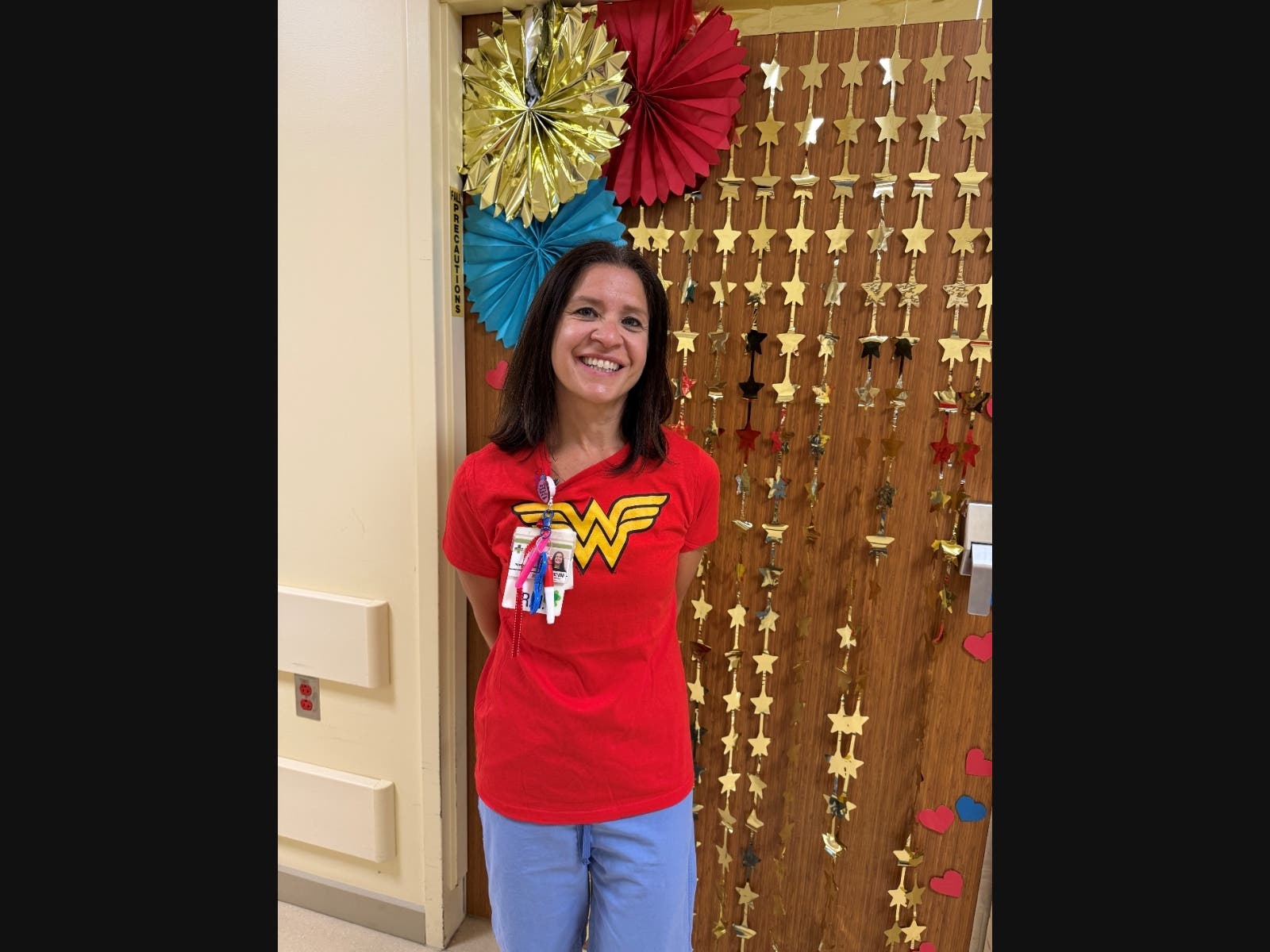

When a routine evening of pickleball suddenly became a life-or-death emergency, Silver Cross Hospital Nurse Jill Sauerwein relied on years of training, quick thinking and teamwork to help save a friend’s life.
On July 13, Sauerwein was playing pickleball at Game Changers in Channahon when she heard someone calling for help. A fellow player had collapsed on the court.
“As soon as I saw somebody down on the ground, instinct just kicked in,” she said. “You don’t think about anything else in that moment except everything you’ve learned through CPR and BLS training.”
Find out what's happening in New Lenoxfor free with the latest updates from Patch.
When Sauerwein reached the scene, a retired physician and a retired EMT were already checking for breathing and a pulse. Someone had retrieved the facility’s automated external defibrillator (AED), but wasn’t sure how to use it.
Sauerwein, who works in the hospital’s Interventional Pre/Post Recovery performing transesophageal echocardiograms (TEEs) and cardioversions, immediately stepped in.
Find out what's happening in New Lenoxfor free with the latest updates from Patch.
“I work with cardiac patients all the time, so I’m very familiar with placing defibrillator pads,” she said.
After the AED analyzed the patient’s heart rhythm, it advised a shock. Sauerwein cleared the patient and delivered the shock before beginning high-quality CPR. A second shock was administered before emergency responders arrived and took over care.
At the hospital, physicians determined the patient had suffered a massive heart attack and was in ventricular fibrillation, a life-threatening heart rhythm. The following day, he underwent a procedure to place a stent and restore blood flow.
Just weeks later, he’s in cardiac rehabilitation and expected to make a full recovery.
Looking back, Sauerwein credits the successful outcome to the rapid response and teamwork of everyone involved.
“It was almost like an American Heart Association training video,” she said. “From calling 911, to getting the AED, to checking for breathing and a pulse, and starting CPR, everything happened exactly how it was supposed to.”
She believes the speed of the response made all the difference.
“The fact that I yelled for someone to get an AED and it was already there. Everything happened so fast,” she said. “I’m certain that’s what gave him the best outcome.”
While Sauerwein remained focused during the emergency, the emotional impact came later. The experience was especially meaningful because the patient was a friend.
“It's emotional any time someone is in a life-threatening situation and you play a role in their care,” she said. “But when it’s a friend, it really hits home even harder.”
Brandy Underhill, Director of the Interventional Suites at Silver Cross, added, “Jill’s actions exemplify the very best of nursing professionalism, clinical expertise and compassionate care. We are incredibly proud to have Jill as a member of our team. She embodies Silver Cross Hospital’s commitment to excellence, service and caring for others both inside and outside the hospital.”
Despite the praise she has received, Sauerwein remains humble.
“I don't feel like a hero,” she said. “I feel like God put me there in the right place at the right time with the right people. I’m blessed that I was able to provide the care I did for a friend in that moment.”
A nurse for 25 years, Sauerwein says she was simply doing what she was trained to do. Her message to others is simple: “Doing something is better than doing nothing. If you’re offered the opportunity to take an AED, BLS or CPR course, take it. Anybody can learn it, and you never know when you might have the chance to save a life.”
In fact, today, members of the hospital’s Heart Walk Committee demonstrated hands-only CPR outside the dining room between 11 a.m. and 1 p.m. for visitors, patients and anyone who needed a refresher.
According to the American Heart Association, more than 350,000 cardiac arrests occur each year outside a hospital, and nearly 70% of them happen in the home, meaning you are most likely to help a loved one.
A majority of Americans incorrectly believe hands-only CPR can only be performed by those with specialized training, but the truth is, immediate bystander CPR triples a person’s chance of survival.
For more information, visit silvercross.org