Politics & Government
Niles Will Tackle Flooding Problem, But It Will Cost Residents
Consultant outlines the plan; village considers ways residents and businesses will pay for it.

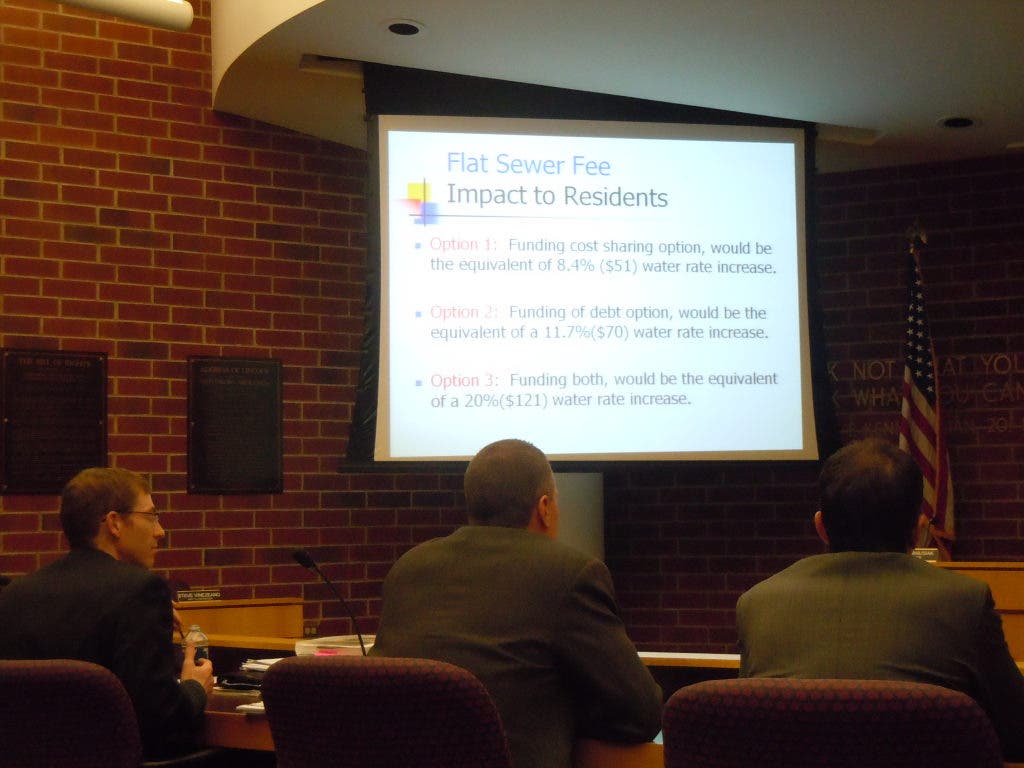
Some Niles residents have for years, and they want relief. A significant milestone on the path to that relief happened Tuesday, when a consultant made a presentation about its work to the village board.
Jeff Wickenkamp, vice president of consulting firm Hey and Associates, gave a detailed report of Niles' flooding situation, complete with color illustrations of Niles' watersheds and sewer system. Village staff, along with Hey, have been mapping the system, and measuring depths, in the wake of the September 2008 100-year-storm. They've also been meeting with the village's Stormwater Commission to identify problems and think about solutions.
Earlier:
Find out what's happening in Niles-Morton Grovefor free with the latest updates from Patch.
To fix the problems, Hey is recommending capital improvements, such as water storage reservoirs and larger pipes, which would cost $20 to $36 million for Phase One, and $5 to $10 million for Phase 2.
Property owners will pay the costs
Find out what's happening in Niles-Morton Grovefor free with the latest updates from Patch.
The village's finance director, Scot Neukirch, suggested various ways to pay those costs. Ideas included raising property taxes, raising sales taxes, charging a sewer fee (which the village does not do now), charging a garbage fee (which the village does not do now) and charging a fee based on what percentage of one's lot is impervious.
Complicating matters, Neukirch said, is the fact that the city of Chicago announced it will raise what it charges for water by 100 percent over the next four years. Residents, who now pay an average of $606 annually for water, will have to shoulder that cost, plus the additional costs for flood prevention.
A few hundred homes hardest hit
The consultant's presentation showed details about the areas of Niles hardest hit by flooding. Wickenkamp identified the following information (from Phase 1 of its analysis; Phase 2 will soon begin):
- 300 homes have experienced basement backups in events less than the 10-year storm (a 10% annual probability)
- 200 homes are subject to 10-year overland flooding
- 520 homes are subject to 100-year overland flooding
Fixing the problem will involve both the large capital projects, which will benefit the entire village, and village-homeowner cost-sharing problems, in which hard-hit individual homeowners and the village will split the costs of the solution.
Cost-sharing programs: Flood prevention up to $5,000
For example, if a home needed a flood prevention system such as overhead sewers to stay dry, the homeowner and the village would each pay 50 percent of the cost, with the village paying a maximum of $5,000.
Some homes will be able to eliminate flooding with a backflow prevention valve, which costs less than an overhead sewer, but Wickenkamp indicated overhead sewers are the preferred technology.
According to a very preliminary proposal, the village could spend a maximum of $220,000 per year on this cost-sharing, which would allow it to fund 44 homes per year.
Cost-sharing: Floodproofing
For homeowners who need floodproofing work on their homes, the village would pay 50 percent under the preliminary proposal, up to a maximum of $10,000. With $50,000 budgeted for this on the village's part, it could fund five homes per year.
More cost-sharing: Rain gardens, rain barrels, local drainage
The consultant proposed the village susidize rain barrels at a cost of $25 to the homeowner. Rain barrels collect water from downspouts and store it for later use, such as washing a car or watering a garden. During a stormwater event, though, they minimize the amount of water available to cause flooding. $5,000 would cover the village's share of 200 rain barrels per year.
The proposal also calls for the village to cost-share up to $2,000 to enable homeowners to put in a rain garden, with plants that soak up water and divert it from basements, on their property. A $20,000 outlay on the village's part would enable it to cost-share with 10 homeowners per year.
The village would also spend $100,000 helping homeowners make local drainage improvements, and $55,000 on a project manager to oversee the program, for a total of $450,000 in cost-sharing expenses related to flood prevention. That would be in addition to the larger dollar amounts for the capital projects.
Hey and Associates has completed Phase One of its analysis, and will start working on Phase Two. Over the coming months, the Stormwater Commission and the village board expect to consider and refine the plans.
Wickenkamp is recommending that the village sponsor an open house in February, in which residents can attend and ask questions about flood relief for their property and neighborhood.
Stay tuned to Patch for additional coverage.
Get more local news delivered straight to your inbox. Sign up for free Patch newsletters and alerts.