Spring rewards us for our endurance. I guess it’s sort of like that good feeling you get after spin class. (OK, I haven’t been to spin class for ages, but I remember.) As exhausted by winter as I am by the end of it, I can’t imagine spring seeming quite so sweet if I lived in a milder climate. I mean really, how can one truly appreciate those first warm days and the complete and utter freshness of an April morning living in Florida or Arizona?
Our local gardens come back to life about now, too, and tender lettuce and spinach salads may begin to appear on the table. I was shocked on my first visit to our community garden to see the spinach growing back happily from last year’s crop. I picked a few leaves and nibbled their sweetness right there in the garden. The garlic we had planted last fall was up two inches, its thin green spikes poking triumphantly through the mud.
But the vegetable that really makes me think of spring is asparagus. I can’t remember an Easter or Passover dinner without a platter of delicious asparagus during this beautiful season. The stores will be carrying locally grown bundles of ‘asparagrass,’ as my kids used to call it, and the hardy perennial will be popping up soon in other people’s gardens—its peak season runs through late April until early June—although not in ours.
Find out what's happening in Northbrookfor free with the latest updates from Patch.
This year I plan to remedy that by planting some asparagus crowns so that next spring we will be able to harvest our own. Asparagus, I have learned, can be planted in the spring or fall, and although it can be planted by seed, it is apparently easier to buy year-old crowns and space them widely. You must wait at least one season before harvesting, but once established, asparagus patches can continue to produce for years.
Cultivated long ago for its medicinal properties, asparagus was thought to aid blood cleansing and was also used for diuretic purposes. During the Renaissance it was even believed to be an aphrodisiac and was banned from the tables of nunneries! Today we know that it is a great source of folate and provides a good amount of fiber as well as substantial amounts of Vitamins A and C. It is low in calories—one half cup of cooked asparagus has 90 calories—and makes a great addition to your vegetable repertoire.
Find out what's happening in Northbrookfor free with the latest updates from Patch.
Although we usually think of asparagus as green, it does come in white and purple varieties, so try them all. Eat it raw as crudités with a dipping sauce, steam it and serve with butter, lemon or hollandaise sauce or cut it into small pieces and sauté it with olive oil, mushrooms and fresh herbs. Stir fry it, roast it, grill it, or wrap it in phyllo dough or prosciutto and bake it! I like to roast it, simply rolling the spears in a little olive oil, sprinkling them with sea salt and baking them in the oven at 350 degrees for about 20 minutes. You could add some chopped sundried tomatoes or minced garlic with the oil if you like more flavor.
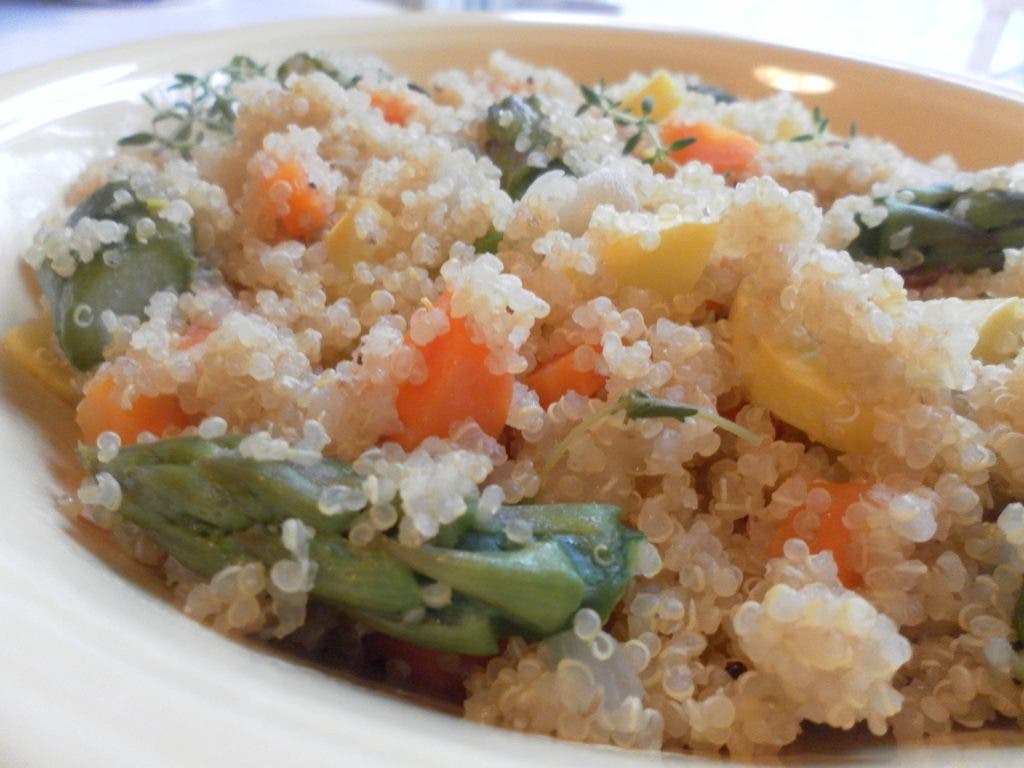
I’ve also incorporated asparagus into this vegetable and quinoa (keen-wah) medley. Quinoa is a super grain with tons of protein. It also contains all eight essential amino acids, which makes it a complete protein, great for vegetarians and those allergic to wheat and corn products. You could also use rice (but not instant) for this recipe. The same measurements would apply. InJoy!
Asparagus, Carrots and Yellow Squash with Quinoa
½ small onion, finely chopped
2 teaspoons olive oil
1 tablespoon fresh thyme, finely chopped
1 or 2 cloves garlic (depends on your love of garlic – I use 2)
1 cup quinoa
1 cup chicken broth (or vegetable broth)
1 cup water
3 medium carrots, cut into small pieces
1 small yellow squash, cut into small pieces
4 or 5 large spears of asparagus, cut into 1-inch pieces (cut off and dispose of the woody ends)
In a large covered pot, sauté the onions in the olive oil over medium heat for about 5 minutes. Add the garlic and thyme and continue cooking about 3 more minutes. Next, stir in the quinoa and the chicken (or vegetable) stock. Cover and continue to cook over medium heat 10 minutes. Add the carrots and the water, cover and cook another 10 minutes. You may need to reduce the heat a bit, you don’t want it boiling.
Then add the yellow squash and asparagus, cover and cook another 5 minutes or so until the quinoa is fluffy and the vegetables cooked (but not overdone!) Serve with freshly ground pepper and shredded Parmesan cheese if you like. This makes a colorful side dish or a complete vegetarian meal.