Neighbor News
The Warrior’s Path to Self-Discovery
The True Meaning of Kung Fu

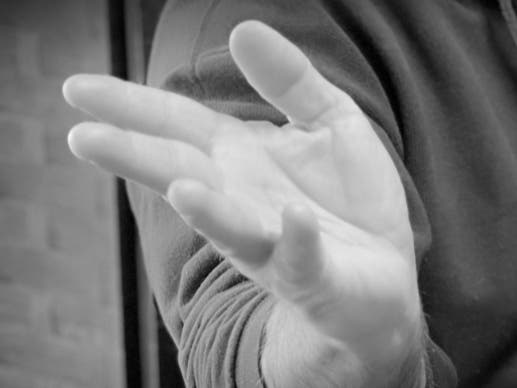
Having dedicated my life to the study and practice of traditional Kung Fu, Chi-Kung, and Tai Chi, I have come to understand that true mastery is not about defeating opponents but about self-improvement, perseverance, and understanding the flow of energy within and around us—our Life Force. Anyone can learn to fight and hurt another person, but to use that skill to heal and help others reach their full potential—that is the true meaning of Kung Fu.
A Lesson from Childhood
When I turned five years old, my mother bought me a bike. Not just any bike, but the most amazing bike any five-year-old kid could dream of—my very first bike. Being the youngest of 6, I was used to hand-me-downs. But at that moment, I had something that was truly my own.
Find out what's happening in Northfieldfor free with the latest updates from Patch.
Excited, I took my bike out for a ride with my older brothers, going round and round the neighborhood. Eventually, my brothers became distracted, talking to the girls next door, and that’s when the local bullies showed up. They wanted to ride my bike. Feeling confident with my brothers nearby, I stood my ground and told them, “No way! Leave me and my bike alone.”
What I didn’t realize was that my brothers were too busy flirting to notice what was happening. The bullies beat me up and took my bike. It wasn’t long before my brothers stepped in, put the bullies in their place, and got my bike back. But that incident left my mother shaken. She had already put my brothers in karate and judo, so her first thought was to get me into martial arts—to make sure that next time, I could defend myself when my brothers weren’t around.
Find out what's happening in Northfieldfor free with the latest updates from Patch.
Finding My Path in Kung Fu
And so my journey in martial arts began. Before long, I developed a desire for strength, discipline, and the ability to stand my ground. I trained rigorously, honing my techniques, perfecting my forms, and pushing my body to its limits. I competed in local, national, and international tournaments. Yet, over time, I realized that Kung Fu was far more than just a physical discipline—it had become a lifelong path of self-cultivation that extends beyond the training hall and into every aspect of my life.
Kung Fu became my life's passion.
As Bruce Lee once said, “To know oneself is to study oneself in action with another person.” True martial arts is not about defeating an enemy but about understanding ourselves through our practice and interactions. It is about helping others grow to their full potential and striving to be the best version of ourselves—without ever believing we are better than others.
Beyond Combat: The Philosophy of Kung Fu
In traditional Chinese martial arts, the term Kung Fu does not simply refer to fighting skills. It means “skill acquired through hard work and dedication.” The word Kung represents energy or power, while Fu signifies time. This concept applies to more than just martial arts—it applies to any craft, trade, or endeavor that requires patience, dedication, and effort to master.
True Kung Fu is about developing patience, resilience, and an unwavering spirit. It is about refining one's character through discipline, learning to adapt, and striving for mastery—not over others, but over oneself. This philosophy is known as “Wu Da”—the code of martial ethics, a moral compass that guides a warrior’s conduct in and out of the training hall.
Many students enter martial arts schools expecting to learn how to fight—some even with the intent to harm others. However, the hope is that as they go deeper into the practice, they will come to understand that real strength is not about overpowering an opponent but about mastering one's own fears, emotions, and impulses.
The Energy Within: Your Life Force, Your Chi
One of the most profound lessons I have learned through Kung Fu is the understanding of energy—both within ourselves and in the world around us. In Chi-Kung and Tai Chi, we cultivate Chi, the vital Life Force that flows through our bodies. This energy is not an abstract concept but a tangible force that can be developed, strengthened, and directed with focused intent.
At first, my training was purely physical. I wanted to perfect my movements and execute techniques with precision. But as I deepened my practice in Chi-Kung, I began to feel the flow of energy more clearly. I realized that Kung Fu is not just about external power—it is about internal balance.
When Chi is blocked, we feel stress, pain, and fatigue. But when it flows freely, we experience vitality, clarity, and a deep sense of peace. We learn to connect with our source, open heavenly energy channels, and see the world in its natural state of being. In my article, “Meditation and Movement,” I teach an exercise to help you slow down and connect. You can read it here: Meditation and Movement.
This understanding transformed my approach to teaching. I no longer focus solely on physical technique but emphasize the importance of breath, relaxation, and energy cultivation. Many students come to me for self-defense or exercise, but they often find something far greater—a deeper awareness of their bodies, minds, and energy. They reconnect with emotions and inner strength they had long forgotten. Witnessing these moments of self-healing and awakening is always an incredible experience.
Healing Through Chi
One of the most defining moments in my journey was my battle with health challenges. Undergoing quintuple open-heart surgery was a life-altering experience. The very foundation of my strength—my body—was put to the test. But through my practice of Kung Fu, Tai Chi, and Chi-Kung, I regained my strength, mobility, and confidence.
I share more about my journey to recovery here: Tai Chi for Healing: My Journey to Recovery.
Daily practice was not just about rebuilding my physical health—it was about reclaiming my sense of self. The slow, deliberate movements of Tai Chi helped me reconnect with my body, while Chi-Kung breathing techniques restored my energy. Kung Fu, once my tool for combat training, became my method of healing.
The True Meaning of Mastery
There is a saying in martial arts: “A true master is always a student.” Mastery is not about reaching an endpoint; it is about continuous growth. The deeper we go into our practice, the more we realize how much there is still to learn.
As Miyamoto Musashi, the legendary samurai, wrote in The Book of Five Rings:
"You must understand that there is more than one path to the top of the mountain."
This wisdom applies to both martial arts and life itself. There is no single way to mastery—only dedication, self-awareness, and an openness to lifelong learning.
True martial artists do not seek to prove their strength through violence but through quiet confidence, discipline, humility, and self-awareness. They use their skills not to harm, but to heal—themselves and those around them.
The Way of the Warrior
As a Sifu—a title that means teacher or master in Chinese—my focus is to pass on this wisdom, not just as a set of fighting techniques but as a philosophy for living. Whether through Kung Fu, Tai Chi, or Chi-Kung, my goal is always the same—to help individuals unlock their full potential, physically, mentally, and spiritually, by connecting with their Life Force and harnessing their Chi.
In the end, the greatest victory in Kung Fu is not over an opponent but over our own limitations. To train, to grow, and to use what we have learned to bring healing and balance to ourselves and others—that is the true meaning of Kung-Fu.