Politics & Government
Ahmed Karrar: State Senate 14th District Democratic Primary Candidate
Two will seek to unseat incumbent Sen. Emil Jones III in the March 17 primary. Meet candidate Ahmed Karrar.


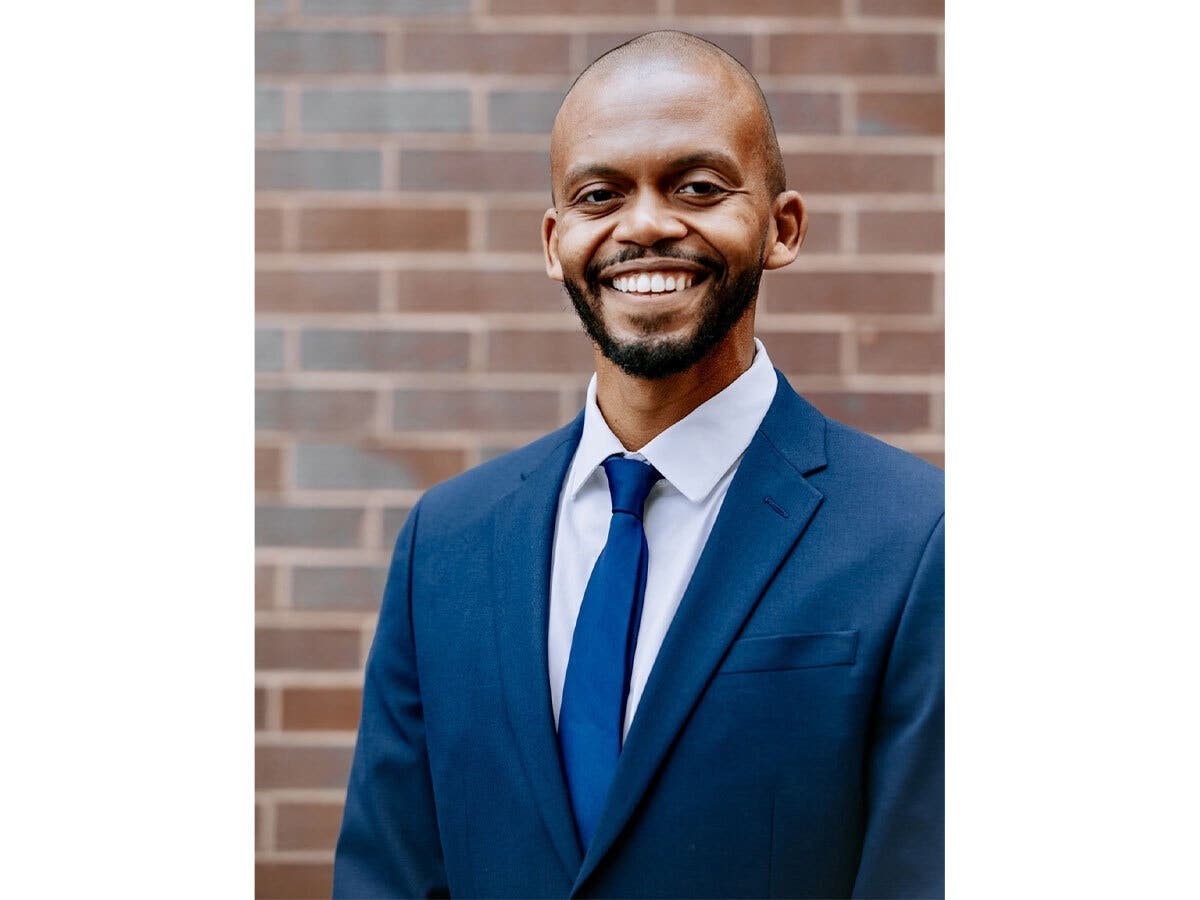
Ahmed Karrar aims to unseat longtime State Sen. Emil Jones III, one of two challengers in the March 17 Democratic primary.
It is the first time Jones faces a contested primary since he was first elected to the 14th District in 2009. Early voting is already underway.
The district stretches from Roseland on Chicago's South Side to include all or parts of Alsip, Blue Island, Calumet Park, Chicago, Crestwood, Dixmoor, Dolton, Harvey, Homer Glen, Merrionette Park, Midlothian, Oak Forest, Orland Hills, Orland Park, Palos Heights, Posen, Riverdale, Robbins and Tinley Park.
Find out what's happening in Oak Forestfor free with the latest updates from Patch.
CANDIDATE
Ahmed Karrar
Find out what's happening in Oak Forestfor free with the latest updates from Patch.
TOWN OF RESIDENCE
Orland Park
POSITION SOUGHT
State Senate (14th District)
PARTY AFFILIATION
Democrat
FAMILY
No answer provided.
EDUCATION
Loyola University Chicago School of Law (J.D.)
Northwestern University (M.A. in Public Policy and Administration
University of Michigan-Flint (B.A. in Political Science)
OCCUPATION
Attorney and Community Development Consultant (11 years of experience)
PREVIOUS OR CURRENT ELECTED OR APPOINTED OFFICE
None.
CAMPAIGN WEBSITE
The single most pressing issue facing our district or state is ___________, and this is what I intend to do about it.
The single most pressing issue facing the 14th District is the rising cost of living and the squeeze it is putting on working people and the middle class.
Throughout my experience knocking on doors across the district, families have consistently raised the same concerns to me: The cost of groceries, housing, childcare, and medical care continues to strain household budgets, and wages have not kept up. On top of that, the Trump administration’s tariffs have added further pressure on consumers and small businesses.
However, it’s also important to acknowledge that this problem did not begin overnight. It reflects decades of policy decisions that prioritized wealth at the top over working families. Over this time period, leaders weakened our unions, allowed corporate consolidation to limit competition, and shaped a tax system that accelerated income inequality.
As your next State Senator, I will use every tool available within our fiscal realities to address these root causes in a responsible and forward-looking way. I will strengthen collective bargaining rights, confront anti-competitive practices and price gouging, invest in affordable housing and universal childcare, protect healthcare access, and reform our tax system so it rewards work instead of wealth.
I will also prioritize public investments in education, workforce development, and modern infrastructure because those investments lower costs, attract responsible businesses, and drive sustainable economic growth.
What are the critical differences between you and the other candidates seeking this post?
The critical difference between me and the other candidates is that I am running to directly confront the growing lack of trust in government that is hurting our communities and our democracy. I believe this crisis of trust cuts across backgrounds and party lines.
Too many people believe politics serves the rich and the well-connected rather than working families. In Illinois, that perception stems in large part from a long history of corruption and insider politics that has weakened faith in our institutions.
I am offering a different model of leadership that prioritizes community, integrity, and meaningful investment in working people and our most vulnerable. As an attorney, community organizer, and consultant, I have worked across sectors to bring people together and navigate complex systems to drive meaningful change. That experience informs how I will lead and rebuild trust in our district.
First, I will fight for a bold policy agenda that will deliver tangible improvements people can actually feel, including universal childcare, stronger worker protections, lower prescription drug costs for seniors, property tax relief, and structural tax reform so we can tax the wealthy fairly and invest in working families and our children.
Second, I am committed to governing through consistent engagement. That means regular town halls across every part of the district, informative newsletters, and direct outreach, including to those who may not agree with me on every issue.
No leader has all the answers. The only way to close blind spots is to stay rooted in the community and bring people together around shared goals. But meeting this moment also requires leaders who are willing to think big and act boldly on behalf of working families.
That kind of grounded, accountable, and unifying leadership has been missing in this district for too long. I am ready to build a unified, pro-working-families vision across backgrounds so that every community in our district can succeed.
Do you support redistricting in a non-census year?
In principle, I believe states should adhere to the traditional redistricting cycle tied to the Census. We need stability and predictability in the process to help preserve public trust and prevent manipulation for short-term political gain.
That said, we cannot ignore the current reality. When Republican-led states choose to redraw maps outside the Census cycle for partisan advantage, Democratic-led states must carefully evaluate their response to ensure fair representation is protected. My preference remains a consistent and fair national standard, but until that exists, we cannot allow our communities to be placed at a structural disadvantage.
If you support tax cuts in Illinois, what spending should be eliminated to offset those cuts? Please be specific.
I believe one area to look at is corporate incentive programs to determine whether they are truly delivering the economic growth and job creation they were designed to produce. Additionally, before eliminating spending that supports working families, we should conduct thorough evaluations to ensure our tax policies align with long-term economic goals. At a time when working people are facing a real affordability crisis, I am not comfortable making cuts to programs that help them stay afloat without first exhausting other responsible options.
More broadly, every leader has a responsibility to seek efficiencies and make government work better and more fiscally responsible, but those decisions must not be made in a rushed or haphazard manner. Any changes to spending or revenue should reflect a thoughtful review of fairness and the long-term health of our state’s economy.
Do you believe an inequity exists between funding for wealthy and poor schools? If so, what would you do to address the disparity?
Yes, inequities in school funding absolutely exist, and they continue to affect students across Illinois, including in the 14th District. Several schools in our district remain underfunded and do not have access to the same level of resources as schools in wealthier communities. While Illinois has made meaningful progress over the past 5 years through the Evidence-Based Funding formula, more work remains to close the gap and ensure that every school reaches full adequacy.
I believe there should be no greater priority than our children. A child’s ZIP code should never determine the quality of their education and access to advanced coursework, mental health support, or extracurricular opportunities.
To fully address these disparities, we must commit to sustained investment in public education. A critical component of that effort is modernizing Illinois’ outdated tax structure. I support moving toward a graduated income tax system so that the wealthiest individuals pay a fairer share. That additional revenue would allow us to fully fund our public schools, reduce reliance on local property taxes, and ensure that every child, regardless of background, receives the world-class education they deserve.
What specific steps should be taken to reduce the state's massive unfunded liability in its pension systems?
I support Governor Pritzker’s recent proposal to stabilize pension payments and bring Tier 2 into compliance with federal Safe Harbor requirements to avoid costly legal consequences. Meeting our obligations responsibly is critical, but structural fixes alone are not enough.
Our teachers, first responders, and state employees perform essential work and we must prioritize recruitment and retention for Tier 2 workers. Illinois will need stronger revenue sources to meet our shared goal of achieving fiscal responsibility while honoring our commitments. That’s why I believe we must move toward a graduated income tax so the wealthiest residents, who recently benefited from massive federal tax cuts, pay their fair share.
What would you do to help constituents struggling with the ever-increasing cost of living, housing and healthcare? What specific legislative actions will you take to increase the supply of affordable homes and lower monthly costs for both renters and potential homeowners in our community?
Middle-class and vulnerable families are being squeezed by anti-worker policies from the Trump administration, as well as decades of structural decisions that have concentrated wealth at the top while wages have stagnated and costs have risen for working families.
As a State Senator, I would use every tool within our fiscal constraints to provide relief. That means fully funding programs that lower household expenses, including rental assistance and utility support. I will also fight to protect Medicaid from federal attacks and advance structural reforms like universal childcare, which will reduce monthly costs for families and strengthen our economy, especially for small businesses.
With respect to housing, the primary issue statewide, as we’re seeing across the country, is a lack of supply. I support meaningful zoning reform, including legalizing multifamily housing near transit and job centers and streamlining approvals so more homes can be built. We must also address speculative purchasing by large firms that continue to drive up prices and expand targeted affordable housing tools in South Side communities that have faced long-term disinvestment.
Do you support the Trump administration’s immigration enforcement in the Chicago area and beyond? Why or why not? If not, what changes do you think should be made?
I have been in strong opposition to Trump’s immigration enforcement actions. They have not made our communities safer and instead have created fear, anxiety, and disruption across immigrant and nonimmigrant families alike. Immigrants strengthen our communities every day as workers, small business owners, taxpayers, and neighbors, and they deserve policies that reflect that reality. These tactics have undermined trust between residents and law enforcement and continue to make it harder to build the cooperation that real public safety requires.
As a State Senator, I would work to protect due process rights for all our residents, support local governments and community-based service providers, and ensure that state resources aren’t used to carry out politically motivated enforcement actions.
Do you support the repeal of the SAFE-T Act, which eliminated cash bail? Why or why not, and do you think wealthier defendants should have an easier route to release?
I do not support repealing the SAFE-T Act. The law was designed to address longstanding inequities in our criminal justice system, particularly the reality that cash bail allowed wealthier defendants to purchase their freedom while lower-income individuals remained detained simply because they could not afford to pay. I believe that justice should never depend on the size of someone’s bank account.
The Act shifts focus from wealth to risk and allows for judges to detain individuals who pose a genuine threat to public safety, while also ensuring poverty alone does not determine pretrial outcomes. Despite early concerns that eliminating cash bail would lead to an increase in crime, overall crime rates have declined since the law took effect.
Lastly, if any adjustments are considered, they should be developed in consultation with key community, legal, and public safety stakeholders to ensure the law remains both fair and effective.
Would you push to repeal the TRUST Act, which bars local police cooperation with federal immigration enforcement? Why or why not?
No, I do not support repealing the TRUST Act. The law helps make all of us safer, regardless of immigration status, by ensuring undocumented residents feel safe reporting crimes and cooperating with local law enforcement without fear of deportation.
It also allows individuals to seek medical care and other essential services without hesitation, which protects public health and strengthens community stability for everyone. At the same time, it ensures local police can focus their time and resources on addressing local public safety priorities rather than carrying out federal immigration enforcement.
What else would you like voters to know about yourself and your positions?
I’m running for office because I believe deeply in the people of this district and in our shared potential to build something better together. Our campaign is rooted in bringing people together across backgrounds to improve quality of life for all of us. After engaging with voters in every corner of the district, I’ve only grown more confident in that purpose. I’ve seen firsthand that, despite our differences, we share common hopes around affordability, safety, opportunity, and dignity.
We are in urgent need of leadership that meets this moment. That means prioritizing working people, delivering real results families can feel, and moving beyond the politics of the past that too often centered insiders and the wealthy. I am committed to building a broad, pro–working families coalition that reflects our district’s diversity and fights for a future where every community can succeed. It would be an honor to earn your support.
Get more local news delivered straight to your inbox. Sign up for free Patch newsletters and alerts.