Neighbor News
Oak Lawn Proposes Ordinance for Temporary Homeless Shelters
Oak Lawn proposes ordinance to restrict temporary homeless shelters.
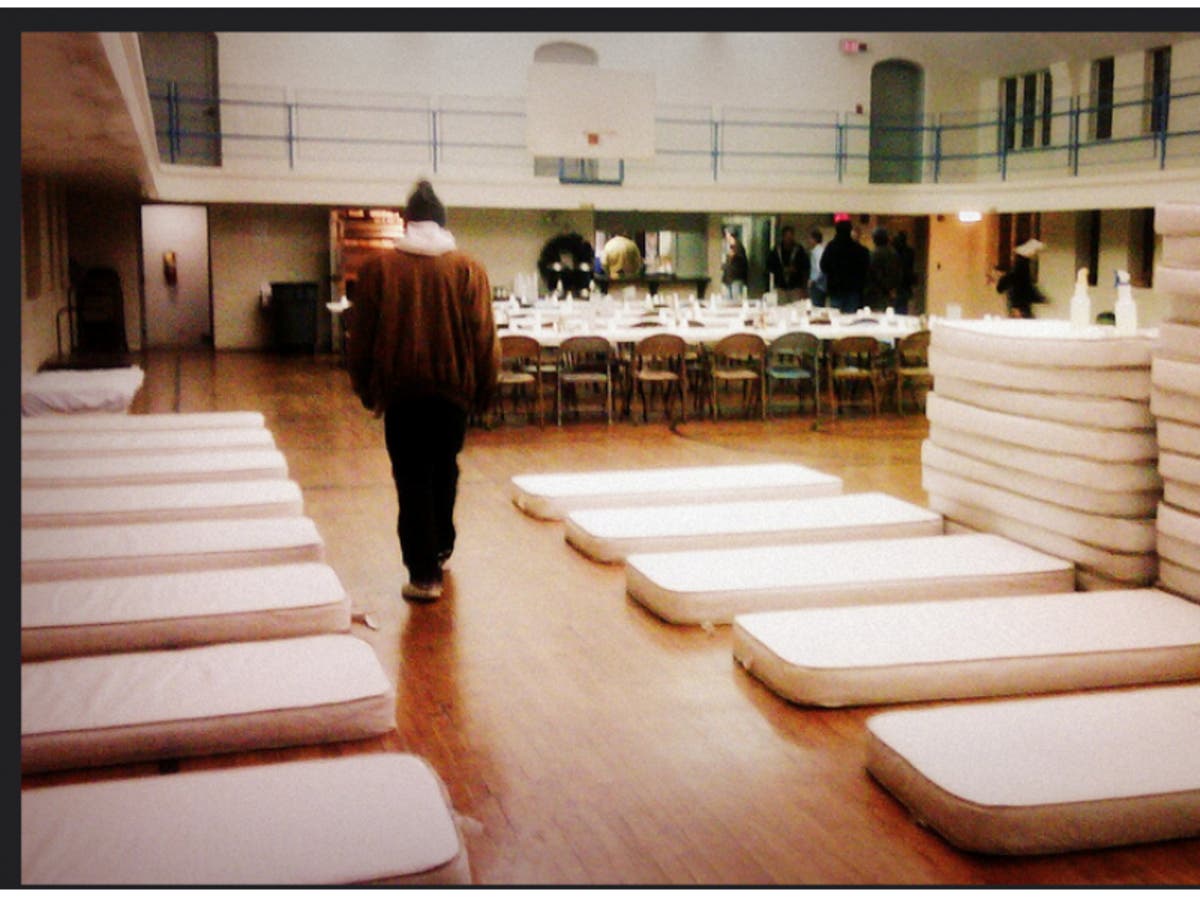
READER CONTRIBUTION: I've posted the Village of Oak Lawn's proposed ordinance to regulate temporary homeless shelters. As you may know, these shelters are located in area churches on a rotating basis and are administered by BEDS Plus, a respected social service agency in the Southwestern suburbs. (Disclosure: I am a monthly volunteer at BEDS Plus' Pilgrim Faith Church site and a longtime friend of the Church's Reverend Peggy McClanahan and her family.) Like all boilerplate legalese, it's a long, dense read; however, the #tldr version is simple: the ordinance severely limits churches' ability to fulfill their calling in Oak Lawn.
The Village commissioned this ordinance to be drafted based on unfounded fears that a reckless outside agency was attempting to convert a private residence into a homeless shelter. In fact, an area church leader had only polled neighbors about the possibility of using an empty parsonage to serve dinner to shelter residents on Sunday nights.
Despite its misapprehension, the Village will take up this ordinance at its next Planning Commission Meeting on Monday, November 6th at 7:30 PM in the Village Hall. I urge all concerned to attend and voice their objections, or contact Village President Sandra Bury, Village Manager Larry Deetjen, and/or their Trustee (see lefthand sidebar). (Yes, it's short notice, but that's part of the problem with how the Village has approached this.) In a separate post, I've drafted a set of talking points that you can use in these conversations and share with your larger networks.
Find out what's happening in Oak Lawnfor free with the latest updates from Patch.
Full text begins:
WHEREAS, Section 6(a) of Article VII of the 1970 Constitution of the State of Illinois provides that any municipality which has a population of more than 25,000 is a home rule unit, and the Village of Oak Lawn, Cook County, Illinois, with a population in excess of 25,000 is, therefore, a home rule unit and, pursuant to the provisions of said Section 6(a) of Article VII, may exercise any power and perform any function pertaining to its government and affairs, including, but not limited to, the power to tax and to incur debt; and
Find out what's happening in Oak Lawnfor free with the latest updates from Patch.
WHEREAS, under the current Village Code of Oak Lawn, temporary overnight shelters are not regulated; and
WHEREAS, on October 16, 2017, the Planning and Development Commission of the Village of Oak Lawn conducted a public hearing on Petition #2017-__ relative to a request submitted by the Village of Oak Lawn proposing an Ordinance granting the amendment of Title 4 of the Village Code of Oak Lawn to allow for the addition of Chapter 16: Temporary Overnight Shelters; and
WHEREAS, after hearing testimony on the petition, the Planning and Development Commission unanimously voted in favor of recommending to the Village President and Board of Trustees, the Ordinance granting the amendment of Title 4 of the Village Code of Oak Lawn to allow for the addition of Chapter 16: Temporary Overnight Shelters; and
WHEREAS, the Village President and Board of Trustees find that it is in the best interest of the public and the Village to revise and update the Village Code to include the regulations of temporary overnight shelters setting requirements for its licensing, site, and structure, as set forth herein and to adopt the findings and recommendations of the Planning and Development Commission.
NOW, THEREFORE, BE IT ORDAINED BY THE VILLAGE PRESIDENT AND BOARD OF TRUSTEES OF THE VILLAGE OF OAK LAWN, COOK COUNTY, ILLINOIS, AS FOLLOWS:
SECTION 1: The foregoing recitals shall be and are hereby incorporated as findings of fact as if said recitals were fully set forth herein.
SECTION 2: That Title 4 of the Village Code of Oak Lawn be and is hereby amended by adding Chapter 16: Temporary Overnight Shelters and language as follows:
Chapter 16
TEMPORARY OVERNIGHT SHELTERS
4-16-1: PURPOSE:
The purpose of these regulations are to regulate the placement, construction and modification of multi-family residences and to support, foster, and establish standards for licensing and regulation of facilities to provide shelter to persons who are temporarily without permanent housing. Such facilities are designed to provide shelter on an emergency and temporary banot intended to be permanent residences or a substitute for permanent residences.
4-16-2: DEFINITIONS:
Applicant. A person that submits to the Village Manager an application for a license or the renewal of a license to conduct, operate or maintain a shelter under this Chapter.
Person. Any public or private corporation, firm, partnership, association, organization, government or any other group acting as a unit, as well as a natural person.
Temporary Overnight Shelter. A building, or portion thereof, in which sleeping accommodations are provided for no more than twelve (12) hours per day, for three (3) or more persons who are not related to the owner, operator, manager or other occupants thereof by blood or marriage. Temporary overnight shelter shall not include any hotel or motel, hospital, nursing or personal care facility, single-family dwelling, two (2) family dwelling or multiple-family dwelling as those terms are described in this Code.
4-16-3: SPECIAL USE PERMIT:
For a temporary overnight shelter sought to be established after December 1, 2017, a special use permit shall be required for the placement of a temporary overnight shelter in the R-3 Multi-Family Residence District. The application for a special use shall be made by both the owner of the premises and any other entity providing significant programming support for the temporary overnight shelter pursuant to following the requirements found in Section 4-14-1. Notwithstanding anything to the contrary contained in this Chapter, the special use requirements of this Chapter shall not apply or be imposed upon any currently existing temporary overnight shelter following the passage of an ordinance approving this Chapter.
4-16-4: LICENSE REQUIRED:
No person shall conduct, operate, maintain or permit to be conducted, temporary overnight shelters, operation or maintenance of a shelter for the temporarily homeless within the Village unless the Village has issued a license as provided for in this Chapter and which is in full force and effect. For all existing temporary overnight shelters operating in the Village of Oak Lawn after the passage of the Ordinance approving this Chapter, said temporary overnight shelters shall have until January 1, 2018 to apply for a license.
4-16-5: APPLICATION FOR LICENSE:
Application for such license shall be made to the Village Manager or his/her designee in such form and manner as may be prescribed by said Village Manager or his/her designee. The application shall be under oath and shall contain:
- (A) The location of the premises for which a license is sought;
- (B) The proposed maximum number of persons to be housed in the shelter;
- (C) The name and address of the applicant if an individual, and if a firm, partnership, corporation or association, the principal address of the entity and name and address of its officers;
- (D) The name of the person(s) under whose management or supervision the shelter will be conducted;
- (E) The date of special use approval or the date on which an application for special use was filed with the Village, if application is pending or the date on which the Village Board approved an exemption from that requirement.
- (F) A statement that it will maintain a policy of affording preference to persons previously residing in the Village of Oak Lawn, in accordance with the requirement imposed by the Zoning Board of Appeals.
- (G) Guidelines to be utilized for operation of shelter (including but not limited to such policies as admission criteria, procedures for linkage with social service agencies, and procedures for termination of stay).
- (H) Within 14 days following a filing of an application, an applicant shall arrange for an inspection of the temporary overnight shelter by the Oak Lawn Fire Inspector for the purpose of identifying and determining an occupancy limit for said temporary overnight shelter.
4-16-6: INSPECTION:
Upon receipt of an application for a license hereunder, the Village Manager or his/her designee shall cause an inspection to be made of the proposed shelter pursuant to Section 3-1-4 of this Code. The applicant shall afford the representative of the Village's department’s reasonable opportunity to inspect the applicant's location for which the license is requested and to interview the applicant's agents and employees and any other person within his/her or its custody or control in the particular premises for which a license is being requested. During the term of licensure, the Village Manager or his/her designee may conduct inspections of the shelter following a 24-hour notice to licensee. Notwithstanding anything to the contrary contained in this Chapter, the initial inspection requirements of this Chapter shall not apply or be imposed upon any currently existing temporary overnight shelter following the passage of this Ordinance.
4-16-7: STANDARDS FOR ISSUANCE OF LICENSE:
Upon completion of such inspection, and a review of the application, the Village Manager or his/her designee shall issue an appropriate license to the applicant for the shelter providing the Village Manager or his/her designee finds and determines that the applicant meets the minimum standards of the Fire, Building and Public Health codes and that such conforms to the requirements of this Chapter.
4-16-8: ANNUAL LICENSE:
The Village Manager or his/her designee shall provide for the issuance and renewal of licenses for shelters. The licenses shall be issued on forms prescribed by the Village Manager. Each license, whether an original or a renewal license, shall expire at the end of one year from the date of its issuance (which date of expiration shall be stated upon its face) unless sooner revoked or surrendered. Licenses shall not be transferable either as to place or as person. The license shall be displayed in a conspicuous place near the main entrance inside the shelter.
4-16-9: LICENSE REVOCATION:
Whenever the Village Manager or his/her designee determines that a violation has occurred which endangers or threatens the life, health, safety or welfare of the shelter's occupants, the licensee or its employees or agents, or the community, the Village Manager or his/her designee shall revoke the shelter's license by providing twenty four (24) hours' written notice to the shelter, or by taking summary action pursuant to Section 4-16-15 of this Chapter. Where determined necessary, said notice shall contain an order for evacuation of the occupants, immediate correction of the violation(s) or such other measures which the Village Manager or his/her designee determines to be required.
The Village Manager or his/her designee may revoke the license of a shelter for any violation that is uncorrected within 7 days following notice of said violation. If after 7 days allowed for the abatement of a violation, the Village Manager or his/her designee may revoke a license for failure to abate said violation. The Village Manager may also revoke the license of a shelter for repeated violations.
4-16-10: APPEALS:
Whenever the Village Manager or his/her designee refuses to issue a license, renew a license or revokes a license for a shelter, the person aggrieved shall have the right to appeal the decision of the Village Manager's designee to the Village Board of Trustees, or has the right to request the Village Manager to reconsider his/her decision. The Village Board of Trustees shall grant such person a reasonable opportunity to present in writing, or at the Village Board of Trustees’ option in an open hearing, his/her arguments against such decision. The Village Board of Trustees shall consider such arguments and pertinent facts and shall provide a brief response to the appeal within ten (10) days. The decision of the Village Board of Trustees with respect to such appeal or reconsideration shall be final.
4-16-11: VIOLATIONS:
The Village Manager or his/her designee shall have authority to issue written notices of violations to licensee specifying the particular violations and the time allowed for correction.
4-16-12: MAXIMUM NUMBER OF OCCUPANTS:
Unless otherwise restricted by the special use permit granted for a specified shelter, or unless specifically exempted from this regulation by the Village Board, the maximum number of occupants permitted is to be determined by the Oak Lawn Fire Inspector. The maximum occupancy limit shall be displayed in a conspicuous place near the main entrance inside the shelter.
4-16-13: ADMISSION AGREEMENT:
No owner, operator, or manager of a shelter shall allow a person to occupy a shelter unless said person has signed an agreement stating that he/she understands that the stay is for a temporary period, and does not intend the shelter to be a permanent residence.
4-16-14: RECORDS AND REPORTS:
Every licensee shall keep and maintain such records and make such reports to the Village Manager or his/her designee as may reasonably be required to implement this Chapter, including but not limited to a list of names of all persons who stay overnight at the shelter and the dates of the stay. Data from such reports and from applications on file within the Village shall be made available by the Village Manager or his/her designee in accordance with disclosure requirements of the Illinois Freedom of Information Act, 5 ILCS 140/1 et seq.
4-16-15: SEPARATION OF SLEEPING AREAS:
Separate sleeping areas shall be provided for men, women, and parents with children, if applicable. Children under the age of 17 shall be accompanied by one (1) parent in a separate sleeping area.
4-16-16: NOT-FOR-PROFIT:
No person shall own, operate or manage a temporary overnight shelter except on a not-for-profit basis or without charge to the temporary overnight shelter's occupants.
4-16-17: DAYS AND HOURS OF OPERATION:
A temporary overnight shelter may operate on and between the days of October 1 and April 30 and between the hours of seven o'clock (7:00) P.M and seven o'clock (7:00) A.M. In the event of severely sub-freezing cold weather or any other such emergency creating an imminent danger to persons continually exposed to the natural elements, the Operating Manager may temporarily extend the operating days or hours of temporary overnight shelters provided that any such extension does not extend the permitted days of operation by more than seven (7) days or the hours of operation for more than seventy two (72) consecutive hours. No owner, operator or manager of a temporary overnight shelter shall allow any person to remain in the temporary overnight shelter for a period in excess of twelve (12) consecutive hours.
4-16-18: MEDICAL CARE:
It shall be unlawful for any person to provide, as part of the regular accommodations or services of any temporary overnight shelter, any medical care or treatment, nursing care or other health-related care. Nothing contained within this Section shall prohibit any person from obtaining emergency medical care or treatment for any occupant of a temporary overnight shelter in the event of an emergency. Any treatment related to counseling services are excluded from the prohibitions in this Chapter.
4-16-19: STAFF:
Each temporary overnight shelter shall be staffed with at least two (2) persons on duty and awake during operating hours. One of these persons shall be designated as night supervisor and shall be responsible for administration of the shelter during this time period.
4-16-20: MEANS OF EGRESS:
Temporary overnight shelters shall provide means of egress in accordance with Section 4-14-7 of this Code.
4-16-21: EVACUATION DIAGRAM TO BE POSTED:
A diagram illustrating evacuation of the floor and of the temporary overnight shelter in the event of an emergency shall be posted on each floor of the temporary overnight shelter. The diagram shall measure no less than twenty inches (20") square, and shall be posted in a place and manner where it will be readily visible to occupants.
4-16-22: SMOKING MATERIALS PROHIBITED:
No person shall use smoking materials in any temporary overnight shelter. No owner, operator, or manager shall knowingly allow a shelter occupant to bring weapons, alcohol, or unprescribed drugs into the shelter.
4-16-23: AUTOMATIC FIRE ALARM:
It shall be the responsibility of the alarm user to install, test, inspect and maintain an approved fire alarm system in an operative condition at all times, in compliance with all village adopted codes including the international building code, 2012 edition, the international fire code, 2012 edition and the NFPA 72 –national fire alarm code, 2010 edition.
An approved fire alarm system shall consist of smoke detectors, heat detectors, manual alarm-initiating devices, sprinkler water flow detectors and tamper switches (if applicable), audible and visible notification appliances and annunciation at fire department point of entry. The approved fire alarm system shall provide complete coverage of the building and shall comply with all applicable codes.
In addition:
1. Addressable fire alarm systems shall be installed, unless other application/installation approved by the fire code official.
- Visible notification appliances shall remain active (flashing) when the automatic and manual fire alarm system is silenced.
- Exterior waterproof visible notification appliance shall be installed in an approved location on the address-side of the building or other location approved by the fire code official.
- Activated duct smoke detectors shall initiate a supervisory signal at a constantly attended location.
- An approved key box shall be installed according to the following:
- An approved key box shall be installed on all commercial buildings and all Group R- 2 occupancies containing (3) or more dwelling units. The key box shall be obtained from the fire department’s designated agent, and shall contain keys to gain necessary access as required by the fire code official.
- The key box shall be installed in an approved location in close proximity to the main entrance or where readily accessible and immediately available for use by fire department personnel. The bottom of the key box shall be mounted no less than sixty (60) inches from ground level and the top of the key box shall be mounted no more than seventy-two (72) inches from ground level.
- A detailed zone/device map shall be posted next to the fire alarm control panel and annunciator panel (if applicable). A copy of said maps shall be submitted to the fire department for approval. An acceptable zone map shall include the following information:
- Minimum size of 81/2" x 11" and shall be clear and legible.
- Framed and mounted or protected by other acceptable means.
- Simplified floor plan map showing zone/device locations.
- Map shall indicate location of alarm panel and annunciator panels and all addressable devices and related controls. If symbols are used, a symbol legend shall be provided.
- Approved fire alarm systems shall be installed in compliance with the NFPA 70 - national electrical code (NEC), 2011 edition. Exception: The installation of an approved automatic fire alarm system in all educational occupancies, institutional occupancy groups I-2, I-3 and I-4 and any other occupancy deemed necessary by the AHJ shall be enclosed completely within metallic conduit.
- All approved fire alarm systems shall transmit trouble, supervisory, and fire signals directly to the Oak Lawn emergency communications center remote supervising station via a wireless radio transceiver installed and maintained in accordance with NFPA 72 - national fire alarm code, 2010 edition and international building code, chapter 9 - fire protection systems, 2012 edition. All alarm contractors, alarm businesses and alarm supervising stations shall be approved by the fire code official.
The fire alarm contractor supervising the automatic fire alarm system design and installation shall be licensed by the state of Illinois department of professional regulations, per the Illinois private detective, private alarm, private security and locksmith act of 1983.
4-16-24: FIRE EXTINGUISHERS:
Fire extinguishers shall be installed and maintained in each temporary overnight shelter in accordance with the standards established by the International Fire Code and 7-3-1 of this Code.
4-16-25: SANITARY REQUIREMENTS:
Each temporary overnight shelter shall provide a minimum of one bathroom.
4-16-26: LOCATION:
A temporary overnight shelter shall be placed within the R-3 Multi-Family Residence District. The temporary overnight shelter shall also be subject to the requirements in Section 4-5C of this Code. No temporary overnight shelter shall be located within one thousand (1,000) feet of any other temporary overnight shelter unless the Village makes a specific finding that the cumulative effect of such location would not violate paragraph 2 below. Each temporary overnight shelter shall be designed so that the entrances and exits, exterior lighting, and parking facilities will minimize traffic congestion, pedestrian hazards and adverse impacts on adjoining properties. The amount of noise to be generated shall not interfere with the quiet use and enjoyment of neighboring properties. A temporary overnight shelter shall not be located within five hundred (500) feet of a child day care, nursery school or grammar school. Notwithstanding anything to the contrary contained in this Chapter, the location requirements of this Chapter shall not apply or be imposed upon any currently existing temporary overnight shelter following the passage of an ordinance approving this Chapter.
4-16-27: PENALTY FOR VIOLATIONS:
Any person who violates any provision of this Chapter shall be fined not less than fifty dollars ($50.00) and not more than five hundred dollars ($500.00) for each such violation. Each day that a violation continues to exist shall constitute a separate and distinct offense. These provisions shall not apply to use of a premises for occasional overnight events sponsored by the organization that owns the premises.
4-16-28: COMPLIANCE WITH LOCAL CODES:
The premises used as shelters as defined herein shall comply with the Fire, Building and Public Health codes for the type of structure being utilized and with any other requirements of this Chapter.
SECTION3: Any policy, resolution or ordinance of the Village that conflicts with the provisions of this Ordinance shall be and is hereby repealed to the extent of such conflict.
SECTION 4: The invalidity of any section or provision of this Ordinance hereby passed and approved shall not invalidate other sections or provisions thereof.
SECTION 5: That this Ordinance shall be in full force and effect from and after its passage and approval in the manner provided by law.