Community Corner
Rabid Bats Reported in Chicago and Cook County Suburbs
Seven bats have tested positive for rabies, Cook County officials said.


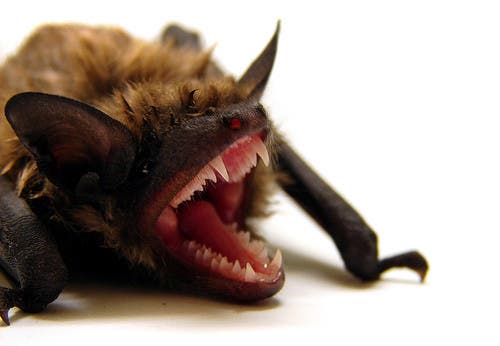
Rabid bats are reportedly making their appearance in the city and suburbs.
Two bats found in the Morgan Park and Beverly neighborhoods have tested positive for rabies, according to Ald. Matt O’Shea’s office.
The bats were found in the 11100 block of South Talman Avenue and the 1800 block of West 105th Street during the past week.
Find out what's happening in Oak Lawnfor free with the latest updates from Patch.
In addition, another rabid bat was found in Chicago's Roseland neighborhood.
All of the animals have been tested by the Illinois State Public Health Laboratory and were determined to be rabid.
Find out what's happening in Oak Lawnfor free with the latest updates from Patch.
In addition, four more rabid bats have been found in suburban Cook County and downtown Chicago since Jan. 1, 2016, the Cook Cook County Animal Control reports.
Bats have tested positive for rabies in Blue Island, LaGrange, Arlington Heights and the Loop making for a total of seven rabid bats found in Cook County.
An Alsip resident also submitted a bat that tested positive for rabies, but he brought it from his workplace in DuPage County, county officials said.
Chicago residents who encounter weak and sick bats, especially those found during the daytime hours, should call 3-1-1, who will inform Chicago Department of Animal Care and Control.
Suburban residents should contact their local police or animal control departments. In all cases of bat findings, try to be as specific about the location as you can so animal control officers can find the animals.
Whatever you do, DON’T handle the bats, and keep curious kids, dogs and cats away from them, too. Isolate the bat by placing a bucket or or other container over it, until local animal control officials can come and examine it.
If your pet hasn’t been inoculated for rabies, contact your vet immediately.
Here are some more helpful hints from Cook County Animal and Rabies Control:
- If a bat is in your home, do not release the bat outdoors until after speaking with animal control or public health officials. It may be possible to test the bat and avoid the need to receive rabies treatment.
- If you wake to a bat in the room you may need to be treated if the bat cannot be tested.
- Keep vaccinations up-to-date for all dogs, cats, ferrets and other animals you own. Click here to find low cost Cook County vaccination clinics.
- Seek immediate veterinary assistance for your pet if your pet is bitten by a wild animal or exposed to a bat.
- Call your local animal control office about removing stray animals in your neighborhood. Never adopt wild animals, bring them into your home, or try to nurse sick, wild animals to health.
- Do not touch, feed or unintentionally attract wild animals with open garbage cans or litter.
- Teach children never to handle unfamiliar animals, wild or domestic, even if they appear friendly.
- Maintain homes and other buildings so bats cannot get inside.
- The small brown bat is the most common type of bat in Illinois and it can fit through openings in a home as small as 1/8th inch. That means even an indoor cat may come into contact with a bat.
- Call your local animal control office to report a bat in your home or a dead bat on your property.
- Call the Cook County Department of Public Health at 708-633-4000 to report human exposure to a bat.
"Please remember that out of the thousands of bats submitted to the state lab for testing only 2 percent are positive for rabies," said Becky Schlikerman, spokeswoman for Cook County Animal and Rabies Control. "Bats serve a valuable place in the ecologic system because they eat flying insects, especially mosquitoes."
Get more local news delivered straight to your inbox. Sign up for free Patch newsletters and alerts.