Community Corner
Sleep Disorder Centers Offer Rest for the Weary
Advocate Christ Medical Center's Sleep Disorder Centers treat 80 sleep disorders in the Southland.


It's Monday.
After drudging through a long morning of traffic, you finally get to work. The clock says 9 a.m. Your boss walks by and says you need to have that project done by 5 p.m.
Where's the coffee? You think. Why am I so tired when I got a good night's rest?
Find out what's happening in Oak Lawnfor free with the latest updates from Patch.
You take a sip of the cheap stuff your work brews. An hour later you're on your third cup and yawning.
For the rest of the week you still feel tired, but you don't know why.
Find out what's happening in Oak Lawnfor free with the latest updates from Patch.
At Advocate Christ Medical Center's Sleep Disorder Center in Palos Heights, manager Angela Marczali will tell you to come in for a sleep consultation.
The sleep center is one of three – with two other locations in Tinley Park and Lockport – recently accredited by the American Academy of Sleep Medicine.
Awarded to over 2,200 sleep centers across the United States, accreditation from the AASM is the “gold standard” for Advocate Christ, Marczali said.
After inspecting each center's testing procedures and evaluating the qualifications of staff members – which includes 12 sleep technicians and eight board-certified sleep physicians at the Palos Heights center alone – only then the does the AASM award accreditation to sleep centers.
Also recognized with accreditation are a center's plans to improve the health of the surrounding community through proper research and diagnosis of 80 different sleep disorders, including apnea, sleepwalking, narcolepsy and night terrors.
Marczali, who first started out in respiratory medicine, began working in the field of sleep medicine 22 years ago, “when it was taken much less seriously,” she said.
“The common explanation was people are tired because they work too much,” Marczali added. “Now, people are much more involved and educated about healthcare.”
The sleep center, complete with four bedrooms, with a king-sized bed in each bedroom, allows the staff to monitor each patient while they sleep.
An average of 40 patients check into the center each week, some of them truck drivers.
“A lot of companies want their drivers to have studies done,” Marczali added. “They drive for very long periods at a time.”
Truck drivers are allowed to drive 11 hours per day with at least an 10-hour break, according to the U.S. Department of Transportation.
Common media misconceptions
Along with a general lack of knowledge, the nature of sleep disorders are often exaggerated by the media, especially in film, Marczali noted.
In the comedy Deuce Bigalow: Male Gigolo a woman with narcolepsy passes out, face first, while throwing a bowling ball. In Step Brothers, another comedy, sleepwalking 40-something sons throw their dad down two flights of stairs after he rouses them from the liminal state.
In reality, she said, a disorder like narcolepsy is very complex, hard to define.
“It's highly sensationalized,” Marczali said, “but it's not a common disorder that brings people in.”
When someone dips in and out of sleep from emotional excitement, for example, like laughter or fear, they're experiencing cataplexy, a condition often prevalent in narcolepsy.
Other symptoms may include drowsiness lasting upward of 15 minutes, dreamlike hallucinations between stages of sleep and wakefulness and sleep paralysis, according to the National Library of Medicine.
“They're very tired,” Marczali continued, “and they can sleep at any moment. But we have people with over 80 different sleep disorders, and they're all very tired.”
Sleepwalking is also misconstrued in the media, she added.
Rare among middle-aged adults, sleepwalking pervades mostly in children ages 4-8, according to the National Library of Medicine, but is also prevalent in college students and the elderly.
Marczali also pointed to popular medications for hyperactive children as further reason for sleep-disorder research.
“Sleep studies in children has been lacking for 15 years,” Marczali said. “Maybe we're medicating kids for things like attention deficit disorder because we don't understand [their sleep routines].”
Treatments for Sleep-disorder
So you just can't figure out why you're routinely tired.
If you've decided to make an appointment at the Advocate Christ sleep center in Palos Heights, the first thing you'll do is meet with one of their sleep physicians or pulmonologists, sometime in the afternoon.
Shortly after a consultation, a sleep technician places electrocardiograph wires along the patient's neck and head to measure brain and muscle activity, rapid eye movement (REM), heart rhythm and breathing.
Patients are recorded as they sleep from 9 p.m. to 5:30 a.m. Two weeks later, a sleep physician sits down and discusses the results with the patient.
What sleep disorder do patients have the most? Definitely not exploding head syndrome, Marczali said, when a patient hears loud noises pounding in their head.
Sleep apnea, when sleepers stop breathing 60 to 100 times a night on average, is most prevalent among patients at the Palos Heights clinic.
Factors of stress, such as weight gain, drinking, smoking and lack of sleep, are leading causes of sleep apnea.
“It's very serious [apnea],” Marczali said. “It can lead to stroke or heart attack, so you should probably talk to a doctor.”
Doctors will sometimes prescribe medicine – such as Lunexor or Ambesleep – but only in certain cases, she added.
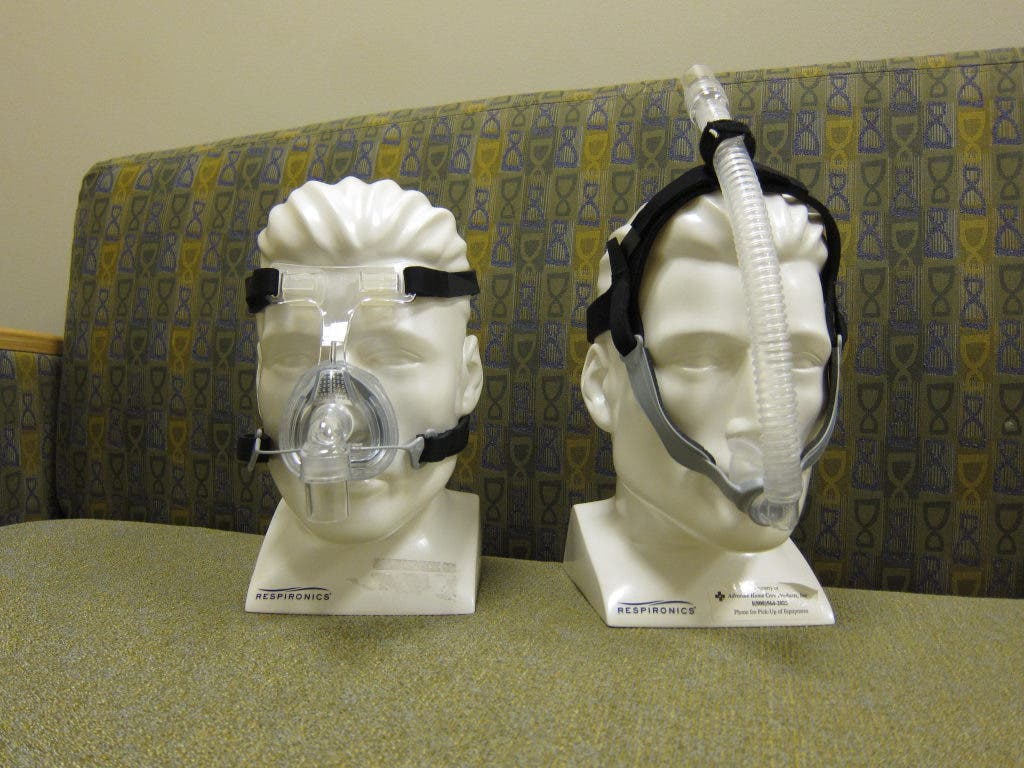
Along with diet and exercise, a breathing mask can allow patients to control the flow of oxygen into the airways by placing a pressure device underneath the nostrils.
“It's 100-percent effective,” Marczali said. Pressure from the device consistently holds tissue in place throughout the night, a proven way to get a better night's sleep.
Contrary to popular belief, you cannot catch up on sleep that you've missed – say sleeping an extra three hours on Saturday if you only slept four on Friday.
“It's a sleep myth,” Marczali said. “There is no [internal] mechanism for catching up on sleep.”
And whether it's a mask that keeps your breathing on track, or a conscious effort on the patient's part to have a consistent sleep schedule, “more people should take sleep disorder seriously,” Marczali stressed.
While on call 24/7, Marczali will sometimes have to report to the center at 2 a.m., which tampers with her sleep arrangement.
“Yes, I do get a bad night's sleep,” she said. “But I try to stick to a schedule.”
The point: no one has a perfect sleep schedule, because no one is perfect, Marczali said. At the sleep center in Palos Heights, though, getting the right amount of sleep is a step worth taking.
“We can fix it, you can fix it,” Marczali said.
Take Advocate Christ Sleep Disorder Center's sleep quiz.
offers three sleep disorder centers in Palos Heights, Tinley Park and Lockport. To arrange a consultation, call 1-877-97SNORE (1-877-977-6673).