Neighbor News
Swallow Cliff Chapter NSDAR Hears About Palos Area History
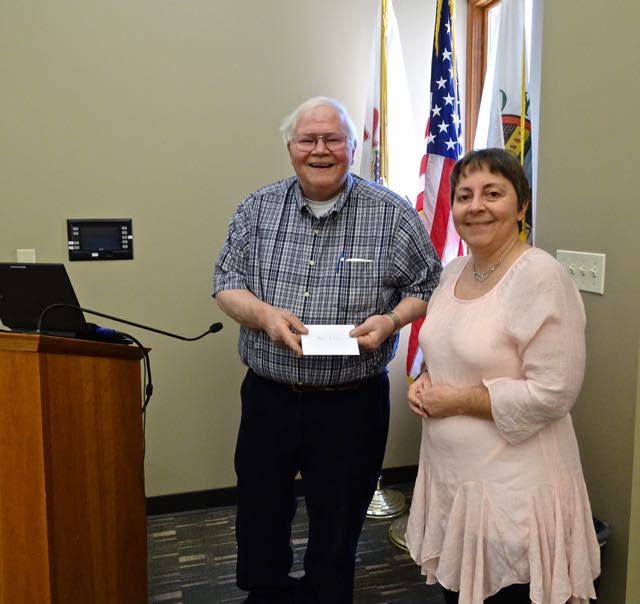
Robert Busch of the Palos Historical Society presented his research into the early history of the Palos area.
Imagine Palos thousands of years ago. Native Americans would have been here fishing and hunting, as evidenced by arrowheads that have been recovered. In the swampy areas they grew wild rice. By the 1600’s, carved out by glaciers that left two small islands and a mountain, Palos had abundant timber and prairie. Robert Busch, president of the Palos Historical Society, set the scene for the Swallow Cliff Chapter NSDAR and presented some of the research he has done over the years to track the arrival of the first Europeans in the Sag Valley and their settlements. La Grange Road was one of the earliest roads, with 111th and LaGrange Road being the geographical center of Palos.
The year 1673 found Father Marquette and Louis Joliet in the area around the Des Plaines River. In 1763, Palos came under British rule after England won the French and Indian War with two forts or earthworks claimed to be built there. On March 21, 1821, the first official plat of survey was delivered. While variously known as Sag Precinct, Orange Township, or Trenton Township, Palos was eventually named after the port of Palos, from which Columbus sailed.
In 1834, James Paddock son of John David Paddock (“Blind David”) is considered the actual founder of Palos and settled on government land near what is now 93rd Street and Kean Avenue. The pioneer village, called “Paddock Settlement,” consisted of six houses, and on June 24, 1835, the Paddocks became the legal landowners, buying 1040 acres for $1.25 an acre. Another prominent family, the McClaugherys, bought 480 acres and married into the Paddocks, as did the McCords.
Find out what's happening in Oak Lawnfor free with the latest updates from Patch.
The 1840’s and 1850’s saw an influx of Irish laborers who built the I&M Canal and Sag Bridge. Today’s canal is the 3rd one built. To meet the growing city of Chicago’s demand for wood, the once-plentiful Palos timber was soon decimated. Busch expressed his hopes that in the future, sites around the Palos area can be excavated to reveal evidence of the earliest settlers and the remnants of those first forts.