First, let’s look at the reason behind them.
Sales tax rebate programs are nothing new. Many communities make good use of them. They are enticements designed to encourage a business to locate or relocate to Orland Park.
During the pandemic, Orland Park offered a short-term (90-day) sales tax sharing program for well over a hundred businesses to help them survive. This was a good use of available resources during a chaotic time.
Find out what's happening in Orland Parkfor free with the latest updates from Patch.
Since 2018, there have been about fourteen “Inducements” that the village has entered into with various businesses.
Four involved car dealerships, five involved food service, two grocers, one hotel, and two large retailers.
Find out what's happening in Orland Parkfor free with the latest updates from Patch.
The goal is always economic growth. Create jobs and attract new businesses. Businesses can open, expand, or improve a location within the village. In return, the village shares some portion of the sales taxes that are generated.
What are the risks?
The business can fail or close (like in the case of Terry’s Lincoln-Mercury or the Chuck Lager restaurant)
Existing businesses in the community might see the inducements as wildly unfair if they can’t participate in it.
The short-term losses in tax revenue could impact school districts, emergency services, or public infrastructure.
A poorly drafted agreement could result in the business taking the sales tax money without measurably benefiting the community.
In the July 2018 agreement with a car dealership, the following “claw-back” language was included:
“Additionally, in the event either a) or b), above, occurs within ten (10) years of the date of this Agreement, as agreed liquidated damages and not as a penalty, the (automobile) Dealership will reimburse the Village all of the sales tax revenue rebated to the (automobile) Dealership by the Village.”
If the dealership left town…ALL the remitted sales tax money would be returned to the village.
That’s fair.
Oddly, that particular remedy language disappeared from the remaining agreements since 2018. In fact, I saw no claw-backs in any of the agreements that followed.
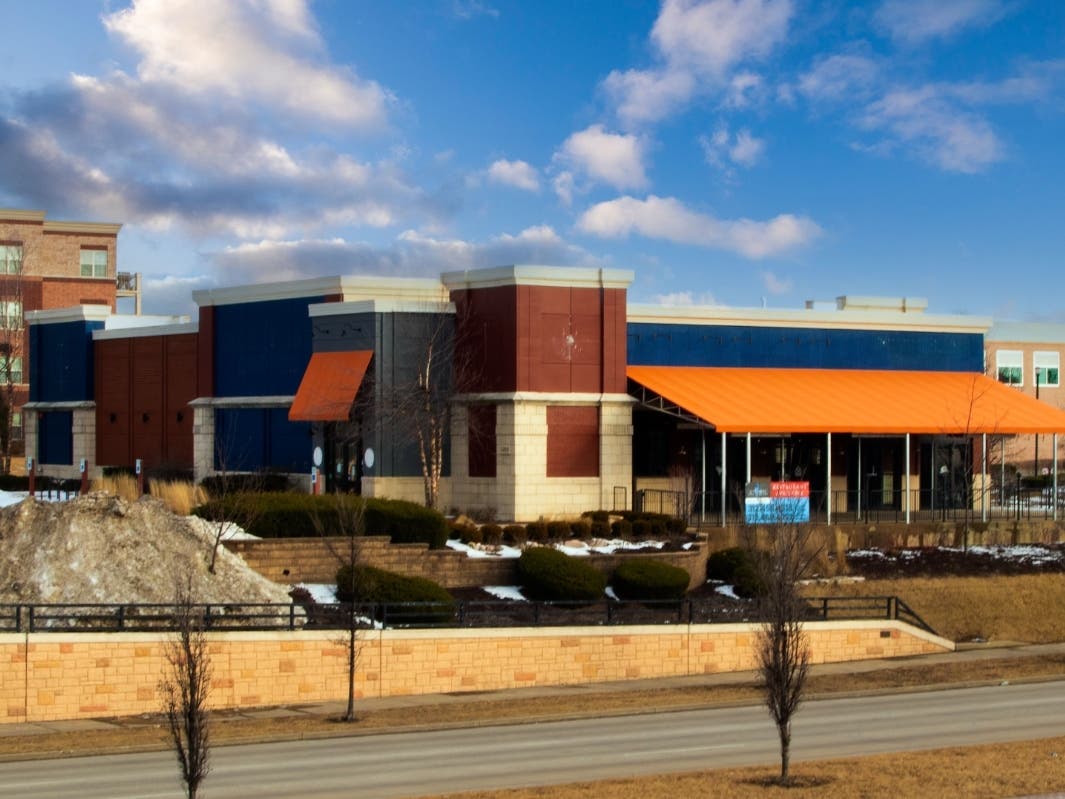
A similar “Inducement” was provided to the ill-fated Chuck Lager restaurant that was perched on an outlot next to Mariano’s.
The sales tax sharing agreement was approved in November of 2021. A Chicago Tribune article from November 4, 2021, outlined the details of the 50/50 split with Orland Park. The agreement, as has been the case with many of these contracts, extended to ten years.
Fabio Viviani informed the newspaper that he expected to employ 80 to 90 full and part-time employees.
But when you read the inducement agreement, only 20 full, and 40 part-time employees were mentioned as a possibility.
The restaurant opened on October 25, 2022, to a great deal of fanfare. By the summer of 2024…it was gone. And with it…$33,769.50 in 50/50 sales tax money.
It may not sound like a lot and put against the village’s annual revenue…it’s insignificant.
However, there was no “claw-back” in the agreement. In fact, the last payments went to them months after they shuttered the restaurant.
What did the mayor or the Board of Trustees say about it?
Nothing. At least not in the written record.
There was no post mortem on this. No review. No analysis as to what should be done with these agreements in the future.
Maybe we need performance-based mile markers. Perhaps a tiered system. How about caps or annual reviews to see if they’re hitting their forecasts.
Something.
But no. They just waved bye-bye to $34,000 and moved on.
This is irresponsible behavior with taxpayer money.
There are a couple of businesses that have already collected a million dollars of more through this sales tax sharing program.
If these businesses fail or move away before the agreements end, are we just going to wave goodbye to that money, too?
This is our money.
We need to think about this between now and April 1.