Politics & Government
Fight the System? Orland Library Has A Better Plan
Illinois will merge its regional library systems this summer in an effort to cut costs. What's a local library to do?
Libraries throughout northern and central Illinois will soon see changes in how they exchange transfer books and materials now that five of the state's existing library systems are scheduled to merge into one.
But for Orland Park Public Library staff, that merger means they'll rely more on resources outside the new system.
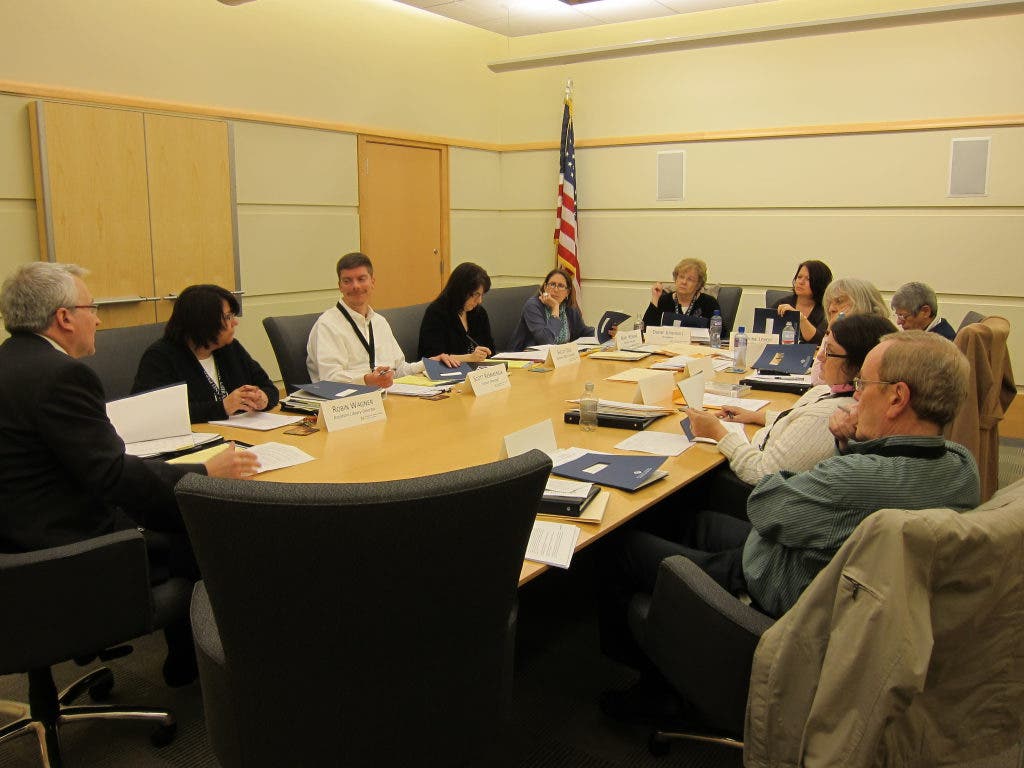
“It's going to be a huge system,” said Mary Weimar, director for the library. “I think their main problem is going to be communication, so it's going to be necessary for our little zone...to communicate with each other.”
Find out what's happening in Orland Parkfor free with the latest updates from Patch.
There are currently nine library systems in place across the state, and their primary function is borrowing books between each other, otherwise known as inter-library loans.
Five of those systems – Alliance Library System, Dupage Library System, North Suburban Library System, Prairie Library System and Metropolitan Library System (MLS), which serves Cook, Will and Dupage Counties – will soon become the Reach Across Illinois Library System (RAILS).
Find out what's happening in Orland Parkfor free with the latest updates from Patch.
RAILS, recently approved by Secretary of State Jesse White, will provide services to more than 1,500 participating members from universities and schools, both public and private, at over 3,700 library locations in a 27,000 square-mile area.
“They are committed to delivery across the state,” Weimar said. “And I'm pretty confident that funding won't go away for [their] delivery. We just sort of do a little more on our own.”
That extra bit the OPPL does on their own, however, is still connected to MLS.
As of October 2010, the System Wide Automated Network (SWAN) separated from the MLS and gave Orland Park and 79 other member libraries a new system to manage the inter-library loan process.
Though SWAN doesn't provide delivery, it is an easier medium for managing online orders, which the MLS system then delivers. Funding for SWAN is divided between state grants and its members, which pay 85 percent of the cost or about $2 million.
“The bigger libraries – like Elmhurst, Downers Grove and Orland Park – pay the lion's share of the cost,” said Scott Remmenga, finance manager for the library.
To measure the cost for each library, an equation that considers collection size, patronage and circulation is used. The OPPL has a shared circulation of roughly 678,000 items with a patronage last year of 520,000 people. A collection of 200,000 books and media items are housed in the library.
If delivery slows, members of SWAN may consider providing their own delivery to card holders in the mailing area, Weimar said.
"By working with SWAN you have a bigger collection and you share the cost," she added. "It's more efficient to work together."
Security System Updated
Several false alarms in the middle of the night have prompted the library to update its ADT security system.
“Something as simple as a piece of paper or cloth may have set off the motion sensor,” said Robin Wagner, assistant library director. “We think it may have been a mouse.”
It could have cost the library as much as $20,000 to replace the whole system, Weimer noted, but ADT made the appropriate updates for only $800.
For more information on the merger check out: http://www.systemmerger.info.