Arts & Entertainment
Orland Park History Museum Hosts Orland Park Cemetery Walk
The names on the tombstones in the Orland Memorial Park Cemetery are a collection of early families that helped shape Orland Park.


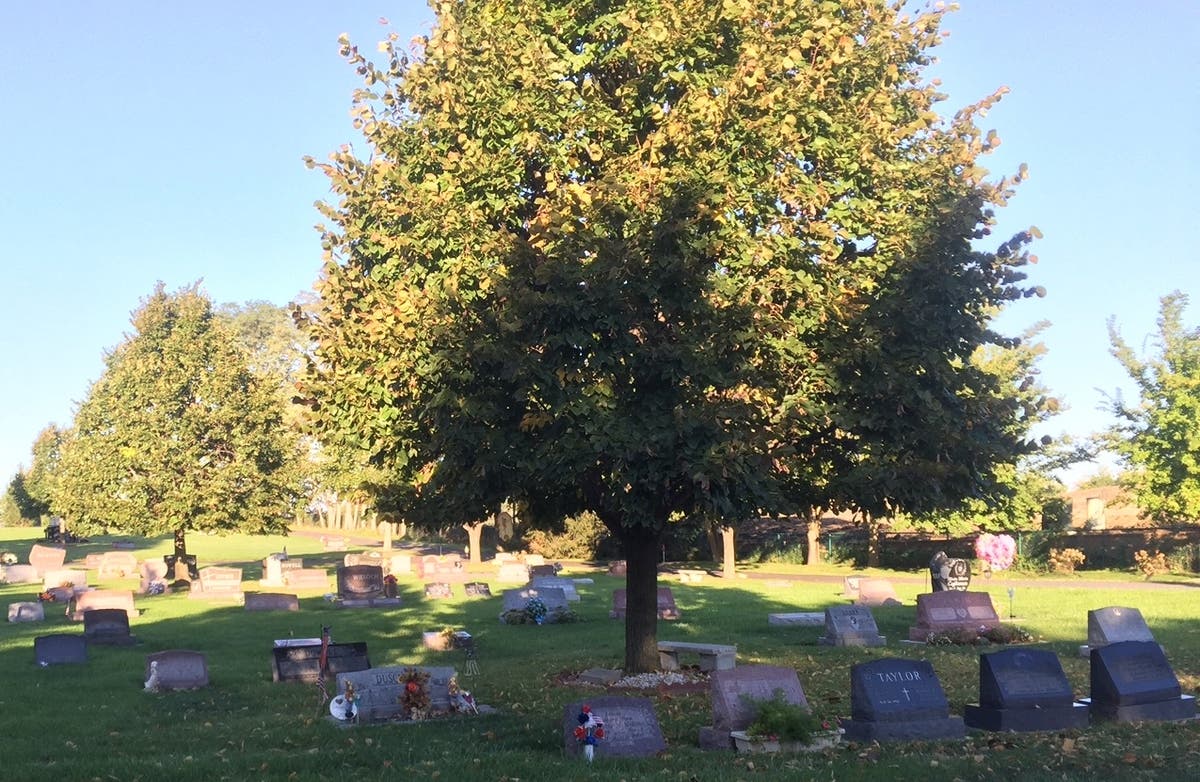


The burial records of the Orland Memorial Park Cemetery are a walk through Orland Park history. Names like Humphrey, Loebe, Myrick, Schussler, Voss, Doogan, Yunker and more include some of the village's early pioneers.
On Tuesday, October 9, the Village of Orland Park History Museum offers an opportunity to hear the stories behind those names during a walking tour of the cemetery at 153rd Street and West 100th Avenue.
Open to adults age 18 and older, the tour will be held Tuesday, October 9 from 7 p.m. until 8 p.m. Participants are encouraged to bring flashlights and dress for the weather.
Find out what's happening in Orland Parkfor free with the latest updates from Patch.
"The museum's cemetery tour is a great way to learn about Orland Park's early settlers and families that played a part in the village's history," said Orland Park Trustee Kathy Fenton, the village board liaison to the museum. "There's a lot of history in that cemetery and we invite everyone to learn more about the people who helped make Orland Park the great community that it is today."
The cemetery is situated on land that was originally owned by George Cox. He sold the initial piece of property for $13 and a lot for himself and his family. Harry Cox, George's son, was the village's third mayor serving from 1915 until 1923. The younger Cox is also remembered for building the first house in the village in 1880 at 14420 Second Ave.
Find out what's happening in Orland Parkfor free with the latest updates from Patch.
"There are a few historical cemeteries in and around Orland Park," said Museum Curator Sarah Stasukewicz. "Most people know about the West Avenue Cemetery and we have the Christ Lutheran Cemetery on 82nd Avenue and a number of our early and recent residents buried at St. Michael Cemetery at 159th and Will-Cook Road. The original St. Michael Church was built at 151st Street and Will-Cook Road in 1847."
Orland Park's early residents were buried outside of the village because Village Ordinance Number 30, passed in 1924, prohibited graveyards, cemeteries or burying a dead person within the village's corporate limits or within a mile of town.
Orland Memorial Park Cemetery was founded in 1859 and was known as the Orland Burial Ground. When Ordinance 30 was amended in 1930, the Village Board annexed the cemetery. According to the cemetery's website, the current name was adopted in 1936.
Area notables among the Orland Memorial Park Cemetery burials include Samuel Tinley, who was born in 1838 and died in 1919. Susannah Tinley, born in 1836 and died in 1925, is buried in an adjacent grave.
Samuel Tinley was nearby Bremen's first railroad agent in the late 1800s. The town's name of Bremen was changed to Tinley Park in 1890 with the Village of Tinley Park incorporated two years later on June 27, one month after Orland Park became a municipality.
A number of village officials are buried at Orland Memorial Park, including five mayors and some former trustees.
Orland Park's first mayor, John Humphrey and his family are buried there, as are more recent community members, former Mayor Mel Doogan and Eleanor and Paul Voss.
Mel Doogan served as mayor from 1965 to 1985 and was a village trustee before that. Doogan Park and the Doogan Pavilion remember Orland Park's long time mayor.
Eleanor Voss was the first female matron for the Orland Park Police Department and her husband, Paul, was an Orland Park police officer, a longtime village trustee followed by serving as a founding trustee for the newly formed Orland Fire Protection District in 1969. Orland Fire Station No. 2, at 151st Street and 80th Avenue, is dedicated to Paul Voss's memory.
The cost for the tour is $5.00 for museum members and $10 for non-members. Tickets are available at the village’s Recreation Department, 14600 South Ravinia Avenue and online at https://bit.ly/2NMPKJ5.
More information about the Village of Orland Park History Museum, located in the former village hall at 14415 Beacon Ave., is at 708-873-1622 or museum@orlandpark.org.