Neighbor News
Orland Park Mayors' Performance in Capital Project Development
This comparison underscores a crucial lesson for our village: good governance matters

Recent discussions have brought renewed attention to two significant projects in Orland Park's history: the downtown triangle project initiated under former Mayor Dan McLaughlin and the concert venue launched during Mayor Keith Pekau's tenure. While each side attributes the other's project to failure, the stark contrast in their planning and execution is worth examining.
As detailed in the article summaries below with URLs to the articles themselves, these projects differed not only in purpose but also in process. Mayor Pekau's concert venue was intended as a revenue-generating enterprise but suffered from severe mismanagement. In contrast, Mayor McLaughlin’s downtown development followed a methodical approach, exemplifying how local governments can lay a solid foundation for private business success.
The concert venue project lacked fundamental planning steps—omitting feasibility studies, public consultations, and transparent financial projections—resulting in a venture that failed to meet its financial goals and alienated the public.
Find out what's happening in Orland Parkfor free with the latest updates from Patch.
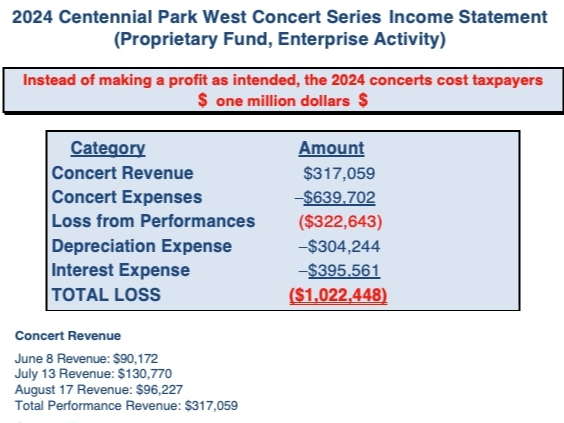
In truth, the concert venue broke records. . . . for losing $1 million in its first year.
On the other hand, the downtown triangle project adhered to best practices at every stage, from strategic land acquisition to extensive public engagement, ensuring alignment with community priorities and fostering long-term benefits.
Find out what's happening in Orland Parkfor free with the latest updates from Patch.
This comparison underscores a crucial lesson for our village: good governance matters. As we evaluate Orland Park’s future, I hope we can prioritize effective leadership and a return to the professionalism that once defined our community's development efforts. Orland Park can be great again, but it requires thoughtful planning and an unwavering commitment to serving residents’ best interests.
SUMMARY OF PATCH ARTICLE https://patch.com/illinois/orl...
The article criticizes Orland Park Mayor Keith Pekau's handling of recent capital project planning, identifying several key procedural steps that were either overlooked or inadequately addressed. Below is a summary highlighting these omissions:
Key Omissions in Pekau’s Capital Project Planning
- Feasibility Study and Market Research:
- Best practice requires expert-led feasibility studies to assess demand, pricing, and event frequency for projects like concert venues. The article claims Pekau’s administration failed to conduct or provide comprehensive research results.
- Budget and Cost Estimation:
- The administration did not release detailed documents outlining operational costs (staffing, maintenance, etc.) versus projected revenue, leaving financial planning partially completed.
- Pricing Strategy:
- A strategic plan to set competitive ticket prices based on costs and market demand was not developed or shared.
- Environmental and Social Impact Assessments:
- Impact assessments for environmental or community effects were overlooked, a crucial step for transparency and public trust.
- Public Consultation and Communication:
- Pekau’s leadership failed to effectively inform or engage the public through town halls, online forums, or accessible reports. Public feedback was neither sought nor incorporated into decision-making.
- Comprehensive Review and Decision:
- The council voted on projects without the benefit of full evaluations, including benefit-cost analyses and risk assessments.
Examples of Best Practices That Were Ignored
For Public Enterprises (e.g., a concert venue):
- Detailed feasibility studies and pricing strategies to ensure profitability.
- Full transparency about anticipated costs and benefits to secure public support.
For Tax-Funded Projects (e.g., a police firing range):
- Cost-benefit analyses and thorough public consultation to ensure alignment with community priorities and proper allocation of tax dollars.
The article emphasizes that these omissions eroded public trust and accountability, highlighting the need for rigorous adherence to best practices in public sector capital projects.
SUMMARY OF WHITE PAPER (https://irp-cdn.multiscreensit...).
Daniel J. McLaughlin's approach to Orland Park's Downtown development is lauded for its meticulous adherence to procedure, thoughtful public engagement, and long-term vision. Below is a summary of key procedural steps McLaughlin executed well, reflecting a commitment to transparency, collaboration, and the community's needs:
1. Extensive Planning and Research
- Initial Vision and Planning:
- Over 20 years of consistent effort, including numerous public meetings, consultations with experts, and iterative adjustments to plans based on changing conditions.
- Early coordination with Metra and other stakeholders to align infrastructure needs, such as parking and traffic flow, with broader development goals.
- Feasibility and Design:
- Engaged Farr and Associates to draft early concepts for a transit-oriented downtown. This plan evolved over time, incorporating expert advice on traffic, soil conditions, and building layouts.
2. Public Engagement and Transparency
- Open Forums and Accessibility:
- Hosted numerous town hall meetings, public forums, and informal gatherings (over 30 coffees in a recent election cycle) to explain the project and gather input.
- Made key documents available on the Village website to ensure transparency.
- Direct Communication:
- Personally engaged with residents, answering questions at events and even in informal settings like restaurants.
- Proactive Response to Misinformation:
- Addressed public concerns and clarified misconceptions regarding the development, ensuring that decisions were well understood.
3. Collaborative Decision-Making
- Stakeholder Involvement:
- Worked closely with the Village Board, staff, and consultants, ensuring diverse input and expertise informed decisions.
- Intergovernmental Agreements:
- Collaborated with school districts and other taxing bodies to create a TIF District. Negotiated agreements to ensure school districts remained financially whole during the project's initial phases.
4. Strategic Land Acquisition and Use
- Land Negotiations:
- Successfully negotiated the purchase of multiple parcels, securing reasonable prices while addressing property-specific challenges.
- Relocation Assistance:
- Complied with legal requirements to support tenants affected by land acquisition, including fair relocation compensation.
5. Infrastructure Development
- Coordinated Design:
- Implemented stormwater retention systems, traffic grids, and Crescent Park as part of an integrated infrastructure strategy.
- New Train Station:
- Partnered with Metra to build a modern train station and associated parking, addressing both commuter needs and aesthetic concerns.
6. Visionary Leadership
- Economic and Community Development:
- Advocated for a vibrant, pedestrian-friendly downtown to attract businesses and young professionals, enhancing Orland Park's competitiveness with neighboring communities.
- Proactive Problem-Solving:
- Identified and addressed longstanding issues, such as flooding near LaGrange Road and inadequate commuter facilities, as part of the downtown development plan.
Conclusion
McLaughlin's leadership exemplifies how public sector projects can be effectively planned and executed through community engagement, collaboration with stakeholders, and a steadfast focus on the long-term benefits to residents. His approach ensures that the Orland Park Downtown project serves as both a community hub and an economic driver.
Darold Barnum, PhD, MBA, is Emeritus Professor of Management and Decision Sciences, University of Illinois at Chicago, and Founding Co-Director of the University of Illinois Center for Human Resource Management. Much of his consulting and research involved improving the performance of local governments.