Health & Fitness
MWRD Commissioner Debra Shore, staff participate in Congressman Quigley Climate Tour
MWRD Commissioner Debra Shore and staff participated in Congressman Mike Quigley's Chicago Climate Tour.

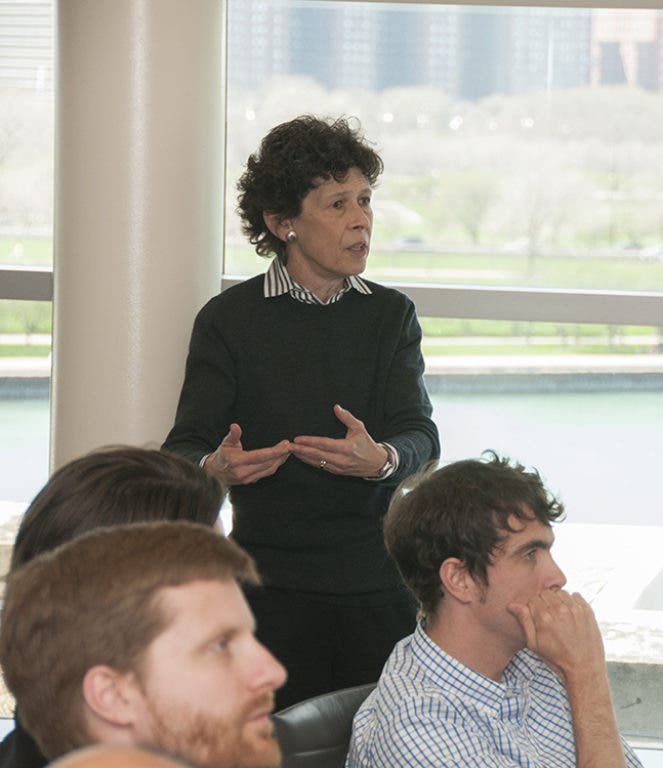
U.S. Representative Mike Quigley recently led a two-day Chicago Climate Tour through the Chicago region to encourage an open exchange of ideas about the environment and its effects on culture, politics and the economy. On April 30, the Congressman made a stop at the John G. Shedd Aquarium, and participants included Metropolitan Water Reclamation District of Greater Chicago (MWRD) Commissioner Debra Shore and MWRD Assistant Director of Maintenance and Operations Antonio Quintanilla.
Five panelists led the wide-ranging discussion: Dr. David Archer, University of Chicago, presented a summary of carbon dioxide emissions research and the impact of carbon emissions on climate and temperatures; Dr. Philip Willink, Shedd Aquarium, spoke on Great Lakes water levels; Bob Moseley, Nature Conservancy and Chicago Wilderness, discussed Chicago’s open spaces; Suzanne Malec-McKenna, formerly of the Chicago Department of Environment, explored the relevance of climate change to the community; and Dr. Alaka Wali, Field Museum, spoke on the social aspects of climate change.
Further discussion focused on the urgency of understanding and acting to protect the Great Lakes, fixing the Illinois renewable energy portfolio standards, communicating personal costs versus environmental cost of climate change, the need for research funding, tangible benefits of environmental projects, electoral issues, and public education and participation.
”The MWRD has a number of initiatives underway to reduce our carbon footprint by working to capture and reuse more of the methane generated by the sewage treatment process, reducing energy use for nutrient removal, and capturing heat from effluent in a sewerthermal process, but there is much more to do,” said Commissioner Shore. “We see the damaging effects of more intense rain storms in four of the last five years, which I believe are evidence of a changing climate.”
“The MWRD, as well as other large infrastructure organizations, rely on data from the National Oceanic and Atmospheric Administration and United States Geological Survey weather stations for our work,” Quintanilla said. “These public institutions need continued funding for basic data acquisition in order for our engineers to make informed decisions.”
Established in 1889, the MWRD (www.mwrd.org) is an award-winning, special purpose government agency responsible for wastewater treatment and stormwater management in Cook County, Illinois.
Our water environment...Take it personally.
Find out what's happening in Palatinefor free with the latest updates from Patch.