Neighbor News
The Unregulated Short Term Rental Market's Impact on Housing Costs
Housing is a rapidly growing financial burden on the majority of Americans, and unregulated short term rentals have been found to be a cause
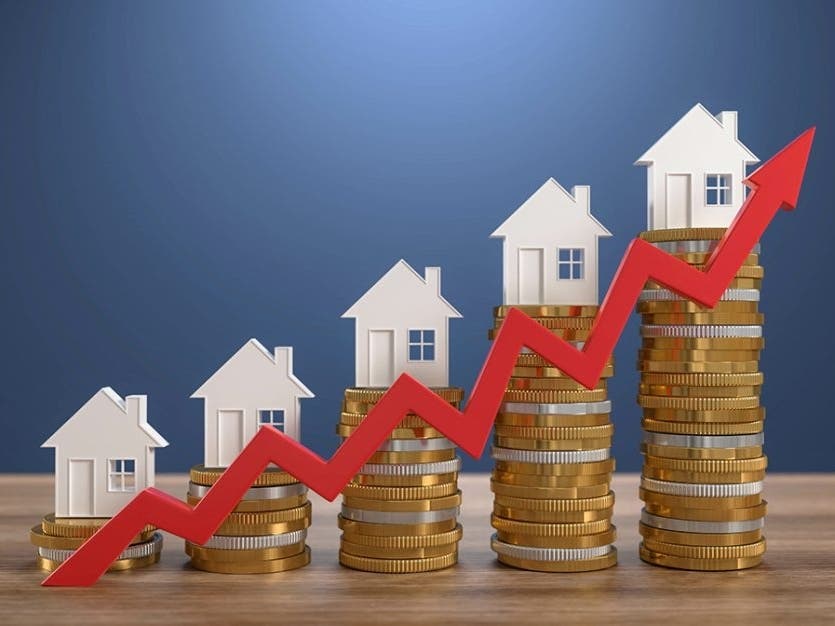
The average cost of housing is a rapidly growing burden on renters and those buying homes. According to the National Equity Atlas, Half of renters are currently considered rent burdened, meaning they spend more than 30% of their income on rent and utilities, in the majority of major cities in the United States. This percentage has continued to rise, resulting in other alarming housing related effects such as the amount of homeless Americans reaching 653,104, the largest amount since the tracking of homelessness began. There are several causes for this rise in housing cost; one identified cause is the rapid, and largely unregulated, growth of short-term rentals such as AirBnB. Research has found a correlation between the amount of AirBnB’s in a given area and a rise in housing and rental costs. This has led to some cities to enact strict regulation of the short-term rental market in hopes of reigning in the cost of housing.
AirBnB and other short-term rental companies have been found to raise the housing and rental costs. Researchers have identified the supply of houses and rental units as being a cause of rising prices. However, the supply of housing is not in and of itself lower than the population. Conversely, this is because, according to the Housing and Education Alliance “Large companies are acquiring residential properties at higher rates, sometimes purchasing entire neighborhoods or apartment complexes.” This causes rising prices because housing removed from the buying and rental markets, to be used as short-term rental property, results in less housing for those looking to buy or rent property. This alarming trend led researchers from the University of Pennsylvania to look to statistics and data in order to see exactly what impact the short-term rental market has on housing prices. In their study, they found “for zipcodes with the median owner-occupancy rate (72%), a 1% increase in Airbnb listings leads to a 0.018% increase in the rental rate and a 0.026% increase in house prices”. This may not seem like much, but the real cost to home buyers and renters as a result is hundreds of dollars a year excess in housing costs that exist for no other reason than the increase in short term rentals Coupled with other cost of living increases, this has resulted in a dire situation for US home buyers and renters wherein the cost can be the difference between being able to afford housing and not.
It is worth taking a second to ask why the short-term rental market has grown so much over the last decade. It would seem to be contrary for people who themselves are subject to the housing and rental market to act in a way that hurts the market itself. In looking at properties being used as short term rentals, a study by Carnegie Mellon University found that the type of housing most impacted by an expansion in short term rentals was the low income rental market. This means that the population in the housing market who is most vulnerable is also the most impacted by short term rentals. However, the study also found that this meant that the landlords of property that is used as low income rental property are the most likely to see financial gains from switching to the short term rental market. This is because not only are those landlords likely to see an increase in cash flow, as all landlords of property switched from the long term rental market to the short rental market were, but also that they were less likely to have the drawbacks of the short term rental market - an increased risk of neighbor complaints as a result of the transition. In effect, the unregulated nature of the short-term rental market has created a situation wherein it is far more profitable for a landlord to risk having their property empty or to, at least, have it empty much more of the time than it would otherwise. As a result, regulation of the short-term rental market is necessary to combat rising housing costs in the United States.
Find out what's happening in Palatinefor free with the latest updates from Patch.
Seeing the rising cost of housing, a number of cities have begun to pass regulations to limit or ban short-term rentals. For example, in 2023 New York City passed New York City Local Law 18 which imposed sweeping regulation of the short-term rental market. The New York City regulation required short term rentals be registered with the city, limited occupancy to no more than 2 paying guests at a time, and required the owners be present for the duration of the short term rental. In places without this kind of regulation, landlords see the opportunity to use the short-term rental market in order to increase their profits, but with regulations such as New York City Local Law 18, the housing market disrupting effects of AirBnB are largely stopped in their tracks. By raising the standards of short-term rentals it reduces the amount of people who view it as an easier and more profitable way to use their property which reduces the amount of AirBnB’s thus reducing the impact on the housing/rental costs. According to Wired, a year after passing New York City Local Law 18, New York City reported a 70% drop in short-term rentals.
The cost of housing is a major issue in the United States that impacts everyone. It has been found that the unregulated growth in the short-term rental market is partially responsible for the rapidly rising costs of housing. The growth of the short-term rental market and thus the increasing impact of it on the cost of housing is the result of the lack of regulations making it a far more lucrative use of housing than selling or the traditional rental market. As a result, local laws should be passed to reduce the spread of the short term rental market and in effect to help alleviate the housing costs renters and would-be home buyers are experiencing.