Politics & Government
Road Worriers: Westgate Valley Lawsuit Tries to Force Palos Heights to Take Over Subdivision Streets
A lawsuit filed by various homeowners associations in the Westgate Valley development argues the city should make their roads public. The city disagrees.
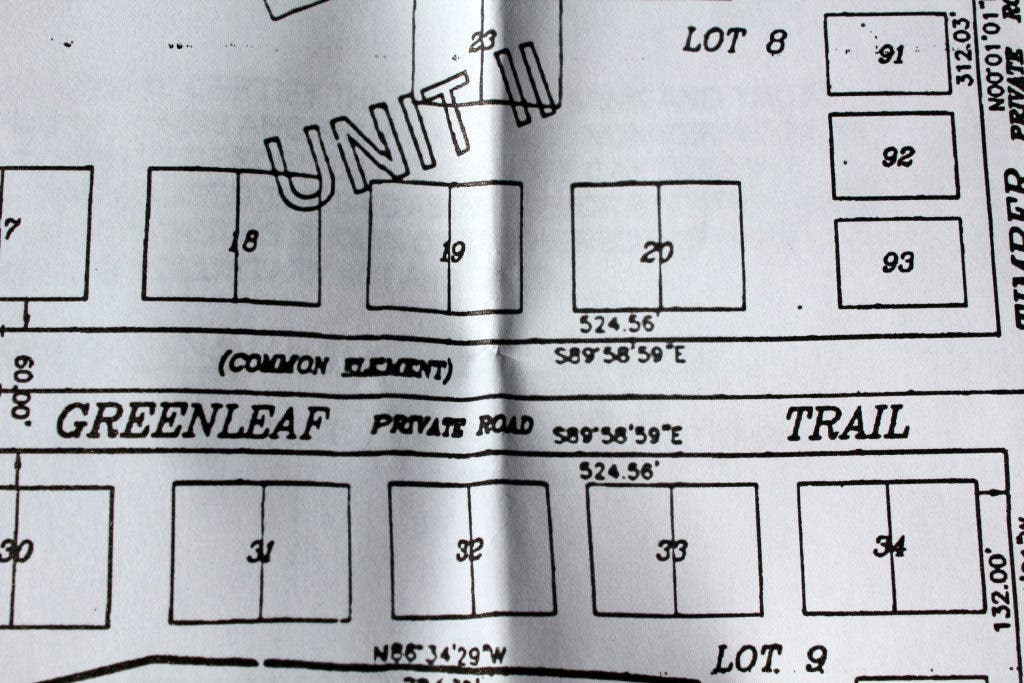


Were all the roads within the Westgate Valley subdivisions intended for public use?
It’s a seemingly simple question at the center of a lawsuit against the City of Palos Heights, and the debate both predates and plagues the current city council.
On one side you’ll find a former mayor and hundreds of homeowners who say the city should plow their streets in the winter and maintain them the rest of the year.
Find out what's happening in Palosfor free with the latest updates from Patch.
“I wouldn’t have bought this place if I knew the streets and sewers weren’t public,” said one resident, Thomas Farrell, though the sentiment resounds.
On the other side are the elected officials, city staff and current mayor, all of whom contend that only some of the subdivision roads north of 135th Street along Ridgeland Avenue are public and entitled to receive city services.
Find out what's happening in Palosfor free with the latest updates from Patch.
And in the middle, of course, are the lawyers who for three years have been sparring over the interpretation of maps, language and intentions.
The characters in this legal fracas abound, each one having brought a different set of eyes to a discrepancy 13 years in the making. Wherever you stand, it can be stated without hyperbole that this is a matter, as one lawyer puts it, of “ripe controversy.”
Seed and Stem
In 1998 the city annexed the former Westgate Valley Country Club, a 191-acre piece of property near 135th Street and Ridgeland Avenue, with the stipulation that lead developer, Donald Jeanes, construct more than 800 single-family homes, condominiums and townhomes. Several acres were reserved for commercial and office buildings.
Within a decade, the subdivisions housing Westgate Valley Townhomes and Estates, Keystone Crossing Townhomes, Laurel Glen Condominiums, Forest Ridge Duplex, Forest Ridge Elite and Forest Ridge Townhomes were completed. Control of the property was turned over to various homeowners associations, several of which are part of a “master association.”
The suit, filed in July 2008, asks a Cook County judge to force Palos Heights to take responsibility for the costs and upkeep of their roads. It cites Article VIII-A, section 3, of the annexation agreement, which states: “All utilities, road, sidewalks shall conform to all ordinances of the city. Upon their completion, they shall be dedicated to and accepted by the city.”
Sidewalks, driveways and landscaping were to be and are the responsibility of the homeowners, while police and fire oversee the area.
In late 2008 city attorneys filed a motion to dismiss the suit, arguing that discussions between developers and the city after the annexation agreement was signed show there was never an intention to make all the streets public. To the contrary, the city said, plat easements approved a few years later designate Shadow Creek Drive/Circle—a major roadway in two subdivisions east of Ridgeland Avenue and the “road” mentioned in the annexation agreement—as private.
What’s more, Jeanes, a former mayor of Palos Park, signed a private road easement agreement in 1999, and the city passed a rezoning ordinance in 2000 which specified that most roads within the area were “privately owned and maintained.” The minutes from select Roads and Construction Committee, Planning and Zoning Committee and Plan Commission meetings between 1998 and 2001 enforce the point.
But all of these documents are “extrinsic” to the annexation agreement, which was never officially amended, the residents’ attorney countered. What mattered most was the intention of both parties at the time of the annexation agreement, a “clear and unequivocal” document that “speaks for itself,” and not whether the parties changed their mind.
An early draft of the annexation agreement, prepared September 1997 by city attorneys, suggests Palos Heights made a conscious decision to make the roads public. It provided the city with explicit alternatives in the language of Article VIII-A, section 3: either the roads, upon their completion, would be maintained by “the developer and his successors” or “the City.” They chose the latter.
In fact, the area’s single-family homes, as allegedly agreed by the city and the lead developer, have been dedicated and receive city services.
Every townhome or condominium subdivision within the city has private streets except one. About 30 years ago a deal was cut with Villa Caprell in which the streets would be maintained publicly in exchange for a drainage easement, Mayor Bob Straz said.
To the city’s defense, the annexation agreement recognizes a difference between public and private streets. It fails, however, to specify any further. Of the eventual homeowners associations, Article IX, section 3, states: “The Owner agrees to provide for the maintenance of all private streets…”
City attorneys could not be reached for comment. The residents’ lead attorney, Diane Silverberg, of a Buffalo Grove-based firm, denied comment on the suit.
Further complicating Silverberg’s argument is Jeanes, the area’s original developer, who as of last week said he disagrees with the lawsuit “100 percent.”
“The townhomes and condominium areas were always intended to be private streets,” he said. “The only streets that were going to be public were streets in the single-family (home) area.”
Jeanes constructed the single-family homes and commercial portions, and then sold everything, including the property that became townhomes and condominiums, to other developers. It was “clearly stated” during those transactions that most streets were to remain private, he said.
Still, more than 100 dismayed on Feb. 15 to hand-deliver a petition urging the city to dedicate all of their streets. Jeffrey Key, a resident of Westgate Valley Townhomes, took the podium and asked the city “to do the right thing.”
Mayor Bob Straz said the council couldn’t talk about pending litigation, although Ald. Jean Gnap (1st Ward) reiterated, as her colleagues have said in the past, that the streets were never intended to be public.
“I think that they need to look at their declerations and find [mention of private roads] in there,” she said Tuesday.
Key, a retired music teacher, is running for alderman against Gnap in the city’s only contested race. The residents involved in this lawsuit comprise about 15 percent of the city population. If elected to the council, Key promised last month “to be a pain in their butt.”
Taxation and Representation
Contention this rooted is seldom without cost. Palos Heights has spent about $30,000 in legal fees, according to city records, and yet a trial hasn’t begun. That’s money that could have been used to purchase another truck with a plow blade and salt, some residents contend. Worse, many of them say, is knowing their tax own dollars will be spent in court to continue denying them services.
“I’m paying taxes to the city (and) they’re paying lawyers to stonewall us,” Key said, “so that I have to go out and get another lawyer and pay again to get my streets plowed. This is bizarre.”
Homeowners in Laurel Glen paid a private snow removal company $19,595 to plow their streets and driveways between November 2009 and March 2010, according to a source close to the homeowners association. They have also paid $13,988 in legal fees since March 2009.
Homeowners in Westgate Valley have paid their private snow removal company a total of $215,122 since November 2007, the earliest date on file with Erickson Management. This figure includes street and driveway plowing and the cost of salt.
Driveways, it should be noted again, have never been at issue with any of the subdivisions. Sources contend most of their snow removal contracts go toward street plowing.
Patch’s effort to obtain legal and snow removal fees from the remaining homeowners associations was blocked by Silverberg, their attorney.
Blame Game
Former Palos Heights Mayor Dean Koldenhoven, who presided over the city council during the annexation agreement, sides with the residents.
“Use constitutes acceptance,” he said last week. “Once you give (a road) the final lift and the city engineer says ‘OK’ and they put people and vehicles on it, it’s dedicated.”
Despite how lawyers spin it, a street is a street, and a street within Palos Heights is Palos Heights's responsibility, Koldenhoven said. He recalled, as mayor, once issuing the public works department an executive order to plow all the subdivisions' streets, but it went ignored.
Straz said the order was likely meant for roads in front of the area’s single-family homes and wasn’t followed because those homes weren’t yet completed and therefore not yet public property.
Public Works Director Jerry Martin denied comment, citing the “pending litigation.”
There’s plenty of ambiguity and miscommunication to go around, but it seems only fair that some of the blame falls on the developers and Realtors. Some property owners say they purchased their homes without any prior knowledge of the issue.
Rich Maziarka had shopped around the Palos area for years before settling in Laurel Glen. He’s now president of its homeowners association.
“Nothing was ever said about it being private or ‘you own it,’ even as late as closing,” he said.
That was 2005, and within four years his subdivision was involved in the lawsuit. Laurel Glen and Westgate Valley joined the fight last.
Other residents say they knew of the discrepancy but were assured it wouldn’t be a long-standing problem by a developer’s map which labeled the streets outside their townhomes and condominiums as “subject to being dedicated.”
“I lived in Chicago all my life, and I was used to the city taking those things on,” said Thomas Farrell, a resident of Forest Ridge Duplex since 2003. “It was a shock."
And still others, Farrell noted, might not know their streets are private. Some only learned the truth last month when a small clan of residents went door to door gathering signatures for the petition.
Several council members, including Straz, have also inherited a problem they didn’t create. This, both sides have in common. But ignorance of the law excuses no one, and the intentions of the city and its lead developer were made clear long ago, the mayor said.
“Nothing has been changed over the 10 or 12 years that those townhomes have been there,” he said. “You have the buyers and the subsequent buyers: they were aware of this in their condo declarations (and) title policies when they closed on their homes. It's not that the city has changed anything.”
About coming to an agreement outside court, Straz said there’s “a chance,” though he doesn’t “know what it would be.” The city, he noted, has spoken with the residents in the past about taking control of their water and sewer utilities.
“It’s a shame, as adults, that we can’t sit down and hammer this out,” Farrell said.
The next court hearing is scheduled for March 2 in Chicago. A judge is expected to review a recent motion for disclosure, filed by the defense, and may put the case on a briefing schedule, inching it closer to trial.