Politics & Government
Refugee Ban Separates Families In Chicago Area, Unites Aid Groups
"We were devastated, but can't imagine what the families are going through," says a coalition of refugee aid agencies opposing Trump's ban.


After spending five difficult years in refugee camps in Turkey since fleeing his home, 46-year-old Syrian Khaled Haj Khalaf was close to reuniting with his daughter Baraa and his 1-and-a-half-year-old granddaughter in the United States.
Ahead of her planned flight to Chicago, Baraa, 25, sold all of her belongings to afford the 17-hour trip across Turkey to Istanbul, he said. Due to arrive at O'Hare Monday, Baraa and her daughter expected to be able to move into the same Skokie apartment building as the rest of the family.
But instead, due to President Trump's controversial executive order on immigration, Baraa was given $250 at Istanbul airport and told to "go home," as if she had somewhere to go, explained Khalaf, who arrived in the U.S. last September with the help of the Unitarian Church of Evanston.
Find out what's happening in Skokiefor free with the latest updates from Patch.
Khalaf was one of several refugees who spoke Tuesday at an event sponsored by RefugeeOne, a Chicago-based agency working on providing resettlement assistance to refugees and asylum-seekers, and a coalition of other groups including Catholic, Ethiopian, Hebrew, Iraqi, Pan-African and Syrian groups, as well as Heartland Alliance and World Relief.
RefugeeOne said it has helped more than 16,000 refugees from every major war and crisis in its 35-year history. Today, the group is trying to navigate more than 300 cases involving people from 16 different countries, people who had already been fully vetted and cleared to come to the U.S. until last week's executive order. During the next three weeks, at O'Hare alone, 15 families, including 14 children, were scheduled to arrive, according to the agency.
Find out what's happening in Skokiefor free with the latest updates from Patch.
"What can we do?" asked Khalaf, who had been a candy maker in Syria before the outbreak of war. Now, his whole family is in limbo. His wife suffered a stroke and was briefly hospitalized. His daughter, granddaughter and son-in-law remain in Istanbul.
All this, Khalaf said, comes on top of the overwhelming demands of learning a new language, becoming acclimated to a new culture, finding work and a place to live. Despite the challenges, he said he deeply appreciates the demonstrators taking to streets and airports around the country on behalf of migrants and refugees.
"Thank you for everyone who's been standing, chanting, cheering and standing by us," he said.
Fatima Birkdar, also a Syrian refugee, arrived in Skokie in mid-December last year. Along with her two daughters, Ruba, 22, and Heba, 25, Birkdar spent years in Egypt while a lengthy application and vetting process moved along. Ever since her childhood, coming to America had been her dream, she said.
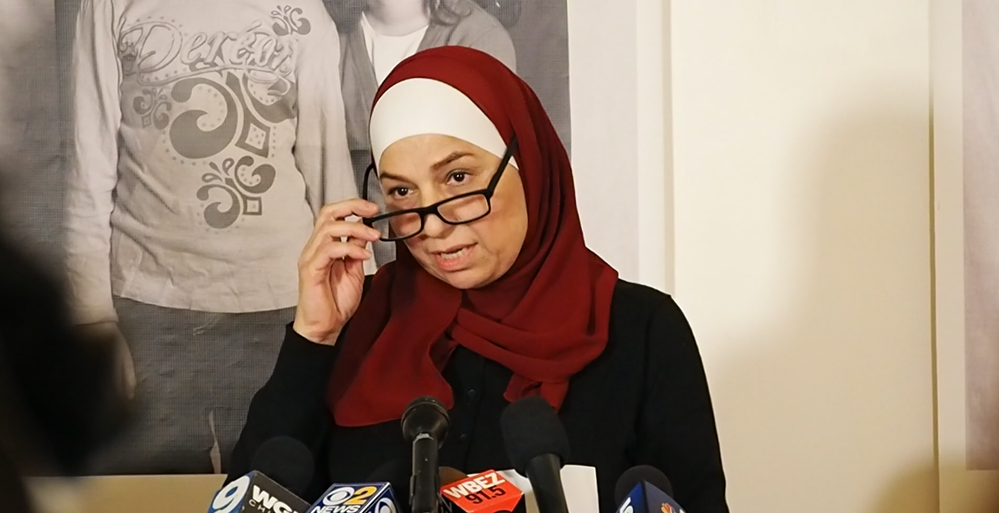
"I want America to know, first: we aren't [just] refugees, we are human beings," she said. "We come here because we are looking for peace which we missed in our country. We are Muslims and we are not terrorists, and we don't come to take others' place. We come here to continue our lives, to study, to support, to contribute to the people in the country."
Her daughters are trying to find a way to enroll in college to continue their education. But due to the family's visa status, it's impossible to acquire a scholarship, explained Ruba, who studied fine art and interior design in Cairo and hopes to one day be an animator for Disney.
"These aren't illegal immigrants. They're legal. They have visas. The state department arranges their flights," said Alisa Wartick. "I think if people could understand that, I think they would have a different opinion." Wartick has been organizing a network of about 40 mothers from around Lincoln Square who came together on Facebook last November to provide support for refugee families. She said the group managed to raise more than $10,000 from more than 200 people for the remainder of the Khalaf family, who'd been due to arrive Jan. 30.
"It seems the exact opposite of what our American values are, what I understand them to be," Wartick said.
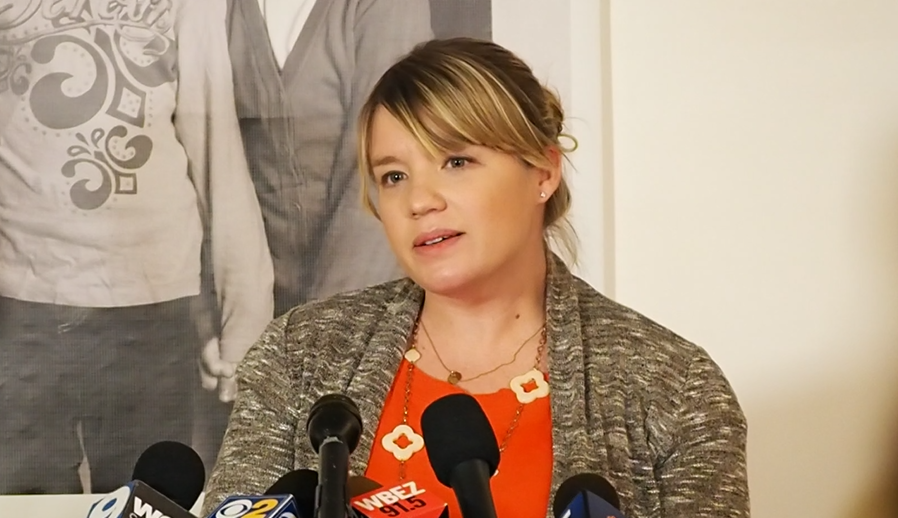
Another group helping out refugees in the Chicago area is Am Shalom, a reform Synagogue in Glencoe that sponsored one of the last families to arrive in the United States before Trump's refugee ban came into effect. The family of four landed Friday at O'Hare, their arrival coinciding with International Holocaust Remembrance Day. Alyssa Latala, a director of the temple, said welcoming a family of refugees was a powerful way to observe the occasion.
"As Jews, this is our charge and responsibility," she said. "We are a congregation descended from immigrants and refugees. This country was a beacon of hope for so many of our parents and grandparents."
After putting out a call for support from its community, donations and volunteers started flooding in, Latala said. Am Shalom fulfilled its initial fundraising, collected enough home supplies for two households and had dozens of volunteers ready to help the family adjust.
Suzanne Sahloul is the founder of the Syrian Community Network. She said the perception of some members of the American public that Syrian refugees are "arriving by the boatload" is completely inaccurate. For the first few years of the war in Syria, thousands of Syrian refugees were resettled in the US with little incident or controversy. But then, things changed.
"We started seeing refugees in the prism of ISIS," Sahloul said, using an acronym for the Islamic State in Iraq and Syria, "which is really unfair." More than 10 million Syrians have been internally displaced or forced to flee the country by ISIS and the civil war that began more than five years ago, according to the United Nations.
The most recent family of Syrian refugees to arrive in Chicago has been set up "safe and warm" in a Chicago-area home, according to Latala. Am Shalom will continue to accept contributions on their behalf via its Human Needs Fund, while RefugeeOne requests a variety of donations for the nearly 1,000 refugees it resettles in the Chicago area every year.
Top: Khaled Haj Khalaf at an event Jan. 31 at RefugeeOne in Chicago
Get more local news delivered straight to your inbox. Sign up for free Patch newsletters and alerts.