Crime & Safety
Robert Serritella Found Guilty Of 1992 Murder Of David Chereck
The convicted murderer turned down a plea deal that could have seen him released after five years in prison.


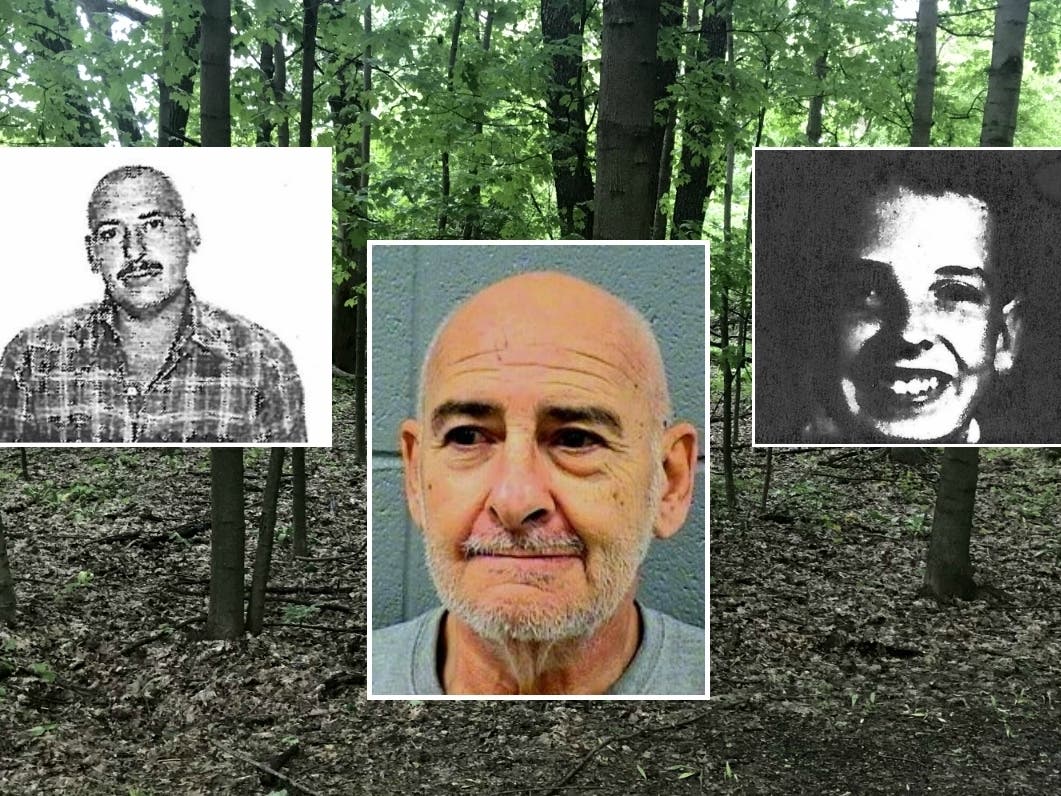
SKOKIE, IL — After three days of testimony and a rejected last-minute plea deal, a judge found Robert Serritella guilty of the 1992 murder of 15-year-old David Chereck. Serritella, 76, was charged 22 years after the death of the Niles West High School student — six years after detectives from a cold case unit picked up the the investigation and one year after Serritella picked up the phone and placed a cold call to the mother of the murdered Skokie boy. Ahead of the verdict Thursday, Serritella again rejected a plea deal that could have ensured he'd see just five more years in prison.
“I can’t do it, your honor.” Serritella said, rejecting a negotiated guilty plea on the final day of his trial. “At this point — I’m sorry.”
The convicted sex offender had already waived his right to a jury trial, preferring to put his fate in the hands of the judge who has overseen his case for much of the past five years, who had already decided which evidence to admit and which to exclude. Prosecutors called 16 witnesses against him, but Serritella declined to take the stand in his defense.
Find out what's happening in Skokiefor free with the latest updates from Patch.
“I wish not to testify,” he said.
Cook County Associate Judge Lauren Edidin took about 30 minutes to consider her ruling after closing arguments were presented. After considering all the evidence presented, Edidin said prosecutors had proved Serritella guilty beyond a reasonable doubt of two counts of first-degree murder in the death of “an innocent teenager, David Chereck, whose life was tragically ended by the defendant in such a violent and cruel way.”
Find out what's happening in Skokiefor free with the latest updates from Patch.
On the night of New Year’s Day 1992, prosecutors said Serritella was “on the prowl” through Skokie and Morton Grove, cruising “in his mommy’s white Chrysler” and “looking to satisfy his sexual urges.”
Serritella “was Esther Chereck and every other mother’s nightmare,” assistant state’s attorney Bill Delaney said, adding that he was “armed with intent and motive.”
“We don’t know how exactly it happened — inside the car, outside the car — but we know it happened,” Delaney said. In addition to circumstantial evidence, he cited evidence of Serritella’s motive, flight and confession. A former Lane Tech High School student testified that Serritella propositioned him on his way home from school and the two began an erotic relationship over the phone. An auto mechanic testified that Serritella was in a hurry to fix damage to his car and head to California after Chereck’s killing. And former cellmates said Serritella confessed details of the crime while imprisoned on unrelated charges.
All the while, Serritella suggested he was merely a witness. He described seeing a teenage boy he believed to be victim, but the timeline and clothing description he provided never matched up. He kept talking about the case after moving to California and Nevada, telling friends and acquaintances about how he was a considered a suspect in an Illinois murder.
“Robert Serritella likes to talk, he talks to everybody,” Assistant Public Defender David McMahon said, describing his client’s philosophy as “sharing is caring.” He said Serritella was “just babbling” and the unsolicited information he provided to police in the days after the murder turned out to be false anyway.
“We know he didn’t see David Chereck,” McMahon said. “He thought he did. It wasn’t David Chereck. He thought he saw the kid.”
With regard to Serritella’s descriptions of the murder as described at trial — he said the murderer may have had to dispose of the boy’s shoes and jacket because of getting blood on them, that Chereck might have had an older male lover who “made a proposal” before “things got out of hand,” and that Chereck must have known his attacker — McMahon argued Serritella was “applying his own logic to what he thought had happened.”
In Serritella’s version of events, he saw a teenage boy get into a car before sunset, close to 5 p.m. on that January evening, on his way to Chicago. He visited a sushi bar, but he happened to return to the area to stop by a 7-Eleven in Skokie nearby where Chereck was last seen alive. He said he saw Chereck again in passing at the convenience store. He first provided authorities with a similar account just days after Chereck’s body was found by a Morton Grove man walking his dog along the Linne Woods on Jan. 2, 1992.
But prosecutors pointed to Serritella’s home address on West Touhy Avenue in Park Ridge to cast doubt on the idea that he just happened to have coincidentally gone out of the way to pass through the same Skokie neighborhood.
On the evening of Jan. 6, 1992, retired Morton Grove Police Chief Mark Erickson, now an teacher at Stevenson High School, was investigating his first case as a detective in the department. He testified in the third day of the trial that he had been assigned to follow up on a call from Serritella to sheriff’s police. Serritella told him he was working on a local newspaper story about Chereck’s murder.
“He told me he had seen a teenage male white with a fatigue jacket the night in question ... that this young teenage boy had gotten into a white Cadillac," which he saw turn north into Harrer Woods around 7 p.m., Erickson said.
The detective said Serritella told him he had seen the boys two more times, once with "three other teenage boys in downtown Skokie," in the area of Lincoln Avenue and Oakton street, and another time, "he saw him walking alone on Gross Point Road."
Erickson asked Serritella what he had been doing in the area at the time, and Serritella suggested he was buying a cup of coffee at the 7-Eleven on his way home.
Serritella's later accounts put his return between 1 and 3 a.m., while Chereck was last seen walking home about three blocks from his parents' house around 10:10 p.m., according to testimony from a friend at trial.
A close-knit group of Niles West sophomores, now in their mid-40s, spent the evening hanging out with Chereck. They played video games at a bowling alley, decided against seeing a movie, visited a video store and hung around a local park.
The investigation was originally handled under the jurisdiction of the Cook County Forest Preserve police, who did not file charges and no longer have their own detective division.
According to police reports compiled in 1992 but not introduced at trial, Serritella told a roommate in Hollywood that he had “witnessed a murder in Illinois and that the police are trying to blame him, because of his past.” The witness said “she had asked what he meant. Serritella related to [the woman] that the demon in him makes him do bad things,” and he refused to elaborate.
Another witness told Forest Preserve investigators that “Seritella likes to put up smoke screens.” When asked what he meant, police said the witness told them, “when Serritella would commit any crimes or do anything bad, Serritella would create a diversion which would take any suspicions away from him.”
According to the investigators who interviewed the witness, “Serritella had done this several times in the past … [the witness] knows that Serritella has sex with young boys. … the way Serritella would get the young boys is that he would hang around arcades, schools or any other place young boys would hang out at.”
A decade before his arrest, Serritella recruited an actor turned private investigator for a “student film” in Los Angeles via a Craigslist ad. The actor began surreptitiously recording Serritella with a device from Radio Shack. When that was unsuccessful, he enlisted the help of the FBI.
“I’ve tried to forget this whole thing, honestly, the best I could,” the actor said, after his recording of Serritella was played in court. Testifying on the third day of the trial, he explained that he and his future wife had spent Thanksgiving 2004 with Serritella before recording his conversations.
“I probably am still a suspect,” Serritella told the actor on the audio recording played at trial. “I was the prime suspect. I suppose I’ll always be the suspect.”
The convicted murderer said his victim was not abused and “must have known his attacker.” Otherwise, he said, the boy wouldn't have gone to the woods with his killer. Serritella described being a suspect in the boy’s murder as “not a big thing in my life,” but instead “like a hangnail.” Serritella offered the actor money to call the Skokie Police Department and inquire about the status of the investigation, but the man suggested Serritella call the detectives himself.
But Serritella, having provided a DNA sample years earlier, was concerned. Better to not “open up a can of worms and let dogs lie,” he said. “I don’t need any more problems in my life.”
Earlier on a 2004 FBI recording, Serritella expressed concern about cold cases he had heard about where “now they’ve got the technology and now we’ve got the evidence to put him away.”
In the recording, Serritella presents his own “scenario” of how the crime played out — “If a young boy had a male lover,” he said, and they met at the park, “his male lover” may have grabbed his scarf and strangled him.
Prosecutors Wednesday called their second jailhouse informant as a witness. The first, a man who pleaded guilty to second-degree murder in a parking lot stabbing, had already testified that Serritella suggested his car was seen at the scene of the crime. The second, a man awaiting trial next month on charges he molested the 12-year-old daughter of his girlfriend in Chicago, testified he spent nearly a year as Serritella's cellmate. During that time, they spoke about his charges about three times, the witness testified, adding that in those conversations, Serritella provided a detailed account of the crime.
But even in his admissions to a cellmate, Serritella seemed to continue to blend truth with fiction. According to the account from the man detained on child sex offense charges, Serritella told him “a young boy was involved. He was basically trying to [date] him, he met him at a 7-Eleven.”
He testified that Serritella told him he knew the boy for a couple weeks and they had been speaking on the phone. However, phone records obtained by investigators do not show any contact between Serritella, who maintained three phone numbers and often handed out business cards with the pseudonym “Rico Rocco” and the catchphrase “Let’s Come Together.”
In his confession to a cellmate at Cook County Jail, who has since been moved to another county, Serritella claimed he had been attempting to solicit oral sex from the victim, but the boy refused. “Fisticuffs” ensued, according to the witness, and Serritella then choked the boy to death with his scarf.
Serritella told him Chereck was “looking up at him gasping for air,” the witness testified.
The boy “basically looked up at him and asked why he’s doing this,” he said, adding that after Chereck stopped breathing, Serritella took off down the alley, according to their conversation. As for the Morton Grove officer who, years after the initial investigation, remembered seeing a suspicious car pulling out of an alley leaving the forest preserve, Serritella asked his cellmate, “How can this guy see me?”
Serritella expressed a similar query to the other jailhouse informant brought as a prosecution witness at trial. Both accounts put Serritella near where Chereck’s body was found shortly before 5 a.m.
The judge next heard from two investigators who worked on the case. Retired Chicago Police Department Det. John Duffy traveled to Las Vegas after a televised report from WLS-TV reporter Chuck Goudie. Serritella refused to talk to prosecutors, but he was willing to speak to Duffy, according to testimony from the former officer, who spent 16 years as an investigator for the Cook County State’s Attorney’s Office after retiring from nearly three decades with CPD. During the interview, Duffy testified, Serritella repeated his account of witnessing a car similar to his own pick up the murdered boy. When asked about the damage to his bottom of his car that he rushed to get fixed the day after police first called him back about his tip as a supposed witness, Serritella refused to discuss it.
“He wouldn't talk about it,” Duffy said. “He wouldn’t say where it occurred, when it occurred or how it occurred.”
The investigator then asked Serritella what he thought happened to Chereck.
“The person who stopped the boy asked where he lived,” Serritella told him. “The boy and a man smoked some marijuana and the man made a proposal. ...things then got out of hand.”
The final witness called to testify was Larry Rafferty, a longtime Cook County Sheriff’s police investigator and currently a deputy chief of the Midlothian Police Department. He assigned two detectives to investigate Chereck’s murder in early 2008 after sheriff’s police took over investigative responsibilities from the Cook County Forest Preserve District police.
Rafferty let Ms. Chereck know that year the case was reopened. Six years later, Serritella was behind bars, and more than 10 years later Serritella has finally been convicted of murder in the case. It was Rafferty who Ms. Chereck contacted in 2013 after Serritella had called her out of nowhere, seemingly seeking forgiveness for a crime he refused to admit to committing.
When investigators arrived to arrest him in 2014, Serritella was ready.
“He said, ‘I know why you’re here,’” Rafferty recalled.
Ahead of closing arguments Thursday, prosecutors played audio of a 1998 interview between Serritella and WLS-TV reporter Chuck Goudie. In the recording, Serritella repeats his account of seeing a boy who he thinks is the victim get into a car similar to his, driven by a similarly-aged man as himself, except somewhat fatter, hairier and smoking a cigar.
“If the police are the least bit astute,” Serritella told the reporter, they would have been able to trace the man’s cigar.
“He was not in my car. He was never in my car,” he insisted. “I didn’t do it … I think I might have the answer.”
Goudie asked the now convicted killer what he would say to Ms. Chereck if given the opportunity. Serritella said he hoped she would forgive her son’s killer.
“If you could just forgive whoever did it,” Serritella said. “Seek justice, forgive the man.”
Serritella was represented by a pair of pro bono private defense attorneys shortly after his arrest. Subsequently, his case was taken over by the public defender’s office. In the closing argument at his final trial before retiring from the office, McMahon argued that most of the evidence against Serritella had been in prosecutors’ possession dating back to 1992. The only thing that was new, he suggested, was some of Serritella’s confessions while in custody.
McMahon said the prosecution’s case relied on “a lot of square pegs in round holes.” He said several of the prosecution’s witnesses offered little in the way of actual evidence and pointed out inconsistencies in witness accounts from 1992 and those written up by cold case investigators more than two decades later. With time, according to the reports, memories of a white American car stalking the boys that night became more pronounced.
“They’ve made Mr. Serritella look utterly distasteful in many ways, ” McMahon said. “They’ve made you want to find him guilty. But they haven’t made him. They haven’t proven him guilty.”
According to Assistant State’s Attorney Ethan Holland, Serritella has been “haunted by this murder.”
“It haunts him. He talked and he talked and he talked. He can’t shut up about it. But for his refusal to remain silent, we wouldn’t be here today,” Holland said, adding that Serritella concocted “this absurd story” because he thought an officer had seen him exiting the forest preserve on the night of the murder.
“He has been haunted by the fact that what he did to David Chereck might some day catch up to him and today it has,” Holland continued. “Chereck, all 4 foot, 11 [inches] of him didn’t stand a chance. Not against this guy. Not this night. ... Today is Robert Serritella’s day in court. It’s taken over 27 years for this day to come, and it’s also David’s day for justice.”
Earlier:
Get more local news delivered straight to your inbox. Sign up for free Patch newsletters and alerts.