Politics & Government
Dems in 14th District Race Talk Earmarks, Taxes and Deficits
The League of Women Voters of Central Kane County hosted candidates Thursday night.


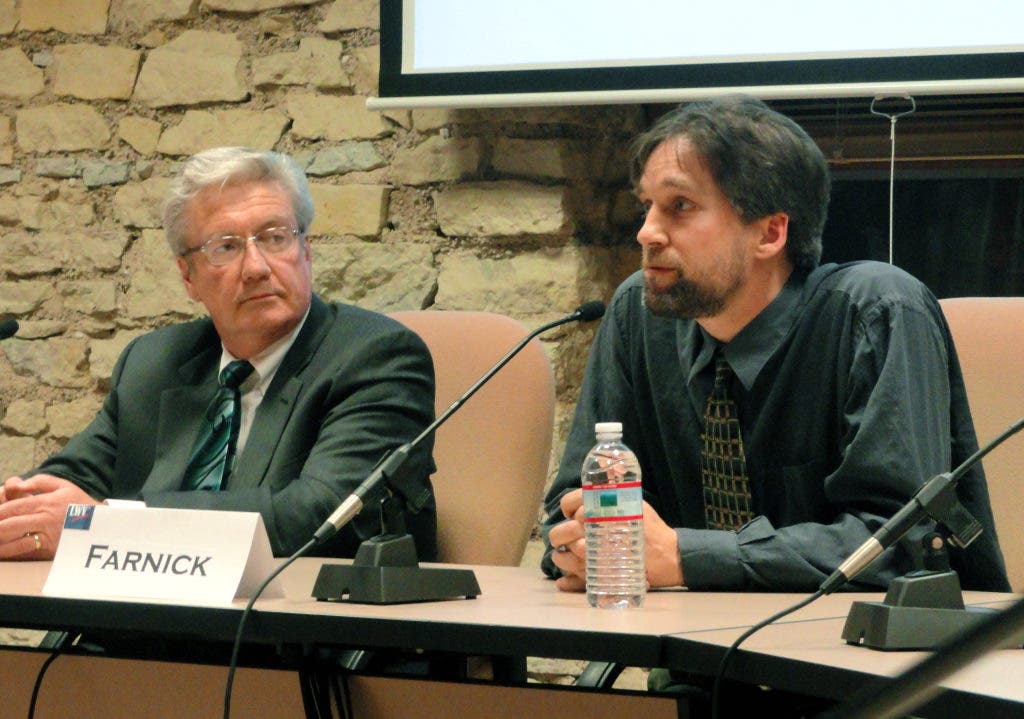


Two Democrats vying for their party’s nomination in the 14th Congressional District addressed questions from interested residents Thursday night.
The League of Women Voters of Central Kane County hosted the candidates in a forum at Batavia’s City Hall.
Dennis Anderson of Gurnee and Jonathan Farnick of Woodstock will square off in the March 20 Illinois primary in the hope of challenging Republican incumbent Randy Hultgren for the 14th District.
Find out what's happening in St. Charlesfor free with the latest updates from Patch.
Both Democrats largely seemed to agree on many of the issues in the questions submitted from residents but did differ on how they view the divide between parties in Washington D.C.
Find out what's happening in St. Charlesfor free with the latest updates from Patch.
What should we do to reduce the federal deficit?
Cutting military spending is one area the candidates both see as places to start cuts.
Farnick said that military spending has doubled in the past six years and remains one of the largest aspects of government.
“That’s a good place to look for fraud and abuse,” he said.
While Anderson offered that the U.S. should scale back the number of overseas bases it maintains, Medicare also is a huge portion of the budget and should be freed up to negotiate drug prices as a way to reduce its costs.
How do you feel about the idea of a fair tax?
Both men favor maintaining a progressive federal income tax.
“It was always a progressive tax,” Farnick said. “If we ever have a flat income, we can have a flat tax.”
Anderson said that anything other than a progressive tax has a disproportionally greater effect on poor people. The tax structure in place for the last 10 years, specifically referring to the President Bush-era tax cuts, has not created jobs.
“And it’s not likely to do so,” Anderson said.
What about earmarks attached federal bills?
“One person’s earmark is another person’s wonderful project,” Anderson said. He prefers “clean bills” and was mainly against earmarks.
Farnick said earmarks simply shift funds around in what otherwise would be the total price tag for a bill
“It doesn’t add anything tot he cost of any particular bill,” Farnick said. His preference is to see add-ons that apply quality to the entire country, rather than for any one special interest.
And how would you increase cooperation between Democrats and Republicans?
Farnick said there most be a common ground—"known truths"—that both sides must be willing to agree on. He specifically mentioned Republicans from the 2010 health care debate who rallied against proposed components they once had supported.
"If you don’t want even to agree to something you've said so in the past," Farnick said, "it’s hard to have a conducive arrangement and talk to move things forward.”
Anderson said he believed there are no bad people in Congress.
"I have Republican friends. We’re able to talk about issues quite civilly,” he said.
The problem lies in the "near-constant campaigns" sitting senators and representatives conduct, Anderson said.
Get more local news delivered straight to your inbox. Sign up for free Patch newsletters and alerts.