Politics & Government
Divided City Council Advances St. Charles Comprehensive Plan
Final vote to adopt plan could come as soon as Aug. 19.


A divided St. Charles City Council on Monday voted 6-3 to direct the city staff to compile a final draft of the 2013 Comprehensive Plan that would reflect the revisions made earlier by the Plan Commission and the council’s Planning and Development Committee.
The move, despite contention over including the possibility of residential development on the site of the old St. Charles Mall property, opens the the door for final adoption of the plan, tentatively set for Aug. 19.
Aldermen voting for the plan included Rita Anne Payleitner of Ward 2, William Turner and Todd A. Bancroft of Ward 3, Jo Krieger of Ward 4, and Ed Bessner and Maureen Lewis of Ward 5.
Find out what's happening in St. Charlesfor free with the latest updates from Patch.
Voting no were Ron Silkaitis of Ward 1, Art Lemke of Ward 2 and James Martin of Ward 4.
Ward 1 Alderman Dan Stellato abstained from the vote.
Find out what's happening in St. Charlesfor free with the latest updates from Patch.
The plan has been more than two years in the making and has been a source of controversy among some residents, particularly over fears that the document would open up commercial properties to residential development — in particular, the development of apartments or high-rise apartments on the city’s West Side.
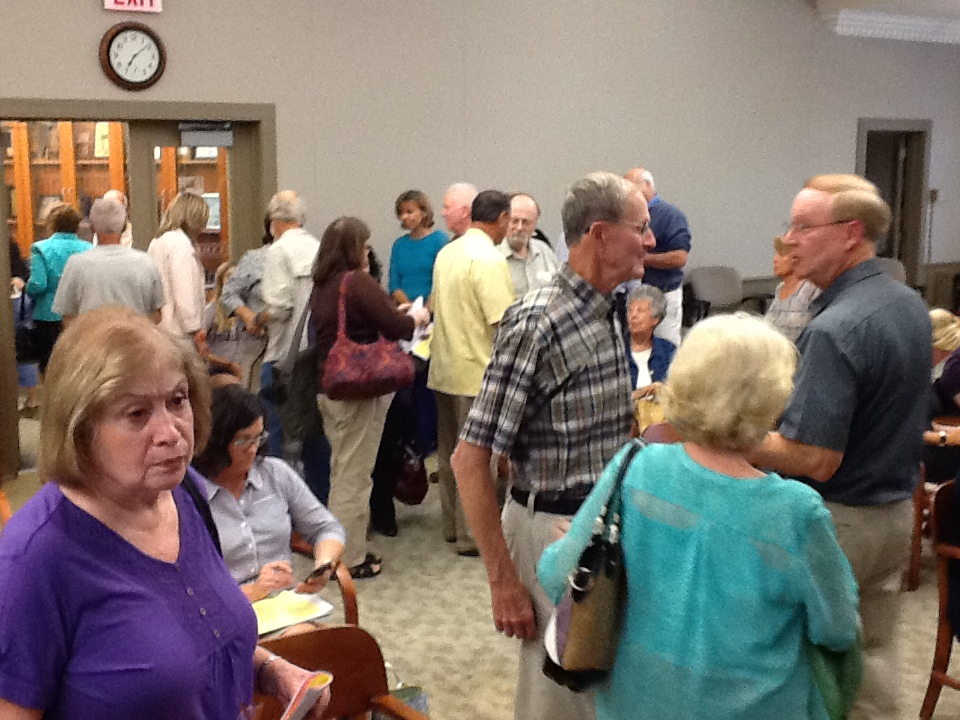
Some of those fears were reflected in comments residents and aldermen made during Monday’s public hearing on the document.
What the Plan Is and Isn’t
Before the floor was opened to comments on the plan, Mayor Raymond Rogina took pains to explain the Comrehensive Plan is a policy document and guideline for the city to look to as future development and redevelopment.
“The plan functions as a guide only … It lays out a vision for how the community could evolve over the next 20 years,” he said.
That means, he said, it serves as a guide for future decisions on such things as development proposals, zoning changes, and decisions on infrastructure improvements.
Further, he explained, the plan does not change the zoning of any property, nor does it approve a development proposal for any property, he said, explaining the city already has a process in place governing such instances that require their own hearings and review processes, ultimately coming before the City Council itself for final approval.
Rogina’s comments appeared to target some of the greatest misconceptions about the plan, its purpose, and the weight it might have on future decisions by the city.
Residential Concerns Remain
The mayor’s opening remarks failed to assuage the plan’s critics, however.
Gene Kalley, an outspoken critic of the plan, warned aldermen that the plan could tie up future tax dollars by involving the city in real estate development. He pointed out that the plan in places makes references to funding sources that ultimately could become taxpayer dollars.
He said the plan ought to reflect that those references to unidentified funding sources simply should reflect they will be taxpayer dollars.
He listed tax breaks the city has offered as incentives for new business, a development incentive, and the use of tax increment financings for the First Street Development as instances of past mistakes by the city.
City officials in the past have flatly disagreed with Kalley’s characterization of First Street and other projects he has criticized.
Another resident spoke about concerns related to residential development and schools — specifically, that the city should work with the school district to ensure that children are not bused across town to other schools.
But other comments were directed at the council’s decision to keep mixed-use and residential development as options along the city’s eastern and western gateway areas.
One man even asked for a show of hands from the audience of those who would prefer to see only commercial development along Randall Road. Many hands in the room went up.
The concerns about residential and mixed-use development in those areas have been raised many times. Some fear the addition of high-density housing — apartments, specifically — will create an array of problems in area where residential density already is a concern. Those concerns range from busier streets to more wear and tear on infrastructure to fears of increased crime.
City officials, however, want to preserve some flexibility in the plan, cognizant that the future might present development opportunities that are unforeseen now.
Still, Vanessa Bell-LaSota, who has been active throughout much of the plan process, expressed concern that, given the council’s flip-flop on the residential issue — the council at one point stripped all residential development from the plan as it pertains to the eastern and western gateways — stronger language should be included in the plan about protecting existing neighborhoods and subdivision communities. She said such protections are not spelled out sufficiently in the plan.
Alderman Bancroft, however, disagreed with that assessment, pointing to two pages in the plan that spell out 10 to 12 safeguards for neighborhoods.
Aldermen Lay Out Stances
Bancroft’s remarks came as aldermen added their voices to the comments on the plan, which Bancroft said he supported.
Silkaitis, Lemke and Martin said they supported much of the plan, but not the flexibility that one day might allow residential development in the gateways where commercial property needs to be safeguarded for commercial use. Each specifically mentioned the former St. Charles Mall site.
Krieger, too, said she would oppose the development of apartments there, but she said she recognized a need for the plan to be flexible to allow creative options.
Perhaps Turner said it best in describing the plan as having plenty of options entering a future that none can predict. “I do believe in American ingenuity. There is no plan out there for the old mall, but there will be. … We need to have all those options on the table.”
Emphasizing restrictions over flexibility, he said, will inhibit ingenuity and creativity needed to ensure success in those area.
Bessner and Lewis also spoke for the plan. Bessner said residential development was not an issue for him — it is the plan’s potential “based upon the competitive plans that may come before us in the next 10, 15, or 20 years.”
Lewis also spoke of the plan’s flexibility, and her opposition to apartments being developed on the old mall site. Still, she said, there are sufficient protections in the plan to address the concerns being raised.
Payleitner, who initially declined to comment on the plan, spoke as the public hearing was winding down, going on the record in support of the plan. Echoing Turner, she said the city needs to keep its options open for the future.
“We need to trust this council now and in the future to see that our town is protected,” she said.
Next Step
Rogina added that with the City Council’s action during its formal meeting after the public hearing, the final draft of the 2013 Comprehensive Plan will be drawn up with all the revisions offered by the Plan Commission and the City Council Planning and Development Committee, reflecting all changes ultimately approved by the council.
The final draft is tentatively scheduled for an adoption vote on Aug. 19.
Let Patch save you time. Our free newsletter can be delivered to your inbox. Fast signup here. Then like us on Facebook and follow us on Twitter at @StCharlsILPatch.
Get more local news delivered straight to your inbox. Sign up for free Patch newsletters and alerts.