Politics & Government
The Case Against Sidewalks In Western Springs
Survey indicates why people oppose sidewalks. Meanwhile, supporters plan rally backing sidewalks in village neighborhood.


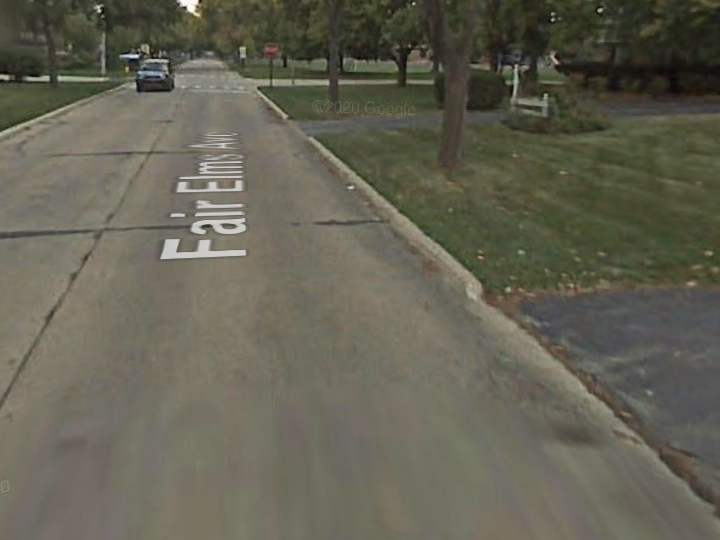
WESTERN SPRINGS, IL — A Western Springs survey of residents in the Forest Hills neighborhood showed that about 60 percent of residents favor paying for sidewalks. But one village official described the sidewalk opponents as "definitively against." Some survey respondents contended the lack of sidewalks added to the town's beauty.
Grand Avenue resident Rod Frazier, one of the leaders of the sidewalk supporters, disagreed with the village official's analysis. Some opponents, he said, were turned off that they would have to pay an estimated $100,000 for a study to determine what the Forest Hills sidewalks would cost. It turns out the study's cost will be much less — $16,000.
On Sunday, sidewalk proponents are planning a rally for 1 p.m. in the village's downtown.
Find out what's happening in Western Springsfor free with the latest updates from Patch.
"We're eager to have the board to get moving on this and really make this a priority," Frazier said in an interview. "We can't spend another 18 months delaying this and picking it up in 20 years."
As it is, the neighborhood is a patchwork of areas with sidewalks and those without. The more than 30-block subdivision is bound by 47th Street, Wolf Road, 55th Street and Commonwealth Avenue. Some streets within two blocks of Forest Hills Elementary School are without sidewalks.
Find out what's happening in Western Springsfor free with the latest updates from Patch.
One of the reasons a patchwork of sidewalks exists, Frazier said, is houses built in the last 15 years were required to have sidewalks. Those built earlier, he said, had no such mandate.
At a meeting last month, the Village Board appeared poised to approve the $16,000 study. But officials generally agreed to delay a decision on the study until a strategic planning session in the fall.
Under a village ordinance, officials said, residents would pay for 70 percent of a sidewalk project, while the village would cover the rest. Residents would pay their portion through a tax district known as a special service area.
Frazier, however, said the village could seek federal and state grants for the project to defray some costs.
The survey of residents was in 2019, with 380 responding.
Many expressed surprise over the estimated $100,000 cost of a study. While some sidewalk foes mentioned the increase in property taxes as a result of the tax district, plenty of others contended sidewalks would not look good.
One resident wrote, "We prefer the aesthetics of full lawns unbroken by concrete sidewalks. To us, the latter connotes city."
Another former Chicago resident agreed, saying, "The main reason we moved here is because there are no sidewalks. We really liked the fact that our lots seemed much larger without the sidewalks." Yet another said "the beauty of the properties with deep setbacks and front lawns with no concrete sidewalks have always been pleasing for us and anyone who visits."
Others expressed support.
"Even though I have a sidewalk, I feel the neighborhood has more young families walking (with baby strollers!) than ever before. It's just dangerous," one resident said.
A resident who is a real estate agent said sidewalks in Forest Hills would help property values.
"I have had home buyers decide on other locations due to no sidewalks in Forest Hills," the resident said.
Another wrote, "My kids ride their bikes to school, and it is scary to share the streets with so many speeding cars and big trucks (Lawn is a through street)."
Get more local news delivered straight to your inbox. Sign up for free Patch newsletters and alerts.