Politics & Government
Water Treatment Plant Change Orders Progress in July: Report
Western Springs releases water department report for July 2013.


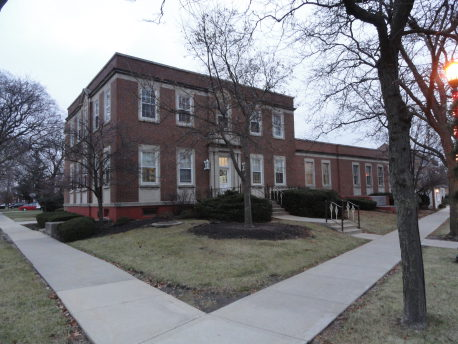
Engineers for the Village of Western Springs will continue work on the Low Pressure Reverse Osmosis Water Treatment Plant, with plans to continue "punchlist" items, installing doors and finishes in the month of August, according to engineering firm CDM Smith's July report.
In July, Joseph J. Henderson & Son installed pump and piping for a Clean-in-Place system for the Amiad Iron Removal Units and continued change order progress, according to the report. Additional architectural work inside the building was also completed.
Additional change orders are being processed and review by the engineer and Village staff, according to the village.
Find out what's happening in Western Springsfor free with the latest updates from Patch.
Village contractors hired a lab to measure the permeate water quality produced from Wells 3 and 4 to prove conformance with the contract requirements. The project ended about six months later than expected after a few delays, which caused concern among residents dealing with the messes of hard water during the transition to reverse osmosis.
Recent water department news:
Find out what's happening in Western Springsfor free with the latest updates from Patch.
- Water Softening Equipment Offline Until Next Week
- Reverse Osmosis Update: Clean in Place Procedure Should Start Next Week
How reverse osmosis filtration works (Written by Darren McRoy)
Labeling the new form of water treatment as “reverse osmosis” doesn’t really do the full process justice. The actual reverse osmosis is only one step of the sequence, and one not even applied to all the water that goes through the plant.
In the coming system, seen in the diagram attached to this article, water is pulled from two Village wells, #3, behind Village Hall, and #4, in the Public Works yard south of the Rec Center. (Well #1 is only used for emergencies, and Well #2 is capped.) The water then is pumped upwards into the treatment plant using booster pumps. There, it is processed by Amiad “iron filters”—which actually filter all particles larger than two microns (1/12,500 of an inch), but perhaps most importantly, iron.
“We tend to have a lot of what we call ionized iron, Fe+, and when that gets exposed to air, it turns to rust,” Supert explained. “It shows up in your washing machine, ruins clothes.”
From there, between five and 15 percent of the water—all from Well #4, since Well #3 has trace amounts of radium too high to be unfiltered—skips the next two steps. This, Supert explains, is because there is such a thing as too-pure water, and the reverse-osmosis process produces just that.
“That water is so soft it’s actually is like almost slimy, slippery—you wouldn’t be able to get soap off your body when you take a shower,” Supert said. “You want some taste, because pure water doesn’t taste good. And you want to have some minerals in there to give it quality.”
The rest of the water then travels though cartridge filters, an extra step to remove further impurities and ensure that nothing can get through that could gunk up the reverse-osmosis piles. Then, at last, the water reaches the step for which the plant is named.
Osmosis, a critical process within all cellular life forms, refers to a process that equals the concentration of a solvent (say, salt) within a solute (say, water) on opposite sides of a membrane. For instance, if fresh water and salt water were placed on opposite sides of a salt-permeable membrane, the salt solvent would move into the freshwater solute, an example of osmosis.
But since the aim in filtration is to remove impurities from water—solvents from a solute—reverse osmosis turns the process upside down. A long, thick tube-shaped selectively-permeable membrane is fitted within a pipe, and the to-be-treated water flows through the interior before being pressure-forced through the membrane to the outside. The process removes virtually anything except pure H2O molecules: the exact opposite result from normal osmosis.
This water is then rejoined with the small percentage permitted to pass with slight mineral content, treated with fluorine and chlorine and balanced to a 7.3 pH before being sent to a 500,000-gallon reservoir behind the water plant. From there it can either go straight to homes and businesses, or to the million-gallon tower in or the two million-gallon standpipe next to Bennett Field.
A summary of the water quality data and the maximum contaminant levels regulated by the United States Environmental Protection Agency and the Illinois Environmental Protection Agency are shown the table above, courtesy of the Village of Western Springs.
Get more local news delivered straight to your inbox. Sign up for free Patch newsletters and alerts.