Politics & Government
Reverse Osmosis to Replace Current Water Treatment System
Project 15 years in the making expected to begin construction in early 2011.


The long-awaited Reverse Osmosis Water Treatment System is one step closer to fruition. According to Municipal Services Director Bill Nelson at last week's Public Works and Water Committee Meeting, the village will begin accepting bids for the replacement of its current water treatment system at the beginning of November with plans to start construction as early as January 2011.
"We started to look at what to do to rehabilitate the plan about 15 years ago; we really started getting serious about finding a replacement for it 5 years ago," explained Nelson. "During the course of that investigation, some of the engineering companies started talking about technologies we had previously discounted, RO being one that's really come down in price, [with the goal] being the higher drinking water standards...reverse osmosis creates essentially perfect water."
Though most suburbs east of Aurora use Lake Michigan water, after investigating its options using both water quality standards and cost analysis, the village decided to continue using its access to an underwater aquifer but to install a new treatment system. "One of the big factors was controlling water rates. If we went to Lake Michigan water or something else, every community the water passes through has the ability to change that rate and charge the village more, so it was determined early on that the village wanted to stay on the deep aquifers," Nelson said.
Find out what's happening in Western Springsfor free with the latest updates from Patch.
The village operates three wells, two of which measure 1400 feet deep to reach an aquifer below the village, and one of which is a shallow well which serves as a back-up in case of emergencies. All drinking water in Western Springs comes from the two deep water wells and will continue to come exclusively from the deep water wells, despite all three wells receiving an update when the new system is put in place. Residents will not necessarily notice a difference in taste with the new system, but they may notice less mineral content in their water.
Reverse osmosis is not a new technology, it was first used in the 1950s, according to Nelson, but it is new to the region; Western Springs will be one of nine municipalities in northern Illinois to use the system. Regions that use desalinated seawater have long been using the technology in order to filter out larger particles that can be found in seawater or aquifer water, which often has a heavy mineral content.
Find out what's happening in Western Springsfor free with the latest updates from Patch.
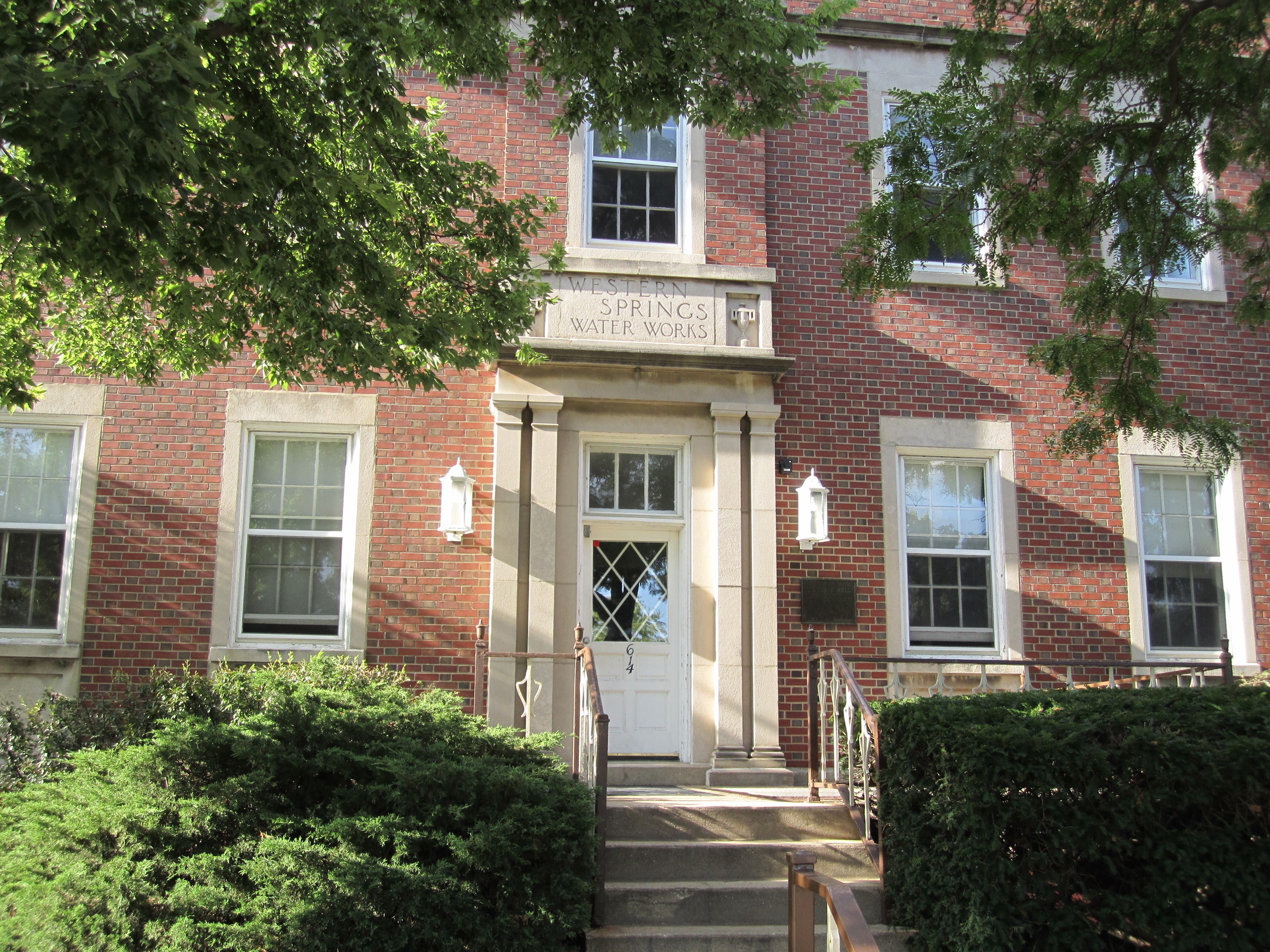
Just as the wells will remain the same, the structure housing the current water treatment system will house the new system after a complete remodel. Village Trustee Jim Maragos explained that reusing the structure was the most cost-effective and logical solution, "The distribution point was there so we couldn't build a new facility then pipe everything to [a new] distribution point...It would cost millions of dollars."
Nelson and Maragos hope that construction will begin at the beginning of 2011 because of the way the interior of the building will be dismantled. There are two systems within the building and the plan is to take one down at a time in order to keep residents supplied with water; this can best be accomplished when demand for water is low rather than during the summer months. If a problem does arise, however, Nelson said, "In emergencies we can buy [water] from neighboring communities." Construction is expected to last 12 months.
The Western Springs Reverse Osmosis Treatment System was designed by consulting and engineering firm CDM, based in Cambridge, Massachusetts, and the company will supervise the project, which will be constructed by a contractor to be determined after all bid proposals are received in November or December. The project is being funded through a revolving, low-interest loan program by the Illinois Environmental Protection Agency for municipalities to update their water and sewer programs.