Community Corner
Letter to the Editor: Phone Industry Pioneer, Frank Reese, 1917-2011
Ray Smith remembers Frank Reese, a longtime Wheaton resident and telephone industry pioneer, who died July 19.


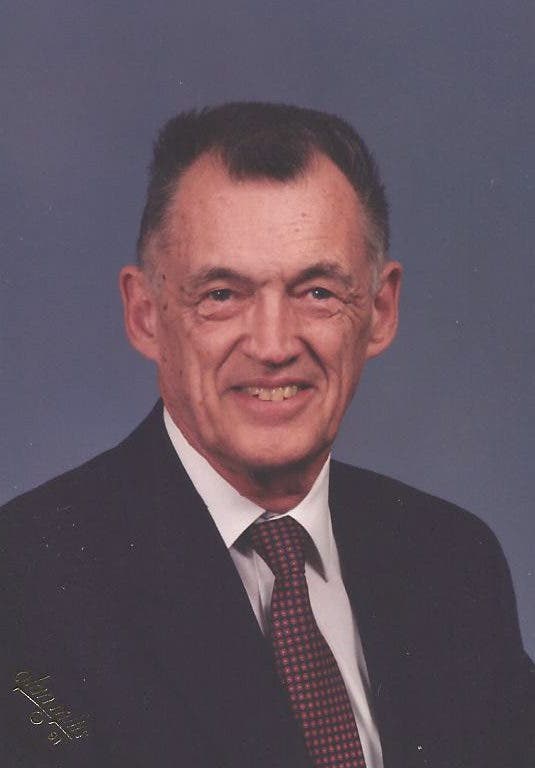
Frank D. Reese (1917-2011): Distinguished Telephone Industry Engineer; Independent Telephone Hall of Fame (1997)
By Ray Smith, Publisher Emeritus, TE&M and Telecom Asia magazines
The Frank D. Reese who died July 19 in Lyons, NY at age 93 of renal disease gave five decades of outstanding service to a bygone telephone industry. He would laugh good-naturedly if he overheard you calling him what he was: "an Industry Giant." Who knows which of his many national citations Frank privately prized most. Perhaps the last: induction into the Independent Telephone Hall of Fame (1997). He was a Distinguished Fellow of the International Engineering Consortium (IEC). Recipient of both prestigious USTA awards: the Distinguished Service Medallion ( 1994) and the Pacesetter (1991 ) for "leadership in telephone technology."
Find out what's happening in Wheatonfor free with the latest updates from Patch.
Honored by the IEEE's Communications Society in 1974 with its Edwin Howard Armstrong Achievement Award given annually since 1958. And so forth. Here was that rarity: a whip-smart, hands-on telephone engineer whose executive skills, combined with a winning personality, led him into senior leadership roles in both the operating and supplier segments of the telecom business.
"To know Frank was to like him. He could reprimand you with a smile and you'd walk away thinking you'd just been promoted," marveled one longtime colleague. Born in Cortland, NY in December 1917 to a physician who co-founded the local hospital, Reese's parents died when he was young and he was largely raised by an uncle until old enough to be sent to Loomis Chaffee (CT) prep School. When at age 12 he was given some batteries from the railroad, he and two pals wired a telegraph between their three houses, the start of his telephony bent. "All hell broke loose when one of his friends spilled some battery acid," says son Charles Reese.
Find out what's happening in Wheatonfor free with the latest updates from Patch.
Frank was hired by General Telephone Company of Pennsylvania as an equipment engineer in Erie after graduating from Cornell University in 1939 with a BS degree in Mechanical Engineering. Between 1942-45 as a lieutenant in the Army Signal Corps he followed the Normandy invasion across France, "rescuing" an excess military PBX before he mustered out that provided room-to-room dialing in future Reese homes! Rejoining GenTel PA in 1945, Frank was promoted to Engineering Supervisor and in 1952 to Chief Engineer. At 40--when transferred to GTE Service Corp as Engineering Director--his career took off. Three years later in 1960 Reese was elected President of the newly-formed GTE Automatic Electric Laboratories in Northlake, IL. During the next fourteen years he honchoed the development and launch of GTE's electronic product line and mentored a staff of talented engineering managers like Ed Glenner, Maury Esperseth, Charlie Pleasance and Bob Stoffels among others. (I covered the cutover ceremonies of the first #1-EAX central office in Portage, Indiana in 1972 as editor of TE&M magazine.)
By the 1980s there were over 3 million lines of updated EAX systems worldwide. As innovative a thinker as Reese was by nature, he had to work realistically with the maze of different central office systems and plant within the non-Bell telcos that CEO Don Power, President Les Warner and minions had acquired to form nationwide General Telephone & Electronics (i.e. the Gary Group of companies).
As an example, Roger Conklin, fresh out of Kellogg at the time, recalls chatting with Frank in the early '60s: "We were discussing the merits of 'associate' ;and 'detached' contact circuit drawings for switching equipment. Federal--which used 'detached' contacts in its circuit drawings had installed a brand new SxS exchange in Erie, PA replacing an old AE stepper. Frank told me that he much preferred Federal's 'detached' contact drawings to AE's 'associated' drawings. But he said 'it is far too late to even thinking of making a change to 'detached' at AE. He also told me that AE some time before had made an evaluation and decided to stick with SxS and not develop a crossbar such as Western, Kellogg and North Electric had done, and would go directly to an electronic CO, which they had on their plate at the time."
By 1973 he was telling friends he was hankering to get back to his operating company roots and took early GTE retirement to join North Pittsburgh Tel in Gibsonia, a few miles south of his old Erie stamping grounds.
As fortunate as the medium-sized telco was to get his level of experience, what they had was also a go-getter-by-the-tail. In two years Frank was GM and, as undoubtedly part of the original understanding, made president in 1979. In a late-life entrepreneurial spurt, he guided the Independent through a ten year modernization program during the midst of turbulent telecom changes technological, regulatory and in the marketplace, launching an interconnect subsidiary, an ISP, a CLEC and aggressively moving in on Bell's toll business in the Pittsburgh environs. The company moved from its embedded Automatic Electric analog to Northern Telecom digital switches beginning in the 1980s. (I interviewed Frank during on-site research and a facilities tour for a TE&Mprofile story of the company during this period.)
Eventually, as age caught up, Reese served as president of the holding company, North Pittsburgh Systems, Inc., a member of the board and its subsidiaries as well as Director of Future Technology and Product Planning. The company was purchased by Consolidate Communications of Mattoon, IL in January 2008 (Reese's former colleague on the USTA board, Dick Lumpkin).
Here's what NPT's website says: "There were many reasons why the company was sold, but the primary problem was competition from non-traditional telephone services (cellular, VoIP, etc). The company was beginning to lose up to 10% of its customer base and start losing money. Hedge fund owners were not happy and forced the company to sell."
All during his career, Reese's level-headed ability to build consensus was in demand by industry organizations. When he'd proven himself as chair of the Engineering Committee and other important sub-committees of the U.S. Independent Telephone Association, he was eventually elected to its "clubby" board of directors. Retired director Rollie Nehring always "felt comfortable working with Frank because he was so honest , straightforward, dedicated, intelligent and cordial--the perfect example of our former industry's legacy."
The same scenario in the Pennsylvania Telephone Association where Reese was treated as a peer by the dominant Bell companies and served a term as president. The IEEE had him chair several of it Communications committees. The International Engineering Consortium in Chicago under Bob Janowiak recruited Frank as a director, where he served as board chair. Successor President John Janowiak says "Frank played an important role in guiding the IEC's strategic mission for over 30 years. Under his leadership we served many industry and academic professionals with quality education. Frank, and his lovely wife, Jan, would bring passion and vitality to each initiative."
In 1980, Frank was a member of TE&M's U.S.trade and seminar mission to the People's Republic of China at the invitation of its Ministry of Telecommunications. Reese lectured on switching technology at sessions the 42-person delegation presented in Beijing, Xian, Nanjing, Shanghai and Hangchow. Reese was a founding board member of the Exchange Carriers Standards Association, the predecessor to the Alliance for Telecommunications Industry Solutions. While professional to the core, Frank showed his soft spot for his telephone heritage as an active member of the Bunova club ofIndependent Telephone Pioneers of America.
The Life Member was on the board of its Historical Foundation and, as verified bycurrent treasurer James McCartney, also made regular contributions to the ITPA's charitable foundation and was "interested in its progress." Frank wrote technical articles which not only engineers but also other levels of operating company readership could grasp and apply. He served as a Contributing Editor for Telephone Engineer & Management, and authored numerous papers fortechnical journals over the years, including the IEEE Spectrum. Did you know this man had a life-long fascination with trains and trolleys?
During the 1970s when he was my neighbor in Wheaton, IL, Reese actively restored trolleys in nearby Elgin. He did the same later at the famous Pennsylvania TrolleyMuseum in Washington, PA where he also enjoyed donning an engineer's cap to give demonstration rides on several miles of track to the visiting public. Son Charles remembers that family man Frank was also a "big modeler. We had an elaborate train layout and dad built some detailed models of inter-urban cars." While living in Erie he was a docent on the Flagship Niagara at the Maritime Museum.
Reese was preceded in death by his wife of 63 years, Janice Painter Reese in 2010. Surviving are three sons, Frank III (Liza) of Darien, CT; Charles of Madison, CT and Robert (Robin) of Lyons, NY and four grandchildren. There will be a memorial service in Erie, PA on August 6 at Brugger Funeral Homes at 11 a.m. He may be gone but Frank Reese has left too big a footprint to be soon forgotten.
Get more local news delivered straight to your inbox. Sign up for free Patch newsletters and alerts.