Politics & Government
Wilmette Residents To Start Paying Annual Stormwater Utility Fee
The $68 million Neighborhood Storage Improvement plan is the village's largest-ever investment in a public works project.


WILMETTE, IL — Starting Jan. 1, property owners in Wilmette will start to be assessed a new fee to cover the cost of the village's largest-ever single public works investment. The $68 million Neighborhood Storage Improvement project will cost approximately $4 million a year to cover its cost, according to village staff.
To calculate residential stormwater utility fees, homeowners will be divided into three tiers depending on how much impervious surface area their property has. Impervious areas include pavement, decks and patios. It does not include lawns, gardens or swimming pools.
About half of single-family homes in the village have between 3,000 and 4,300 square feet of impervious surface, according to the village. A quarter of homes have less, a quarter have more and all homeowners will be billed quarterly on their utility bills.
Find out what's happening in Wilmette-Kenilworthfor free with the latest updates from Patch.
The largest homes will pay $186 in the first year. Those in the middle will be billed $144. The smallest will pay $118 in 2020. Over time, the fees will increase, with the rates eventually calculated based on the actual final cost of the project and the interest rates paid to finance it, according to the village.
Village trustees decided on a three-tier fee schedule based on property size was the most practical and reasonable way of covering the cost of the project, since it would be "logistically impossible" to calculate a fee based on the unique features and sizes of more than 8,000 single-family homes.
Find out what's happening in Wilmette-Kenilworthfor free with the latest updates from Patch.
Residents can check which tier their home is included in can click on "stormwater bill estimate" in the village's community portal or review a video showing how to check their property's estimates impervious area. Those who feel their properties have been included in the wrong tier can submit a request to change it online or by email to stormwater@wilmette.com. Each commercial property will have its impervious surface area measured individually to calculate their fees, staff told Pioneer Press.
In July, an Illinois appellate panel ruled unanimously that stormwater fees based on impervious area are not illegal on the Illinois Constitution and Municipal Code, rejecting a challenge from Winnetka resident Mark Green. The decision ended more than four years of litigation that cost the village over $280,000 in legal fees.
Related:
Appeals Court Rejects Winnetka Man's Claim Stormwater Fees Are Illegal
Lawsuit Challenging Village's Stormwater Fee Dismissed By Judge
Wilmette Trustees Pick Least Expensive Flood Control Plan
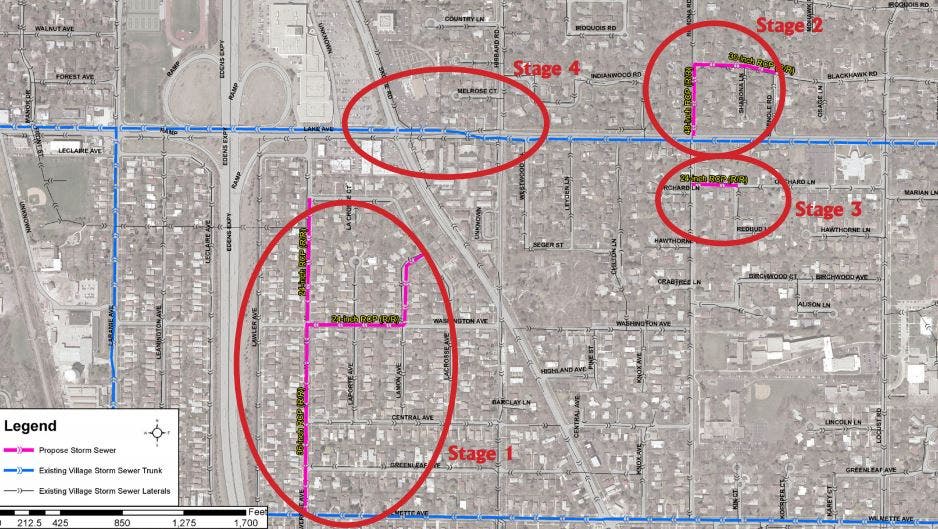
The first construction on the project is complete on Orchard Lane with work on Lavergne Avenue expected to be complete by Thanksgiving, according to a project page for the West Side Neighborhood Storage Project.
The first stages of the project are expected to be complete by the end of the year, with the other stages complete by the summer of 2020 allowing for work to begin at Community Playfield at 702 Locust Road.
The initial work includes building large relief storm sewers in residential areas currently subject to flooding. Once they are complete, three more phases of construction are anticipated, with the whole project complete by 2023.
The new stormwater fee is anticipated to be the largest tax or fee increase Wilmette residents will be paying. For the average home, the village's proposed 2020 budget also includes an annual increases of $40 in property tax, $50 for the road program and $13 to sewer rates, according to a presentation to the village board last month. The budget includes $23.21 million for Phase 1A and 1 of the project.
The 2020 Stormwater Utility Fee will range from $118 to $186 over the year, with properties placed in one of three tiers based on impervious surface area. For more info on tiers and to look up your fee, please visit the Village’s website. https://t.co/vvTOX3MKYh pic.twitter.com/erujTShSM7
— Village of Wilmette (@VofWilmette) November 18, 2019
Get more local news delivered straight to your inbox. Sign up for free Patch newsletters and alerts.