Politics & Government
Rep. Jesse Jackson Jr. Asks Woodridge to Sign On For Third Chicago Airport
The Abraham Lincoln National Airport would be built on a 4,000-acre property near Peotone and funded by private companies.


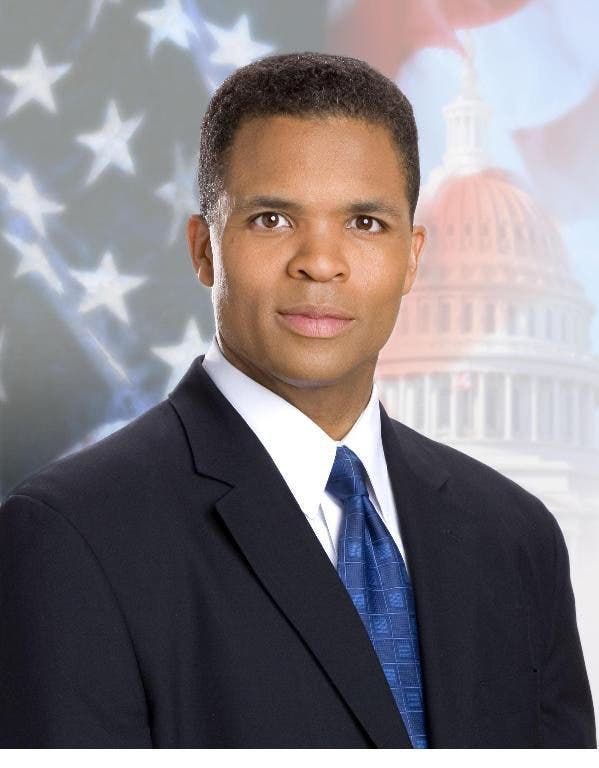
U.S. Rep. Jesse Jackson Jr. wants to become part of the airport authority for a third Chicago airport.
Jackson, who has pushed for an airport located in south suburban Chicago since his initial run for Congress in 1995, presented his case to the Woodridge village board at its Dec. 21 meeting.
“Your joining would signal an avalanche of other home-rule municipalities in Will County to encourage the Governor to begin construction of this project, and that’s why I’m here,” Jackson said.
Find out what's happening in Woodridgefor free with the latest updates from Patch.
Board members were invited to ask questions Dec. 21 but did not discuss or vote on the measure. Jackson left an ordinance for the village to vote on, which is still being considered and will not be on the agenda for the board's Jan. 12 meeting.
While a third Chicago airport has been a long-talked about prospect, Jackson told the village board the project is “very close to getting, I believe, and we believe, a sign-off, provided that the appropriate communities join the Abraham Lincoln National Airport Commission.”
Find out what's happening in Woodridgefor free with the latest updates from Patch.
Cause and effect
The project, named the Abraham Lincoln National Airport, is slated to be built on a 28,000-acre property near Peotone that is owned by the state of Illinois. The first phase of the airport would be built on a 4,000-acre section of that property. If re-elected, the airport would be in Jackson’s district
The airport would be 30 minutes from Woodridge, Jackson said, launch the village into the global economy and create hundreds of thousands of jobs.
By June, the project could create 1,000 construction jobs, Jackson said. Two years later on opening day the airport would create 15,000 jobs. The airport could represent 130,000 jobs in 25 years, he said.
There’s demand for a third airport, Jackson told the board, and Chicago’s third airport would complement, not compete, with O’Hare or Midway.
“The region is profoundly stifled by the lack of aviation capacity,” he told the board. “We simply don’t have enough runways in our region to accommodate future growth,” causing operations to bypass Chicago.
Building the airports will have no recourse to taxpayers or the municipalities which back it, Jackson said, because it was be a private-public-partnership.
“It will be governed by local authority,” he said. “It has credibility from the willingness of private investors to attest to its viability. … The standards for the private sector are very different than the standards used in U.S. aviation operations.”
There’s been a world-wide search for companies to develop the airport, Jackson said. LCOR and SNC-Lavalin, which both have developed international airports as well as seaports and tollways, were chosen.
The Abraham Lincoln National Airport Commission
Jackson likened the commission to a “broad policy organization of transparent elected officials and mayors” which could determine, for instance, how many minimum and prevailing wage jobs are available or if certain nearby communities would be guaranteed jobs.
The commission is open to all Cook, Will and Kankakee home-rule municipalities to join, Jackson said. Woodridge falls into DuPage, Will and Cook counties.
Twenty-one municipalities have joined, including University Park, South Holland, Park Forest, Calumet City, Lansing and Country Club Hills.
As a business, the developers would run the airport as a storeowner would run its own company.
Like a Target coming to the village, “We would not tell them what goes in aisle one, aisle three,” Jackson said. “They run their store.”
Once formed, the commission would ask Gov. Pat Quinn to transfer the 4,000 acres, which Jackson said are designated for use as an airport, to ALNAC. ALNAC would then transfer the acreage to the airport developers.
The airport would start with five gates and one runway and will only expand as need requires, Jackson said. A 25-plus-year plan for the air would include 280 gates. As the airport expands, the commission will collect more rent.
Village Trustee David Pittinger questioned whether there was enough demand to warrant another Chicago airport. He said his own company hoped to cut down on travel.
Jackson said efficiencies offered at the airport would result in lower price points for passengers. Low-cost airlines like Virgin and Spirit Airlines don’t fly out of O’Hare, he said.
A main source of that efficiency would be common use gates, a practice common in Europe. Instead of gates owned by United, any airline can use any gate.
Get more local news delivered straight to your inbox. Sign up for free Patch newsletters and alerts.