Politics & Government
Louisiana Probation Officers Bracing For Thousands Of Additional Caseloads
An estimated 1,200 more inmates will be freed on probation or parole within two years under new laws overhauling criminal sentencing.

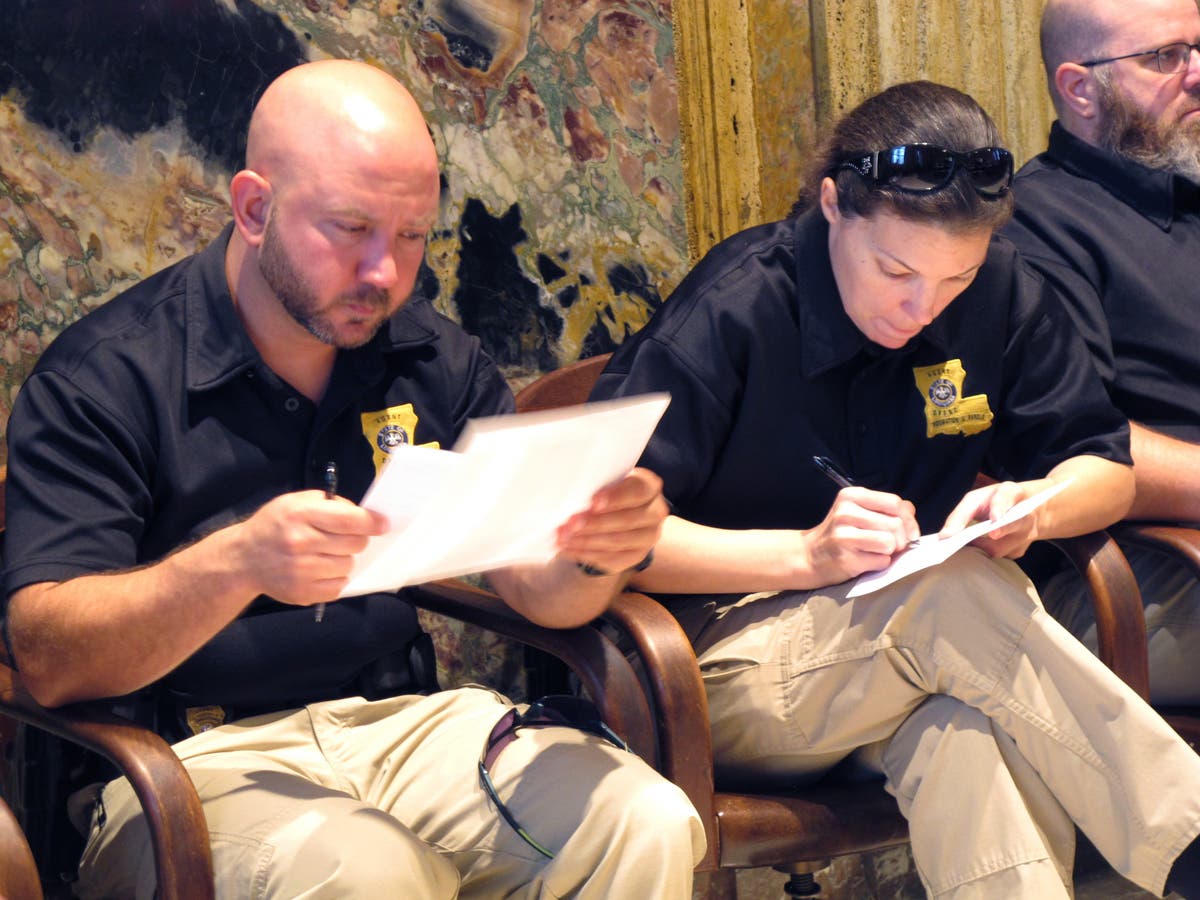


BATON ROUGE, LA — A probation and parole officer in Louisiana recently looked for a drug-addicted prostitute, encouraged a paralyzed former gang member to ease up on painkillers, and checked in on a man who killed his father with a meat cleaver decades ago.
Scott Tubbs, the lone mental health specialist in the Baton Rouge parole offices, said his job is important, but intense and stressful. He's concerned it will only get worse under new state laws that expect to bring thousands of additional cases to his workload and that of his colleagues.
Gov. John Bel Edwards recently signed a package of bills overhauling criminal-sentencing laws, anticipating they will lead to a 10 percent decrease in the state prison population over the next 10 years along with a noticeable fall in crime. Louisiana spends about $700 million a year on correctional costs, a huge bill for a state that has struggled with repeated deficits for nearly a decade. (For more local news, click here to sign up for real-time news alerts. If you have an iPhone, click here to get the free Patch iPhone app.)
Find out what's happening in Baton Rougefor free with the latest updates from Patch.
On June 15th, Gov. John Bel Edwards signed historic criminal justice reform legislation into law. #lagov #lalege #PrisonReformLA pic.twitter.com/e7aemLhnXR
— Gov John Bel Edwards (@LouisianaGov) July 12, 2017
Under the laws, which take effect later this year, an estimated 1,200 additional inmates will be released on probation or parole within two years, Corrections Secretary Jimmy LeBlanc has said. More will follow.
Tubbs and many of his colleagues support the measures, which they hope will lower recidivism rates, ultimately reducing probation officers' workloads in the long run. But for the next two years at least, officers will see a sharp spike in caseloads — without additional resources, he said.
Find out what's happening in Baton Rougefor free with the latest updates from Patch.
"So what do you think is going to happen to the amount of services we provide? Naturally, it's going to go down," said Tubbs.
Tubbs says officers also fear that the additional cases could spur more people to leave the department, generating even larger workloads and creating a downward spiral of attrition.
The department has always struggled to retain officers because of large caseloads, high stress and low pay.
Starting salary for a probation and parole officer is $30,056. It hasn't budged since 2007. Entry-level probation and parole officers in neighboring Mississippi and Texas make around $36,200 and $39,700, respectively — even though Mississippi's median income per capita is about 15 percent lower than Louisiana's, according to federal data. Tubbs makes $45,000 after 15 years on the job.
"You need to make what I consider an adequate living wage, and we're almost to that point where it's not," he said.
Low pay is the chief reason the turnover rate for first-year officers was 42 percent last year, officers said. The turnover rate among all officers was 15.5 percent in 2016, a Corrections spokesman said. For every officer that leaves, 150 to 200 cases have to be distributed across the rest of the office.
"When (officers) are leaving at such a fast rate, a lot of times people get set aside and they're not getting the services that they should because we can't shuffle them around fast enough," New Orleans District Supervisor Richard Berger said.
That makes these officers easy pickings for other state departments, which like to poach them from the parole department because they're already certified for state jobs — so training costs nothing. Making a change is tempting: Starting salary for a Louisiana Department of Wildlife and Fisheries officer is $46,612.
"You don't become a probation and parole officer to get rich," New Iberia District Supervisor Danny Barras told lawmakers during a recent hearing, "but you used to be able to pay your bills."
To underscore their concerns and remind legislators that many haven't received raises in years, the officers maintained a constant presence inside the Louisiana Capitol this spring.
Lawmakers got the message: The state budget that took effect on July 1 gives a 2 percent raise to each officer, with about half of the officers getting an additional pay bump in January that averages $3,362. In 2018, the entry-level salary will rise to $34,632, a state Civil Service spokeswoman said.
"It's better than nothing," officer Jamie Oertel said as she drove around Baton Rouge on a recent afternoon to check on drug offenders. "Fortunately, I think we're now on (lawmakers') minds when it comes to making decisions."
Oertel would like to stick with her job through retirement, but as a single mother, finances play a heavy hand in that decision. Oertel's caseload recently dropped from about 175 to 150 following the addition of 20 officers statewide, including five in her office. She encourages the latest hires to ignore the pessimism they might hear from veteran workers and remember their job is important.
"It's very easy for people to get upset about not getting raises and how much turnover we have," Oertel said, "but (being negative) doesn't make anything better."
By R.J. Rico, Associated Press
Photo credit: Melinda Deslatte; Associated Press