Politics & Government
Texas Anti-'Sanctuary Cities' Law: Arguments Heard In New Orleans Appeals Court
Opponents say the law violates the Fourth Amendment by requiring police to detain suspected illegal immigrants without probable cause.

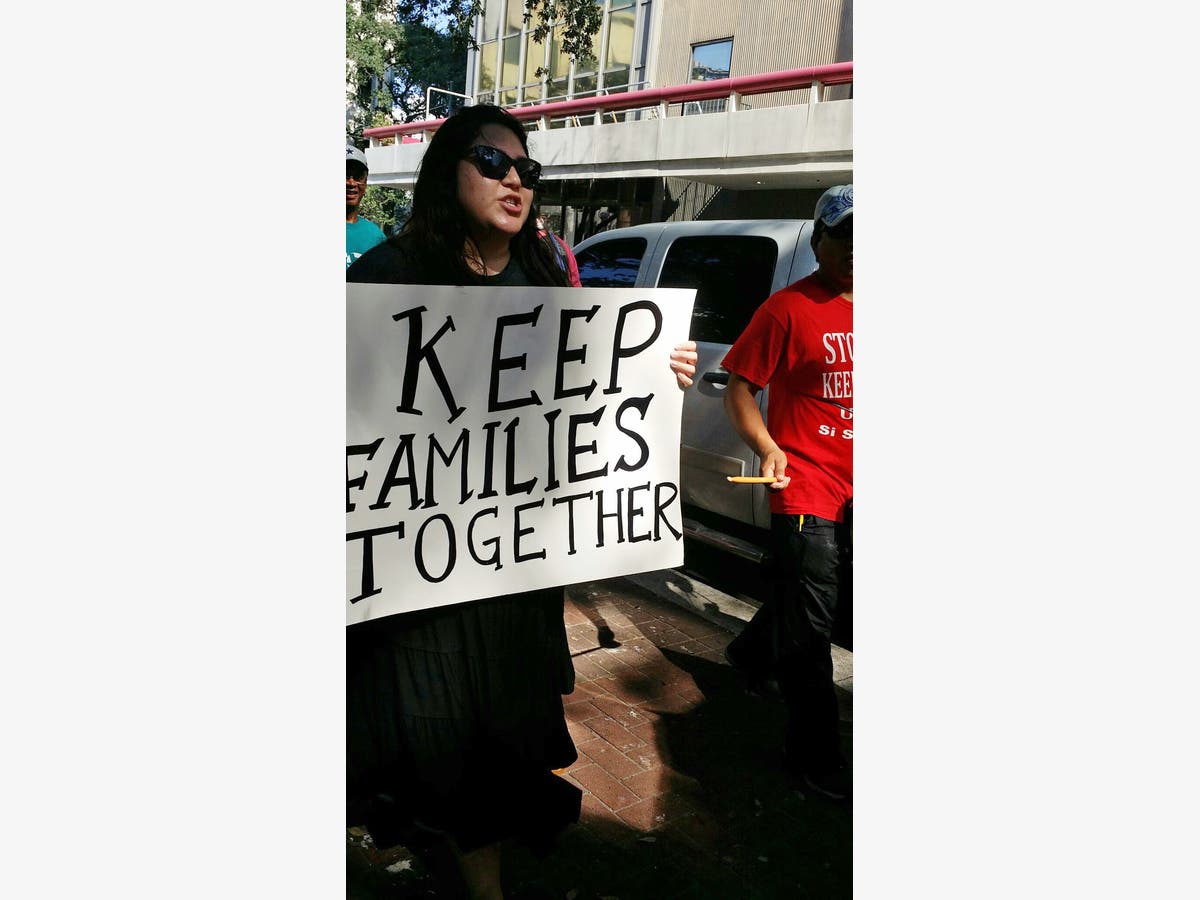
NEW ORLEANS, LA — A federal appeals court in New Orleans heard arguments Friday over whether to allow immediate enforcement of a Texas law aimed at combatting "sanctuary cities"as immigrants and their advocates chanted and beat drums outside the building.
Texas police chiefs can be removed from office — and face criminal charges — under the law for refusing federal requests to detain people jailed on non-immigration offenses. U.S. District Judge Orlando Garcia blocked much of the law Aug. 31 — a day before it was to take effect. The state appealed to 5th U.S. Circuit Court of Appeals. Arguments on Garcia's injunction against parts of the law are scheduled for the week of Nov. 6.
However, state officials, joined by the Justice Department, sought an emergency stay to allow enforcement of the law to begin. That request was before a three-judge panel of the 5th Circuit on Friday morning. The panel would begin discussing the case immediately after the hearing ended, court officials said. (For more information on the "sanctuary cities" case and other New Orleans stories, subscribe to Patch to receive daily newsletters and breaking news alerts. If you have an iPhone, click here to get the free Patch iPhone app.)
Find out what's happening in New Orleansfor free with the latest updates from Patch.
The law also allows police to ask about people's immigration status during routine interactions, including traffic stops. Various local governments in Texas are fighting the provision, which Garcia didn't block.
Municipal officials from Dallas, Houston, El Paso, San Antonio and Austin are among the opponents. The American Civil Liberties Union is fighting the law on behalf of the border city of El Cenizo. The Mexican American Legal Defense and Educational Fund represents other localities.
Find out what's happening in New Orleansfor free with the latest updates from Patch.
"Texas can tell its localities, 'You must cooperate,'" Scott Keller of the Texas Attorney General's Office said as he was questioned by Judge Stephen Higginson on issues including whether the state law illegally pre-empts federal responsibility for immigration control.
U.S. Attorney General Jeff Sessions has praised the Texas law and the Department of Justice filed arguments in support of it, as did several attorneys general from other states.
The law's opponents argue it violates the Fourth Amendment by requiring police to detain people suspected of illegal immigration without probable cause. They also say it illegally puts local police in the federal role of immigration enforcement officers, and is unconstitutionally vague as to exactly when a local law enforcement officer would be in violation of the law.
"They just don't want to be told that they have to cooperate no matter what the situation is on the ground," Lee Gelernt, of the ACLU, said after Friday's hearing.
"They want some discretion to ensure that they are satisfying their own view of the Constitution and that they're not doing anything to harm their own communities."
Judge Leslie Southwick raised the possibility that the panel could lift part of Garcia's stay, perhaps allowing part of the law to go into effect, but without the threat of penalties for local law officials. Nina Perales, of the Mexican American Legal Defense organization, told a reporter outside of the hearing that blocking the penalties would not be enough; the problem, she said, is that they would still be duty-bound to enforce the law.
Supporters of the state law say immigration officials have already determined probable cause when they seek to have local officials detain someone. They also argue that federal and local officials have a long history of cooperation on immigration matters and that the law is clear in its prohibition against local government's policies restricting immigration enforcement.
The measure won passage in the Republican-controlled Texas Legislature and was signed by Republican Gov. Greg Abbott despite opposition from business groups, which worried that it could cause a labor-force shortage and send a negative economic message.
Judge James Dennis joined Southwick and Higginson on Friday's panel. Dennis was nominated to the court by Democratic President Bill Clinton; Higginson, by Democratic President Barack Obama; Southwick, by Republican President George W. Bush.
By KEVIN McGILL, Associated Press
Associated Press reporter Stacey Plaisance contributed to this story.
Photo credit: Stacey Plaisance Jenkins/Associated Press