Community Corner
Pay College Athletes; It's Only Fair
I'm not advocating starting their compensation at NBA levels or even making them semi-pro players. But why not pay the student athletes a reasonable hourly-stipend for their time and effort?

I love March Madness.
I love watching the games. I enjoy listening to the commentators talk trash about the teams and the players. I even get a kick out of most of the commercials, though they aren’t as creative as the Super Bowl ads.
What I don’t like is the exploitation of student athletes, who I believe should be paid to provide the level of entertainment they bring to major television networks every spring.
Find out what's happening in Aberdeenfor free with the latest updates from Patch.
As I watched Ohio State blow out George Mason University, the experience became more about the clever commercials—at least for me—as the game progressed.
Magic Johnson was hawking Dove soap—or body-wash or whatever it is—for men.
Find out what's happening in Aberdeenfor free with the latest updates from Patch.
A UPS commercial focused on how its shipping service provides a “level playing field” for small businesses, much to the chagrin of more established companies accustomed to having an unfair advantage. BMW of Towson boasted it sells the right vehicle for your driving needs, and The Big Screen Store said it will take a trade-in on a TV.
And for all of the money that changed hands, the players didn’t directly see one penny.
They get scholarships and a free education, you say?
Granted.
But a study by Ithaca College and the National College Players Association released in October 2010 suggested that even NCAA Division I athletes who get full scholarships pay about $3,000 a year out of pocket when factoring in non-tuition related expenses such as room and board, parking fees and class software.
That’s not a lot of money for a college education, you say?
Perhaps.
But think about how much money the institutions make off the players.
There are television and merchandising deals, along with endorsements. All lead to big bucks for the colleges and universities.
Then think about how much money the coaches make—John Calipari of the University of Kentucky men’s basketball program, for example, signed a $31.65 million contract in 2009 to coach the team for eight years.
Then think about how much money even people who aren’t at all affiliated with the schools make through side bets and office pools.
Most of my friends and co-workers filled out the brackets hoping to have the magic eye because when the net gets cut whoever is closet to the final result gets the pot. And at $20 to $50 per player, per bracket, the winner usually makes a modest payday.
But if the athletes themselves participated in a pool and chose their own teams to win it all, their ethics would be questioned. They would get thrown off their teams and probably kicked out of their schools.
Now I’m not advocating starting their compensation at NBA levels or even making them semi-pro players. But why not pay student athletes a reasonable hourly stipend for their time and effort? That could be done for all student athletes because the schools could easily afford to pay every sport's players a reasonable stipend and have plenty of cash to spare.
“They are student-athletes," Mark Emmert, the NCAA’s new president, said last month at a Los Angeles Town Hall luncheon, the Associated Press reported. "They are not our employees; they don't work for us.''
Don’t they?
Anyone anywhere near college sports knows these students put in countless hours to reach tournament-play levels.
When I attended Columbia Union College, now Washington Adventist University, which is only a Division II program, even the junior varsity basketball team ran two-a-days four to five days a week.
The morning practice lasted from 6 a.m. to 8 a.m.; the evening practice, 8 p.m. to 10 p.m. And players routinely showed up at the gym early and stayed late to work on their games.
By my count, that puts student athletes in the gym at least 16 to 20 hours a week—before cracking the first book. That sounds like a part-time job.
Not so, said Emmert.
''They are our students, so we don't pay them,” Emmert said.
True.
But in all fairness, they should be paid because everybody else makes a profit from their hard work and dedication.
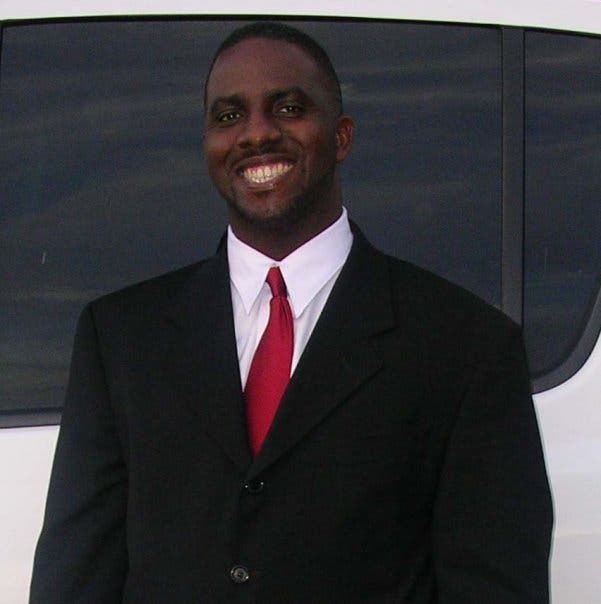
(The Monday Morning Quarterback is a column about the joys and complexities of life as seen through the eyes of Mark Tyler, the Local Editor of Aberdeen.Patch.com. Mark Tyler can be reached at Mark.Tyler@patch.com or 443-945-1882.)
Get more local news delivered straight to your inbox. Sign up for free Patch newsletters and alerts.