Community Corner
Tudor Hall Tour Gives Insight into the Mindset of John Wilkes Booth
My visit to the farm where Abraham Lincoln's assassin was reared confirmed my opinion of John Wilkes Booth. But it also gave me more insight into the family of the troubled actor who killed our nation's 16th president on April 14, 1865.



I’ve been interested in the myths and misconceptions surrounding Abraham Lincoln ever since high school.
That’s when I learned that contrary to the progressive picture elementary school teachers had painted of our 16th president, Lincoln engaged our nation in the Civil War not to free the slaves, but instead to preserve the union.
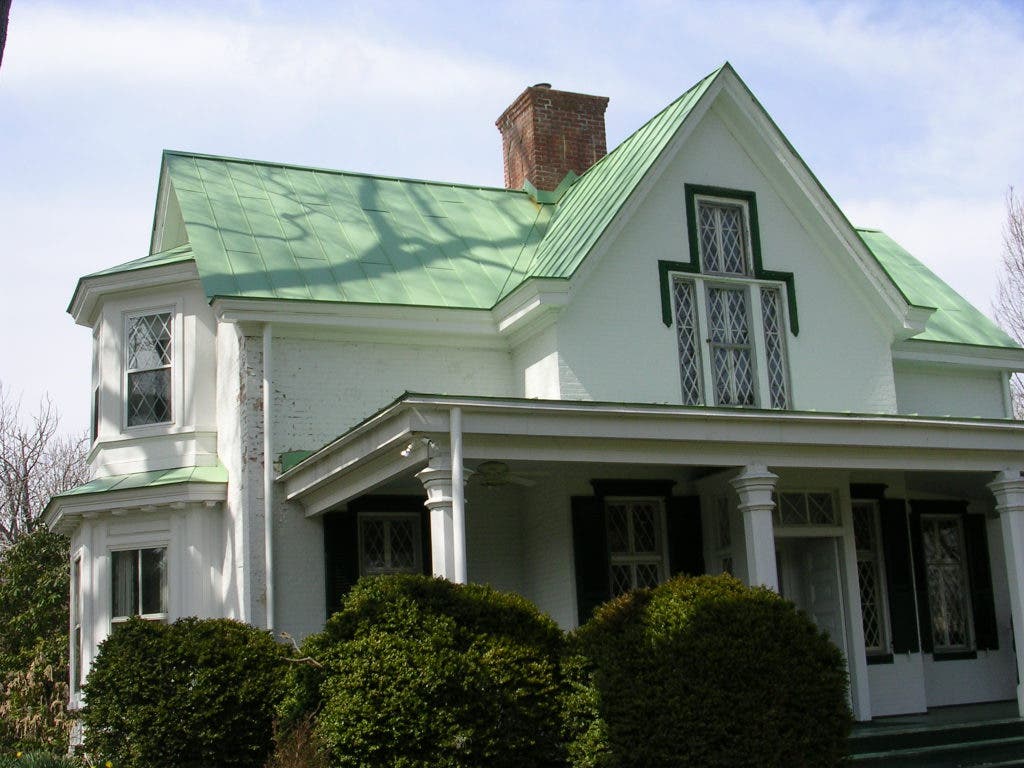
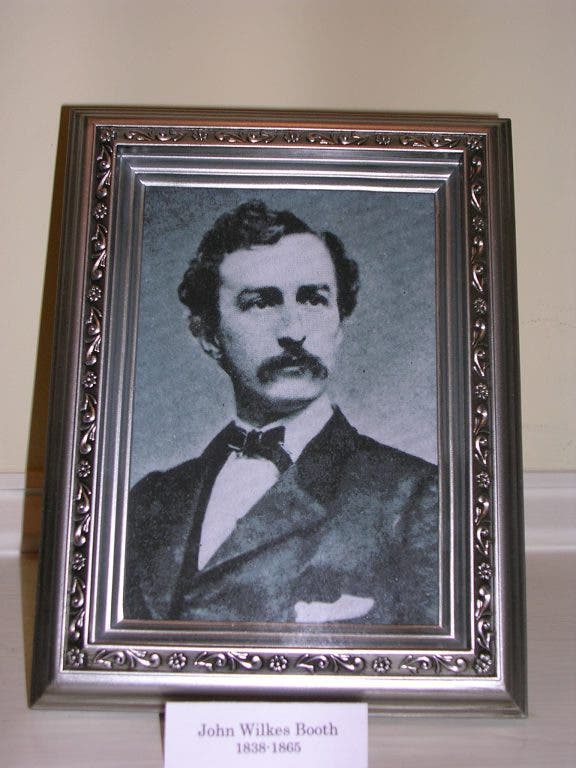
Given my considerable interest in Lincoln and the Civil War era, I gladly took an opportunity to learn more about Lincoln’s famed assassin John Wilkes Booth, on Sunday during a guided tour of Tudor Hall, the Booth family home in Bel Air, MD.
Find out what's happening in Aberdeenfor free with the latest updates from Patch.
The Tudor Hall tour is coordinated through . (For more information or to schedule a visit, go to the website by clicking here.) The tour doesn't normally feature actors in period clothing, but on Sunday volunteer Tina Siatkowski did show up in her floor-length flowing ivory gown.
I’ve always suspected Booth would have to be a pretty sick individual to assassinate an American president. My visit to the farm where he was reared confirmed my opinion of him. But it also gave me more insight into the family of the troubled actor who killed Lincoln on April 14, 1865 ironically just hours after the president had established the concept of the Secret Service.
Find out what's happening in Aberdeenfor free with the latest updates from Patch.
Booth was an extremely popular performer. His target, the quintessential opponent of the expansion of slavery in the United States who was attending Booth’s performance of Our American Cousin at Ford’s Theatre in Washington D.C.
Booth shot the president in the back of the head during the play and Lincoln died the next day.
To visit the Booth farm is to take a step back in time. But it is impossible to completely get lost in the period because development has crept right up to the front yard and the wooden stockade fencing of nearby homes provides a jarring reminder of the current age.
Still, the beautiful white house with hunter green shutters maintains much of its original charm.
As I drove onto the Booth estate admiring its grand entrance, quaint pond and lush grass, I expected to learn that the Booths were a typical family of southern slaveholders.
But that was not the case. The Booth family business actually was acting.
John Wilkes Booth was the son of Junius Brutus Booth Sr., a London-born thespian, who came to America to escape contract disputes on England’s stage.
Junius Booth actually left his first wife and child in England and started a whole new family in America, unbeknownst to any of them. When his children found out their father’s secret, it put a mental strain on all 10 of them.
And Junius Booth wasn’t a big proponent of slavery. He rented slaves but he didn’t have large slave holdings. Records indicate that he bought “a negro woman named Harriett … to serve five years from August 12th 1824 then to be free.”
But Junius Booth drank heavily and it is believed that he suffered from mental illness.
At one point he invited his neighbors to mourn with him, but when they arrived, they discovered he was seriously lamenting the death of his favorite pony—and this came after he had called friends together previously to help him grieve three of his children who had died early in life.
On another occasion, it is said that Junius Booth dug up the body of his favorite son and could be heard both crying and laughing over the body. Eventually, his family reburied the boy.
“Junius was likely bi-polar,” volunteer tour guide Mike Brown explained. “We’ve noticed that all of the Booths had problems. They all were into theater and had trouble with reality.”
John Wilkes Booth was famous for being a very physical actor. But he was jealous of his older brother Edwin who was more famous at the time for being an intellectual actor, and John Wilkes wanted to in some way surpass Edwin’s fame.
“An actor survives on ego,” Brown said.
John Wilkes Booth, unlike other members of his family, supported slavery. But records don’t indicate that he ever owned any.
Still, he attended and took great pleasure in the hanging of abolitionist John Brown (no known relation to the tour guide) who was tried and convicted of treason in Virginia for organizing slave revolts and the attack on the federal armory at Harper’s Ferry.
“If it’s a capital offense for John Brown to die for freeing slaves, then it’s a capital offense for Lincoln to free slaves,” Mike Brown said of John Wilkes Booth’s rationale for the assassination. “That’s the way his mind worked. Wilkes just didn’t seem to grasp reality.”
But emancipation wasn’t Lincoln’s primary goal. The freedom so often associated with the American Civil War was a mere byproduct of the conflict.
The Emancipation Proclamation in effect freed the slaves where Lincoln had no power to do so because the Confederate states didn’t recognize him as their president and left those enslaved where Lincoln could have freed them.
But even that was enough to make John Wilkes Booth so passionate that he killed Lincoln. And for a man to be so committed to taking advantage of other human beings that he would kill to preserve a way of life that he himself didn’t even directly enjoy confirms my personal belief that he was one sick individual.
(The Monday Morning Quarterback is a column about the joys and complexities of life as seen through the eyes of Mark Tyler, the Local Editor of Aberdeen.Patch.com. Mark Tyler can be reached at Mark.Tyler@patch.com or (443) 945-1882.)
Get more local news delivered straight to your inbox. Sign up for free Patch newsletters and alerts.