Community Corner
Open Enrollment For ACA Health Plans Again Brings A Sharp Price Hike For Marylanders
Marylanders purchasing health plans on the state's insurance marketplace face premium rate increases, on top of last year's rate hike.
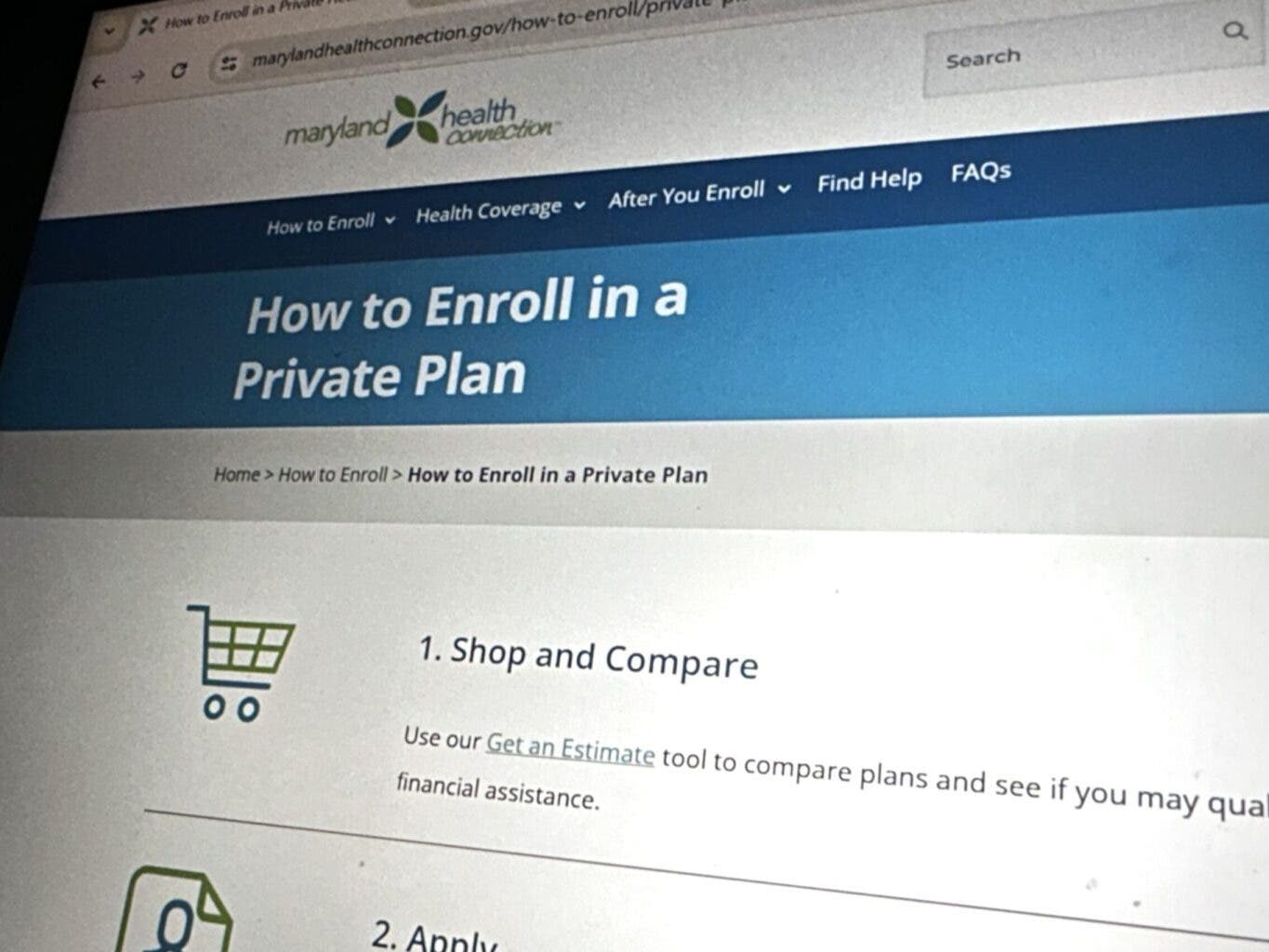
Thousands of Marylanders face another round of sticker shock while shopping for individual healthcare plans after state officials approved a second year of steep premium increases in response to the expiration of federal tax credits that made those plans more affordable.
Marylanders purchasing health plans on the state’s insurance marketplace face an average 14.6% premium rate increase on plans offered by the Maryland Health Connection, on top of the 13.4% rate hike from last year.
Find out what's happening in Across Marylandfor free with the latest updates from Patch.
Healthcare advocates hope that the incoming Democrat-controlled Congress will reinstate the popular tax credit program or issue a similar relief, but any restoration of that federal assistance could be months away — if it comes at all.
In the meantime, Marylanders have about two months to compare plans and find the one that works best given their household’s finances. State officials say there are resources available to help families weigh those options.
Find out what's happening in Across Marylandfor free with the latest updates from Patch.
“We know getting or renewing health insurance can be confusing,” said Johanna Fabian-Marks, executive director for the Maryland Health Benefit Exchange, which operates Maryland’s insurance marketplace. “We’ve got folks standing by, trained experts who offer free help.”
The 2027 open enrollment period started Nov. 1 and runs through Jan. 15. Those who pick a plan by Dec. 31 will start their plan year on Jan. 1. Those who miss that deadline have until Jan. 15 to select a plan, which will delay the start of healthcare coverage until February.
The Maryland Health Connection, the state’s insurance marketplace part of the Obama-era Affordable Care Act, offers a variety of private health plans, with differing levels of coverage to those who do not get health insurance coverage through an employer. The exchange also offers subsidies that help bring down monthly costs for insurance plans for those who qualify.
As Marylanders shop for coverage, the exchange can provide support over the phone, online or in-person if they need help navigating their options. Through the exchange, Marylanders can connect with insurance brokers to help them at no cost.
“Our navigators are on the ground, in-person community assisters, and they’re hosting pop-up enrollment events around the state. That information is also on our website,” Fabian-Marks said. “In addition, we’re providing virtual enrollment sessions on our website so that people who are looking for help can log into a webinar environment that we’re hosting.”
Thousands of Marylanders downgraded health plans on ACA marketplace amid rising premiums
Those resources and more can help Marylanders with questions they have while selecting insurance for the 2027 plan year, especially those who previously benefited from the enhanced federal tax credits that expired in December 2025 after Congress failed to renew them.
In 2025, state lawmakers approved Maryland Premium Assistance, funding to help replace some of the lost benefits for 2026 plans and 2027 plans that Marylanders are shopping for now.
The exact amount of assistance varies by the financial need of the household. Residents with household incomes of up to 400% of the federal poverty level could qualify for Maryland Premium Assistance, replacing some or all of the savings that would have been available if the federal tax credit did not lapse last year.
Those who make more than 400% of the federal poverty level do not qualify for the state subsidy and face steep premium rate increases approved for next plan year. Many households will opt to pay for more expensive plans in the coming plan year, while others may find those options to be unaffordable and drop coverage entirely.
“We know rates have gone up for a lot of people, and it’s unfortunate … and it’s really sad,” said Vincent DeMarco, president of the Maryland Healthcare for All coalition.
Even with the new state subsidy in place, Fabian-Marks said Marylanders still struggled to afford coverage in the 2026 plan year.
Initially, state officials reported record high enrollment in the 2026 plan year as 255,600 people selected individual health plans at the start of the year, despite expectations that the average 13.4% premium rate increase would lead to a drop in enrollment. But many later had to downgrade their plans in order to afford coverage at all, taking on significantly higher deductibles to maintain less-comprehensive health coverage. So while more people were enrolled in a plan, many opted to take on higher risk coverage for lower monthly premiums.
And as the year went on, thousands found even those plans unaffordable for their household finances and dropped coverage.
Fabian-Marks reports that enrollment in August was 12% lower than August last year. Now, about 211,890 Marylanders are covered by health insurance on the exchange. A majority of the enrollment loss is due to new federal restrictions that prohibited certain legally-present non-citizens from accessing federal assistance for low-income households.
The state’s premium assistance program was designed as a temporary mitigation effort, and Maryland’s tight fiscal outlook means that the subsidy will end after next year, unless new funding is found.
It’s why advocates like DeMarco are pushing for state leaders to find new revenue sources to help support the state subsidy. Meanwhile, he hopes that incoming Congressional leaders prioritize restoring those federal tax credits next year, after the midterm elections resulted in Democratic control of the U.S. House of Representatives and Senate.
“When you mess with people’s healthcare, you lose,” DeMarco said. “Many people saw their premiums skyrocket – people thrown off healthcare. They saw a lot of problems caused by H.R.1 and the failure to continue those tax credits … Hopefully that will convince the president and the Republicans in the Senate, who could block things, not to do so.”
The cost of healthcare is hitting America where it hurts: The wallet
Fabian-Marks said Maryland health officials would “certainly be happy to see a restoration of the tax credits,” noting that the exchange would be able to implement those changes quickly after Congress takes action.
“They [enhanced tax credits] really made coverage more affordable and put it in reach for a lot of Marylanders,” she said. “For multiple reasons, from a financial standpoint, for our enrollees and for the state, we would certainly welcome reinstatement of those enhanced tax credits.”
But in the meantime, she notes that despite the rising premium costs in the state, healthcare costs are more affordable in Maryland compared to other states, even if it doesn’t feel like it.
“I know healthcare doesn’t feel affordable, and it is still a financial challenge for a lot of people,” she said. “We are fortunate in Maryland to have the investments the state has made … There are changes coming next year during open enrollment, but this open enrollment is operating as people are used to and it should look familiar.”
-
Maryland Matters is part of States Newsroom, a network of news bureaus supported by grants and a coalition of donors as a 501(c)(3) public charity. Maryland Matters maintains editorial independence. Contact Editor Steve Crane for questions: scrane@marylandmatters.org. Follow Maryland Matters on Facebook and Twitter.