Politics & Government
$3M Targeted at Fighting Maryland's Heroin Epidemic
Gov. Larry Hogan has released state grants to help police track heroin dealers, and to hire recovery specialists to get addicts treatment.


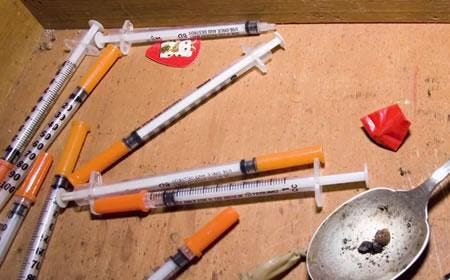
ANNAPOLIS, MD — Police departments will receive money to track heroin coming into their areas, share that information on a state database, and hire recovery specialists to work with addicts under a $3 million grant program announced Monday by Maryland Gov. Larry Hogan.
Police departments in Anne Arundel County and the Harford County Sheriff's office are among the recipients of the grants.
In 2015, the state saw a 21 percent increase in the number of deaths from drug and alcohol intoxication, according to the Maryland Department of Health and Mental Hygiene. A total of 1,259 overdose deaths occurred in Maryland last year. And the state is on pace to equal or surpass that tragic number in 2016. The most recent tally from the health department shows that from January to March this year, Maryland saw 383 deaths related to overdose.
Find out what's happening in Annapolisfor free with the latest updates from Patch.
Maryland Heroin Awareness Advocates recently told Patch that the state needs residential treatment beds. Melissa Eppinger of Edgewater said addicts are dying while waiting for in-patient treatment spots to open up; her own son is in North Carolina at a residential program.
Once patients have completed treatment, aftercare is imperative, advocates say, as addicts learn to cope without the drug.
Find out what's happening in Annapolisfor free with the latest updates from Patch.
SEE ALSO:
According to a news release from the governor's office, a total of $931,371 will go toward funding a heroin coordinator in law enforcement agencies in every region of the state, while about $2 million will go to nine jurisdictions to continue the Safe Streets Initiative, a program that tracks down and arrests the most serious, violent, and repeat offenders while connecting those offenders struggling with substance abuse to drug treatment, health care, education, and other services.
This year, five Safe Streets sites will be funded to hire peer recovery specialists to integrate treatment into the model.
Both programs will support the recommendations of the Heroin & Opioid Emergency Task Force. The Heroin Coordinator Grant Program will support one of the 33 recommendations made by the Task Force: the state should designate the Baltimore-Washington High Intensity Drug Trafficking Area as the central repository for all Maryland drug intelligence by providing money for salary or overtime support for a heroin coordinator to do data input and analysis. Sharing and analyzing this data across jurisdictions will make it easier for law enforcement to identify drug traffickers, officials said.
The Peer Recovery Specialist Program also fulfills the Task Force’s recommendation that peer recovery specialists be integrated into the Safe Streets model. The goal is to track down drug traffickers, protect young people from becoming involved with illegal drugs, and provide treatment and resources for those struggling with substance abuse and addiction.
“Throughout Maryland, from our smallest town to our biggest city, heroin is destroying lives,” Hogan said. “A coordinated law enforcement and treatment response is essential to our administration’s ability to help fight this epidemic and provide our citizens with the lifesaving support they need. These heroin coordinators will work to ensure that every drug seizure, arrest, and investigation is documented and uploaded into extensive shared databases to give us a clear picture of the paths these deadly drugs take to get into our communities. And our peer recovery specialists will work to ensure offenders with addictions get the treatment and support they need to get on the road to recovery.”
Integrating a drug treatment component into the Safe Streets program was an important recommendation by the Heroin and Opioid Emergency Task Force, said its chairman, Lt. Gov. Boyd Rutherford.
“Identifying offenders who have an addiction from the moment they are arrested gives us the time we need to help them turn their lives around,” Rutherford said.
“Until now, it was typical for law enforcement agencies to conduct and analyze their investigations and information on the illegal drug trade independently and in their own jurisdictions,” said Glenn Fueston, executive director of the Governor’s Office of Crime Control & Prevention, which administers the Safe Streets funds. “This is no longer the case. The Heroin Coordinator Grant program will promote an integrated law enforcement and investigative strategy among all Maryland jurisdictions through extensive data-sharing. This, in turn, will advance statewide investigations and prosecutions of drug traffickers, as well as referrals for treatment for individuals struggling with addiction.”
The grants will pay for heroin coordinators in Anne Arundel, Baltimore, Harford, Howard, and Montgomery counties, among others.
The Safe Streets Initiative will send money to nine police departments, including:
- Annapolis City Police Department: $345,147
- Anne Arundel County: $289,807
- Harford County Sheriff’s Office: $207,000
Get more local news delivered straight to your inbox. Sign up for free Patch newsletters and alerts.