Traffic & Transit
4th Of July 2018: Worst Maryland Travel Times
Highway traffic will quadruple Tuesday for July 4 travel. One day in particular has forecasters saying "beware" to Maryland drivers.


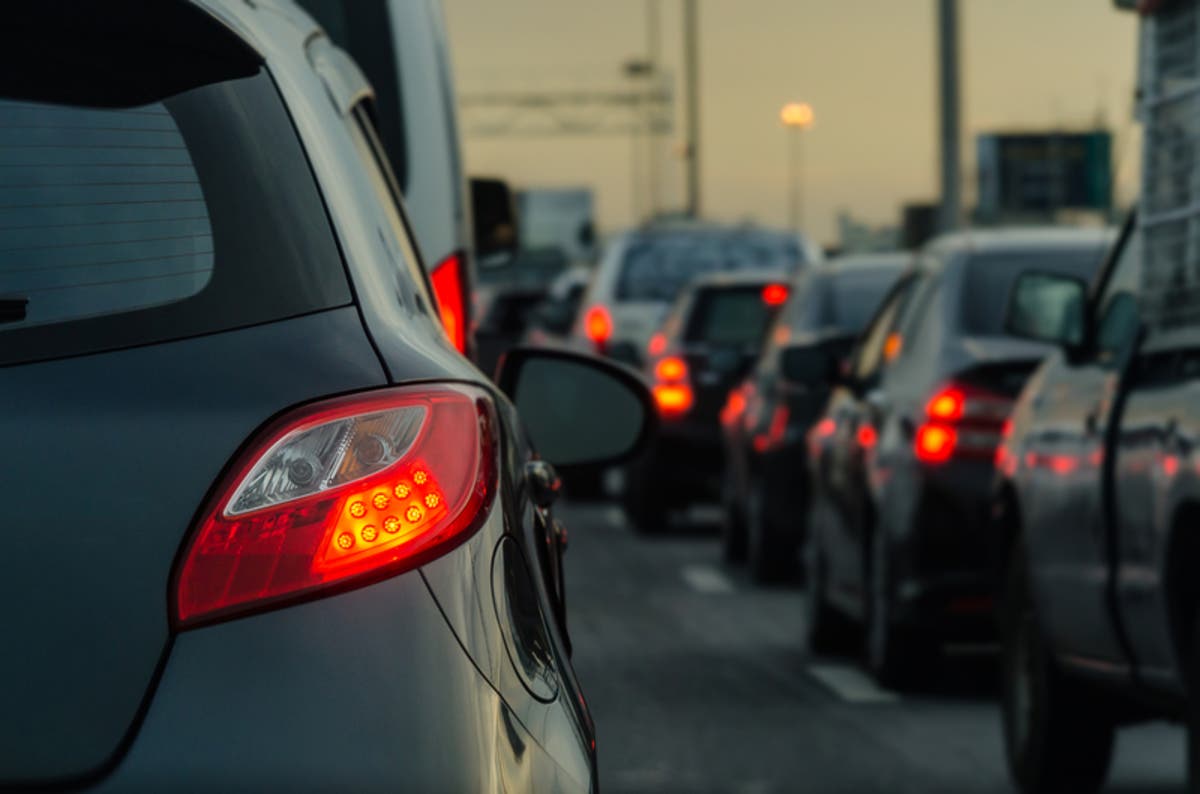
BALTIMORE, MD —Because Fourth of July falls on a Wednesday this year, expect many to take long weekends before and after the holiday. AAA-Mid Atlantic predicts more people than ever will travel for the Fourth of July holiday in Maryland, a 5.7 percent increase compared to last year’s holiday, and the highest percentage increase since the end of the Great Recession.
A record-breaking 993,000 Marylanders are expected to travel 50 or more miles. That's not including the additional traffic of local drivers going to and from beaches, fireworks and other holiday events.
This projection is a 5.5 percent increase from last year. It's also 69 percent higher than 686,000 travelers in 2009—the low since AAA began tracking holiday travel trends 18 year ago. These travelers will join more than 46.95 million Americans traveling nationwide.
Find out what's happening in Annapolisfor free with the latest updates from Patch.
"A grand total of 3.4 million persons from the Washington, D.C. metro area, Maryland and Virginia will travel for the Fourth of July," said John B. Townsend II, manager of public and government affairs for AAA Mid-Atlantic, in a statement. "Of that number, 2.9 million persons from the three areas will travel by automobile to their Fourth of July holiday destinations."
For those heading for the seaside and shore in Maryland and Delaware, travel times will increase by 180 percent, starting at 2:30 p.m. Tuesday afternoon on U.S. 50 Eastbound, which normally conveys 96,000 vehicles on peak summer travel days. Holiday travelers will find themselves stuck in long, slowing queues at an average speed of 21.1 miles per hour, warns INRIX. Anticipate eastbound delays and unbearable traffic conditions for the the next two days.
Find out what's happening in Annapolisfor free with the latest updates from Patch.
On the Maryland side, brace yourself for travel delays at the I-95/I-495 concurrency, starting at Exit 27. Here, I-95 conveys holiday travelers and commuters to and from the Beltway to Baltimore, Wilmington, Philadelphia, New York City, and Boston.
The worst time to hit the road on U.S. Route 50 westbound from Maryland Eastern Shore is Tuesday afternoon at 1:15 P.M., as travel delays increase 87 percent and highway speeds drop to 31 mph. A typical trip at the same time of day normally takes just over half an hour, or 32 minutes. It will worsen to one hour, an increase of 28 minutes in delays on the day before the holiday. Traffic to and from the Bay Bridge will be the heaviest Tuesday, July 3 through Sunday, July 8.
SEE ALSO: These Are Best Times To Cross Chesapeake Bay Bridge For July 4 Week
(For more news like this, find your local Patch here. If you have an iPhone, click here to get the free Patch iPhone app; download the free Patch Android app here. And like Patch on Facebook!)
By the Numbers: Fourth of July 2018 Travel Forecast
- Automobiles: More than 862,900 Maryland residents will drive to their destinations, 5.6 percent more that last year.
- Airplanes: 74,700 Maryland residents will take to the skies, 7.3 percent more than last year.
- Trains, Buses, Rails and Cruise Ships: About 55,600 residents will travel by other means, 5.5 percent more than last year.
“Marylanders are paying prices at the pump that are 20 to 28 percent higher than last year at this time,” said Ragina Cooper Averella, manager of Public and Government Affairs at AAA MidAtlantic. “However, Maryland prices, as well as across the nation, have been trending downward since the Memorial Day weekend.”
As of Wednesday, June 27, Maryland’s average is 5 cents lower than the national average at $2.80 per gallon. The state average is 3 cents less than last week, 19 cents less than last month, but 58 cents more than last year on this date. Nearly a month ago on Memorial Day, May 28, motorists paid an average of 19 cents per gallon more to fill up in Maryland when the price was $2.99 per gallon.
Worst Times to Travel: Beware "Terrible Tuesday"
INRIX, a global transportation analytics company, and AAA project the most congested cities in the U.S. could see travel times double.
And the worst day to travel? July 3, dubbed "Terrible Tuesday" by AAA MidAtlantic. The most congestion will happen Tuesday, July 3, from 4 p.m. to 6 p.m., as commuters leave work early and join holiday travelers, according to INRIX.
“Although travel times are expected to nominally increase throughout the week, Tuesday afternoon will, hands down, be the worst time to be on the road," says Scott Sedlik, general manager and vice president - public sector at INRIX. "Our advice to drivers is to avoid peak commuting hours altogether or consider alternative routes."
Some roads will be worse than others. In particular, drivers on the Capital Beltway going in the clockwise direction will face nearly quadrupled travel times on Monday, July 2 at 11:30 a.m.
Today is “Mournful Monday” because there will be “hell to pay” on northbound Interstate 95 and on the Inner Loop of the Capital Beltway. Here, getaway speeds will slow to 12 miles per hour, creating chokepoints. Travel times will be four times longer than usual, forming bottlenecks, said Townsend of AAA Mid-Atlantic.
Getaway gridlock will be at its very worse Tuesday afternoon, July 3, from 4 p.m. to 6 p.m. During the Fourth of July holiday getaway, traffic flow will become stop-and-go on major freeways and along major corridors across the region, already one of the most gridlocked areas in the whole wide world on any given day. So expect traffic back-ups and brace yourself for travel frustrations on U.S. Route 50, Interstate 270, Interstate 95, and along the Inner Loop and Outer Loop of Interstate 495 (the Capital Beltway).
“For area residents who already lose 80 hours a year stuck in traffic, this means congestion will be much heavier and more unbearable than usual this morning, Monday, July 2, when it quadruples on a stretch of the iconic Capital Beltway, and on Tuesday, July 3, when travel times will be twice as long as the normal trip on area freeways,” said John B. Townsend II, AAA Mid-Atlantic’s Public & Government Affairs Manager. “The two-fold increase in travel times will spell gridlock in capital letters across the area as holiday travelers sit idling in traffic.”
Here are the worst times to travel on DC area roads and estimated travel times:
| Road | Worst Travel Time | Normal Travel Time | Predicted Travel Time |
| US 50 West | Tuesday, July 3, 1:15 p.m. | 32 minutes | 1 hour |
| US 50 East | Tuesday, July 3, 2:30 p.m. | 37 minutes | 1 hour and 43 minutes |
| I-95 South | Tuesday, July 3, 4 p.m. | 1 hr and 2 mins | 1 hour and 43 minutes |
| I-95 North | Monday, July 2, 6:30 a.m. | 48 minutes | 1 hour and 39 minutes |
| Capital Beltway Clockwise | Monday, July 2, 11:30 a.m. | 10 minutes | 51 minutes |
| Capital Beltway Anticlockwise | Tuesday, July 3, 4 p.m. | 29 minutes | 41 minutes |
| I-270 North | Tuesday, July 3, 5 p.m. | 48 mins | 1 hour and 35 minutes |
Travel Forecast and Tips from VDOT
The Virginia Department of Transportation expects the most heavy congestion to happen between 2 p.m. and 8 p.m. on Tuesday, July 3 and Thursday, July 5. The agency expects additional congestion on Interstate 66 east on Wednesday, July 4 in the late evening hours, and on I-95 in the Fredericksburg region.
To ease congestion, most highway work zones lane closures on interstates and other major roads in Virginia will be lifted from noon Tuesday, July 3 until noon Thursday, July 5. HOV restrictions will be lifted on Interstates 66 and 395 Wednesday, July 4.
Check traffic conditions before you hit the road:
- See VDOT's Fourth of July travel trends map to anticipate the best times to travel.
- Visit 511 Virginia for real-time information about traffic, congestion and accidents or download the free mobile VDOT 511 app.
- Call 800-FOR-ROAD (800-367-7623) 24 hours a day.
- Find HOV schedules and tolls on VDOT's website.
- Follow VDOT on Twitter and Facebook.
- Ease your travel with E-ZPass. Visit ezpassva.com to enroll online and for a list of E-ZPass retail locations.
- Use the Express Lanes mobile app to check real-time toll prices and traffic cameras or follow
- Follow the Express Lanes on Twitter @VAExpressLanes for updates
- Find rest stops along interstate roads.
Gas Prices Not As Bad As Memorial Day
After the highest gas prices so far this year on Memorial Day, gas prices have slowly but surely started to fall. In the DC metro area, the current $2.80 average is 15 cents lower than the 2018 high, according to AAA. However, that's 56 cents more than this time last year. But given the busy travel forecast, travelers aren't deterred by the prices.
Image via Shutterstock
Get more local news delivered straight to your inbox. Sign up for free Patch newsletters and alerts.